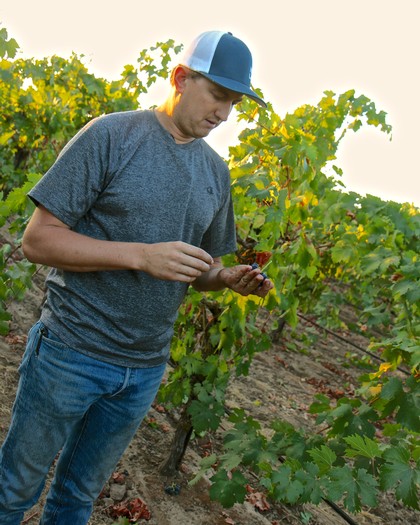
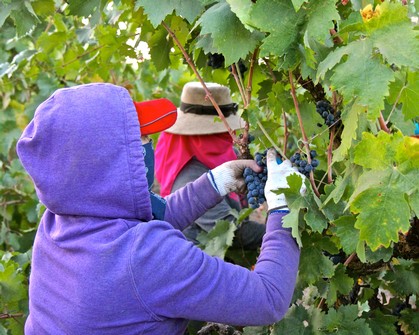
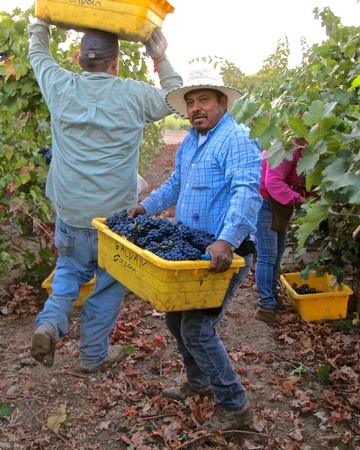
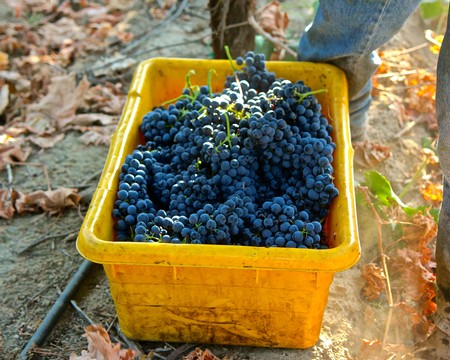
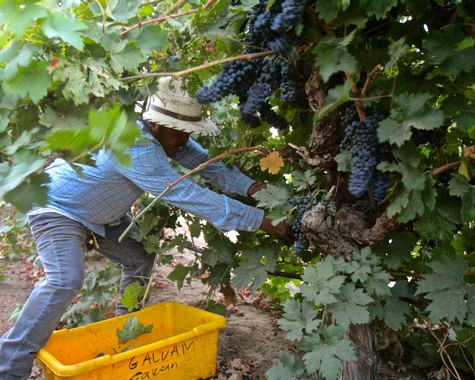
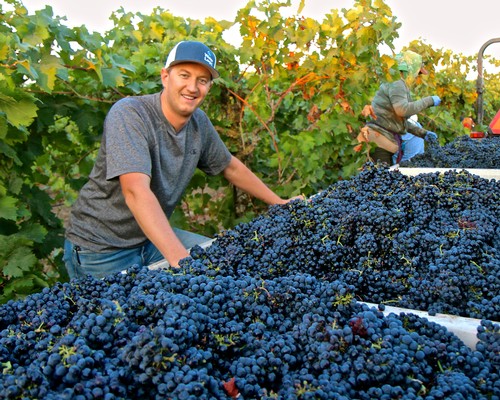
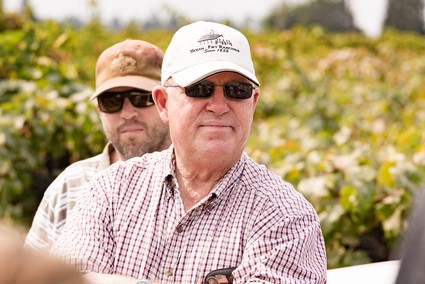
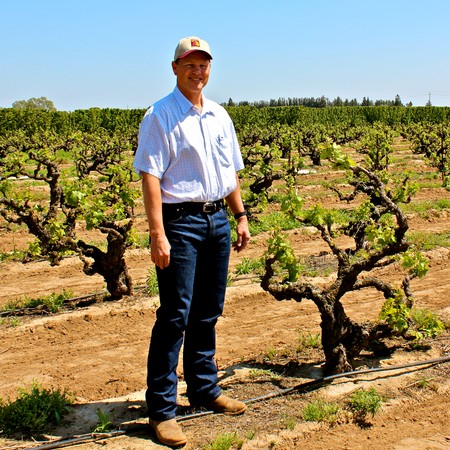
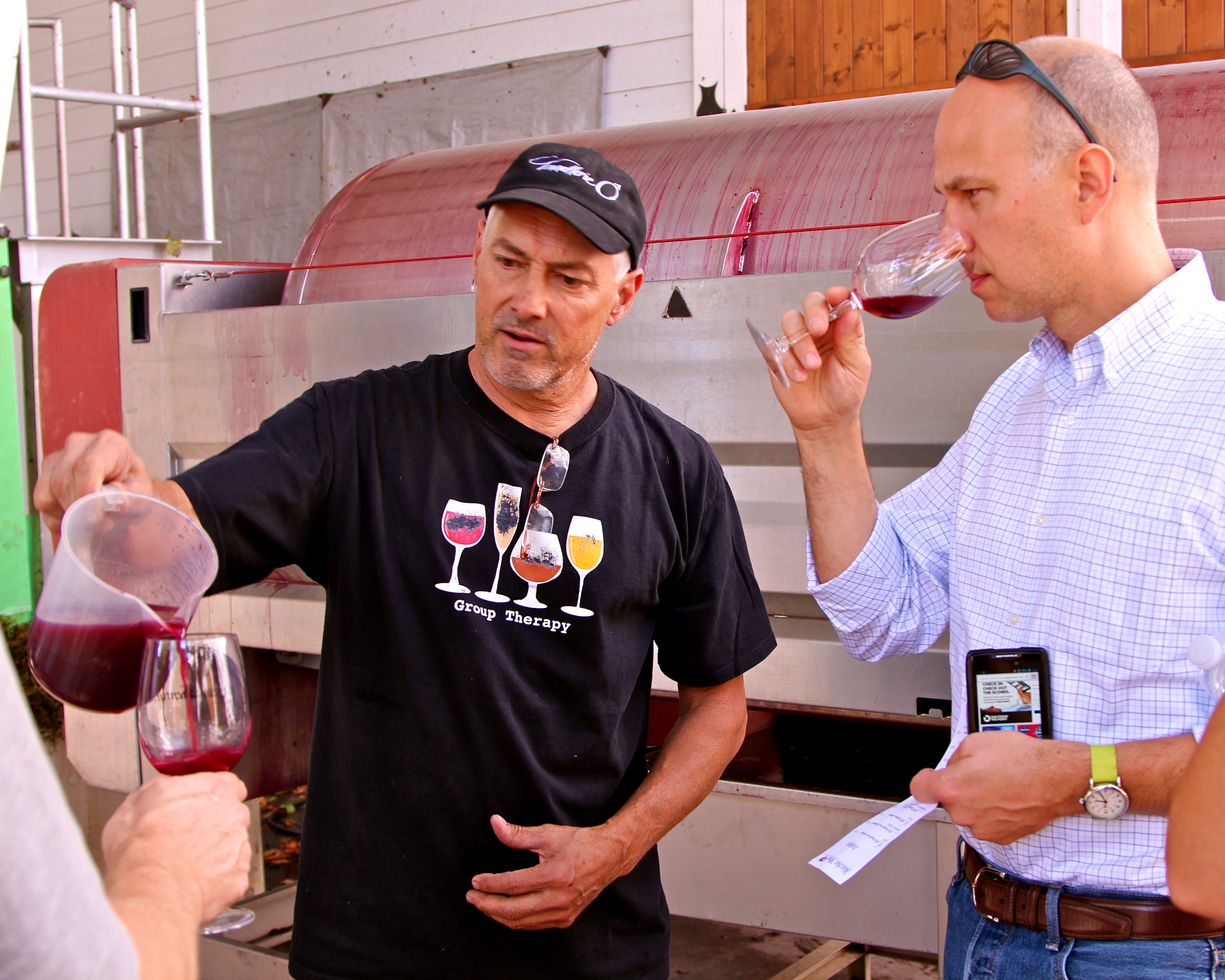
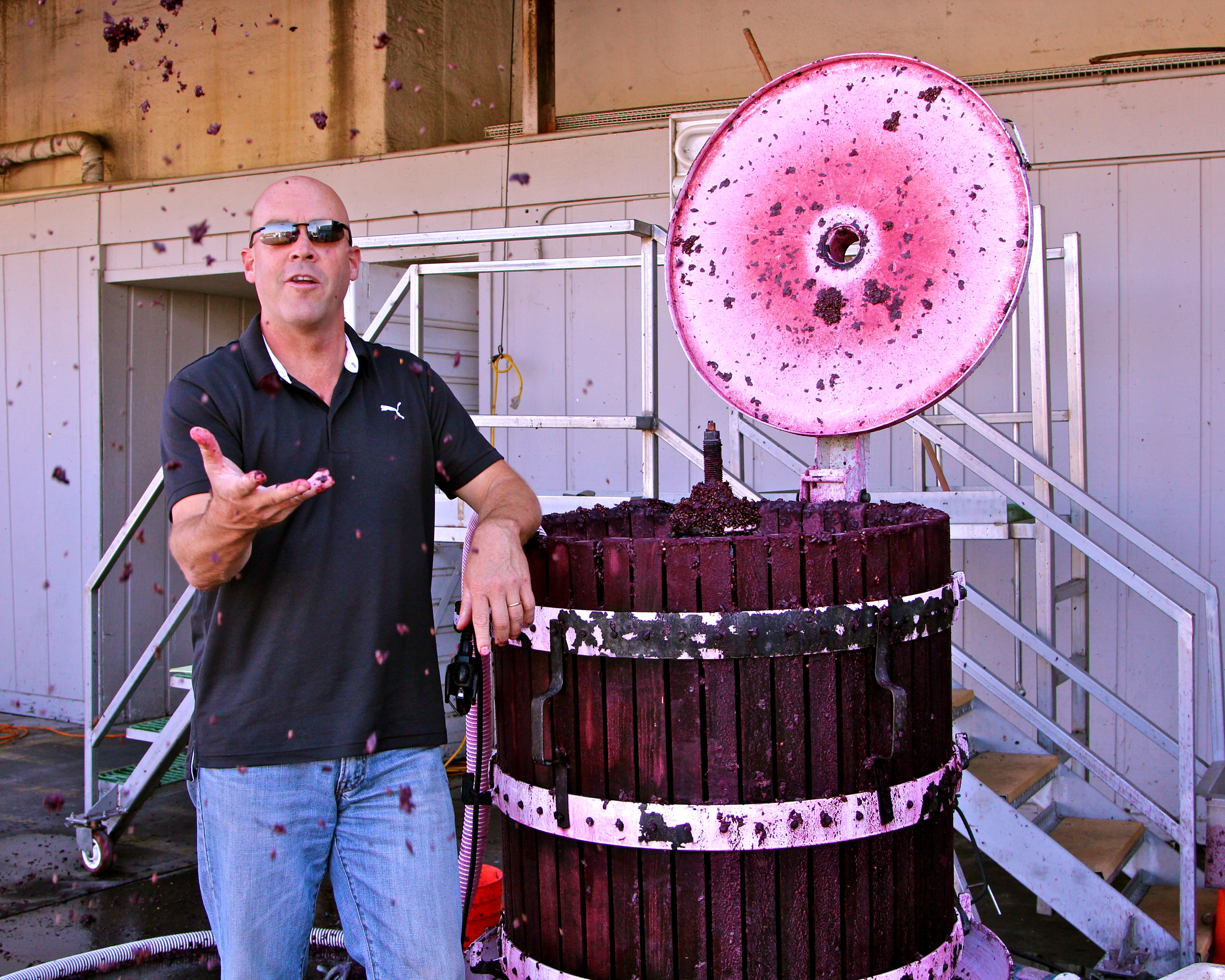
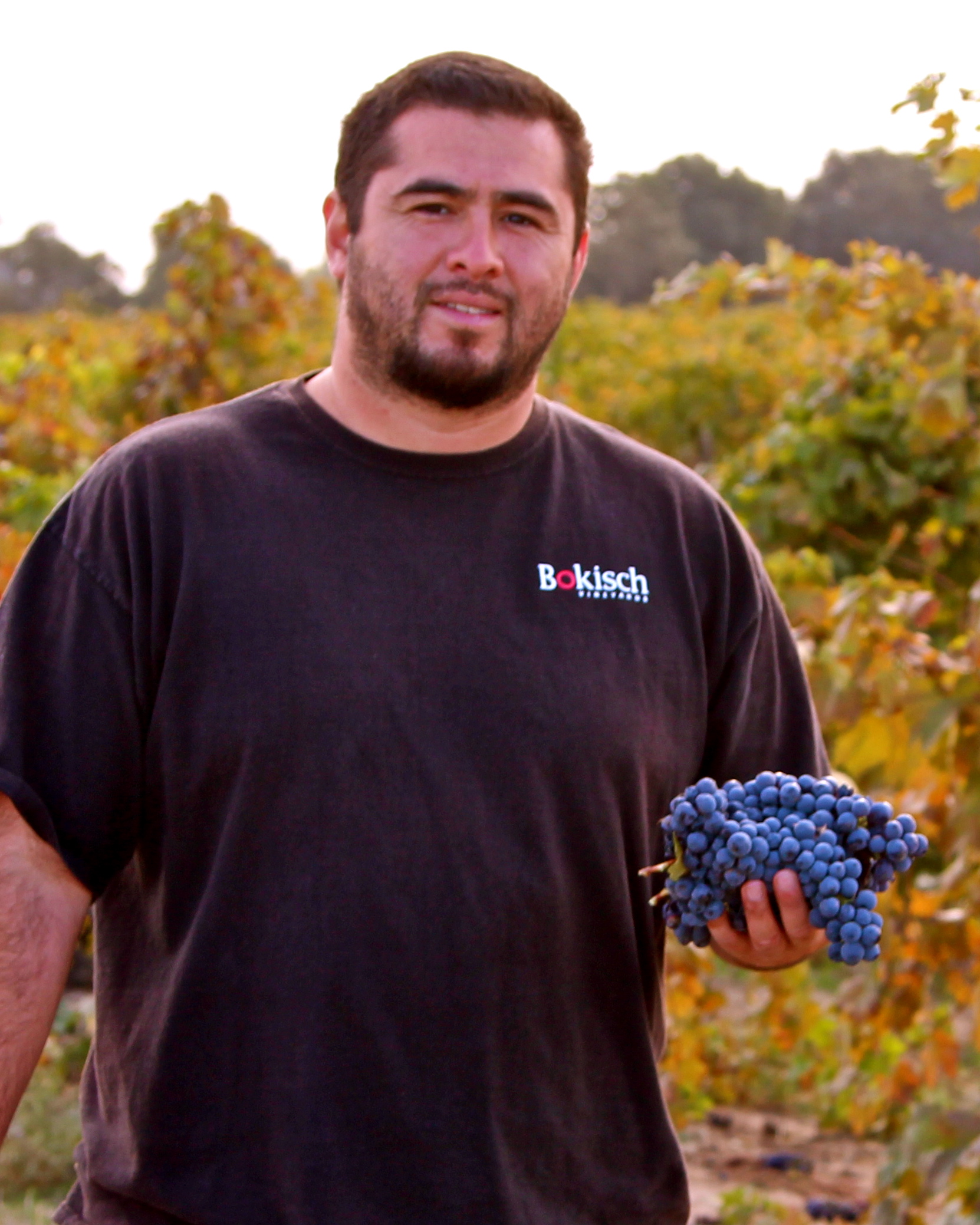
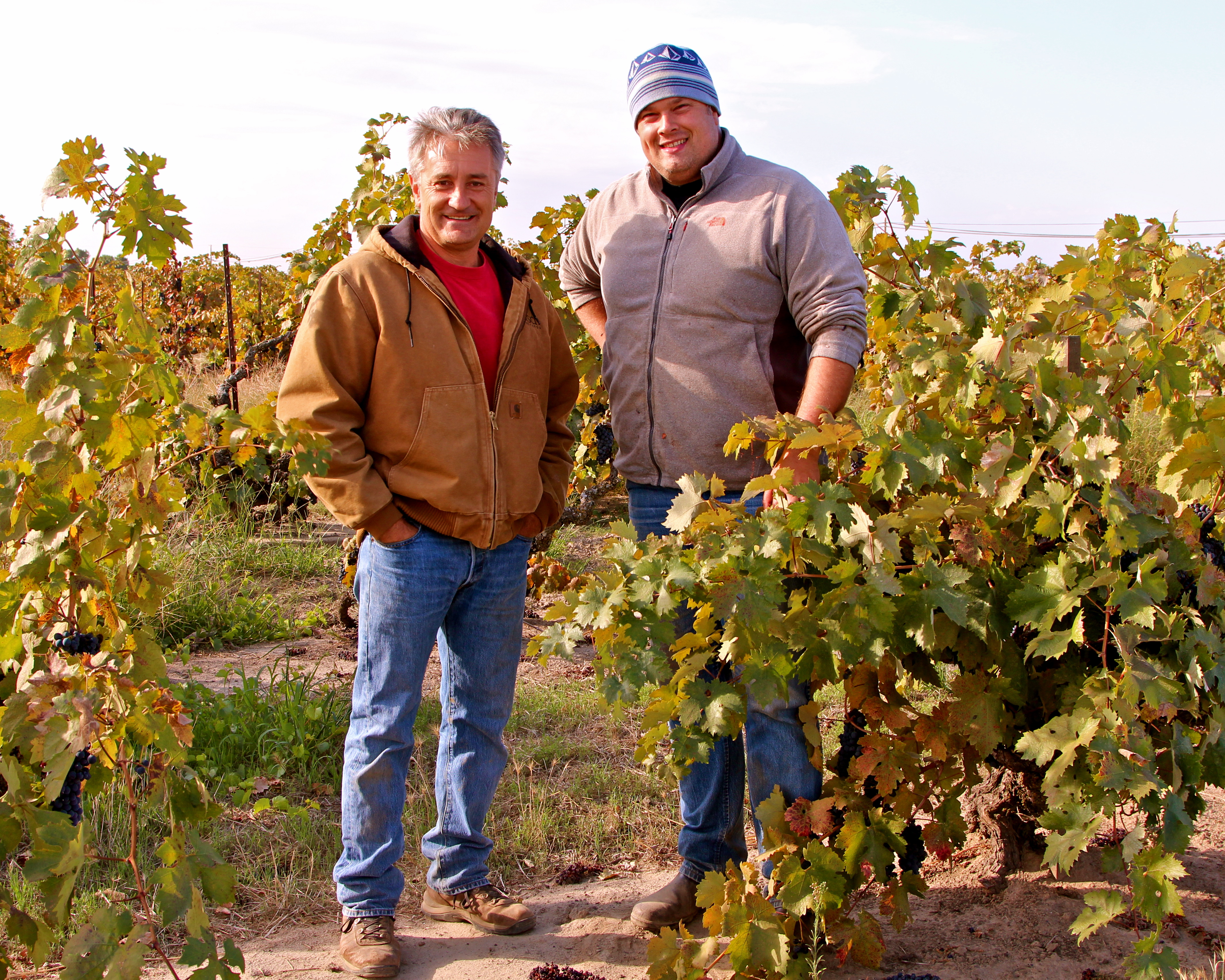
Cemetery Vineyard owner/grower Aaron Shinn samples his 2017 Zinfandel harvest
It’s always been said that in the most challenging vintages for any wine region – rain, snow, hail, drought, floods, hot seasons, cold seasons, rampant diseases or pests, anything that Mother Nature may throw at you – it’s the best growers, in the most favorable sites, that end up standing out far above the crowd.
Whatever the case may be, there’s nothing that Aaron Shinn – G.M. of Lodi’s Round Valley Ranches as well as owner of Shinn Farms – likes better than a challenge. And so far, 2017 has been as challenging a vintage as any.
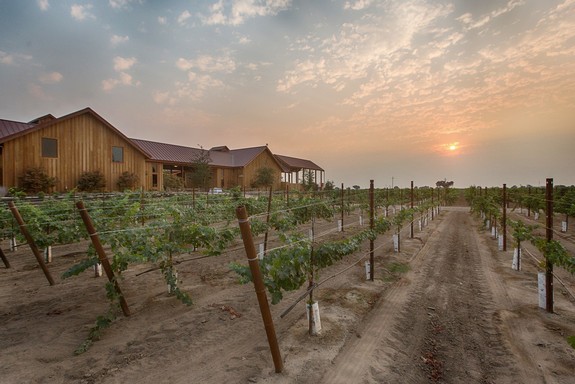
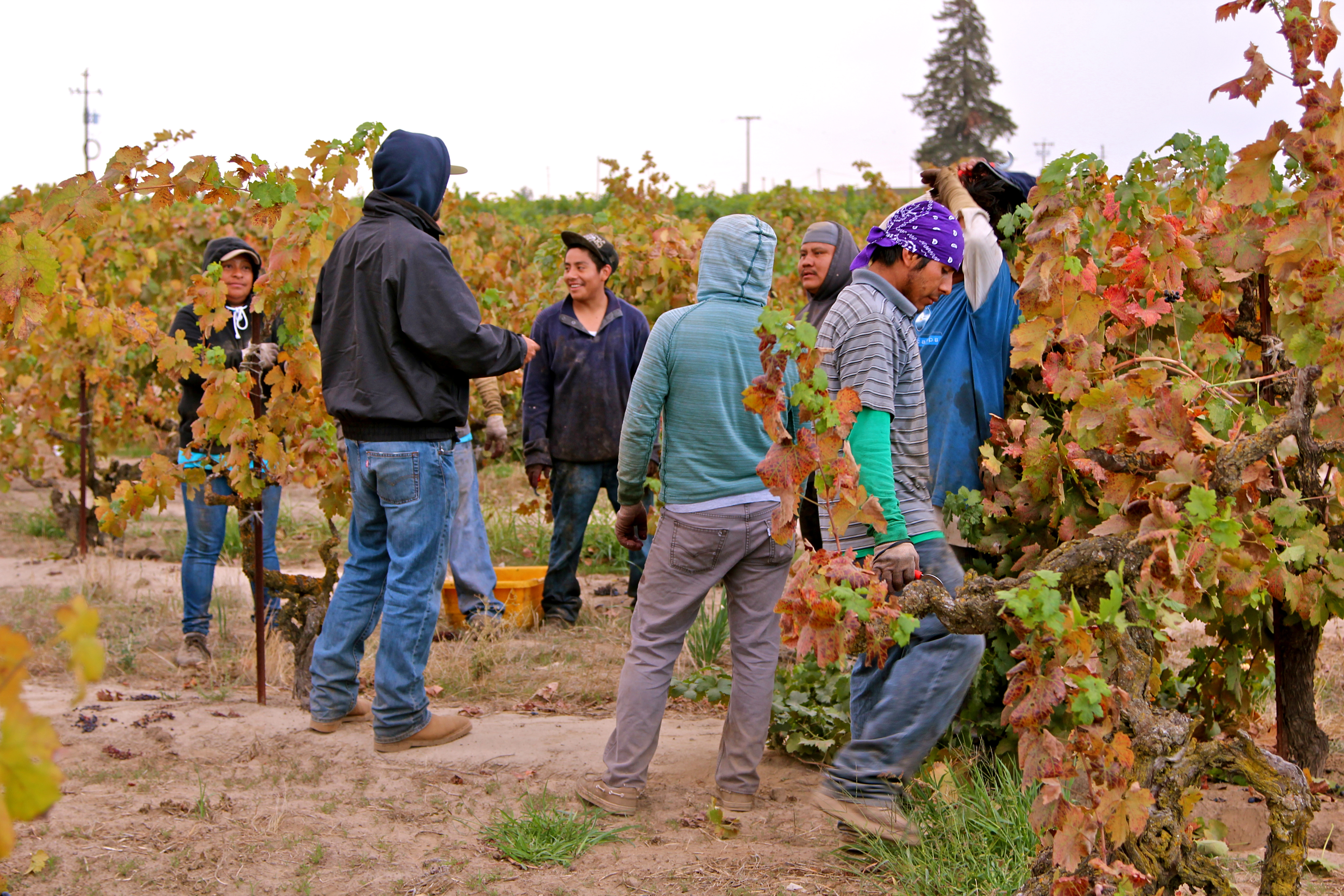
At the break of dawn past Wednesday, August 23, Mr. Shinn walked and talked us through long, arduous road leading up to this particular moment of truth: the harvesting of 2017 Zinfandel from his own Cemetery Vineyard; located on the east side of Lodi’s Mokelumne River Viticultural Area, right across a country road from the Cherokee Memorial Park & Funeral Home.
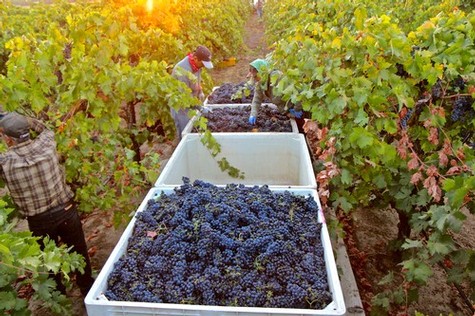
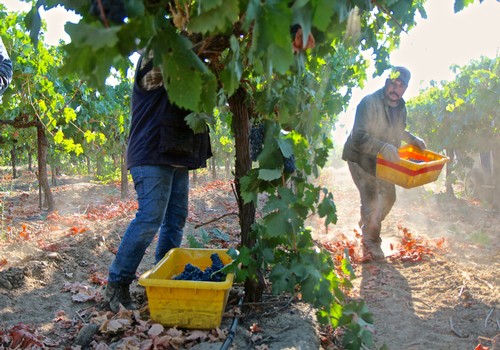
2017 Cemetery Vineyard Zinfandel harvest
The picking that we watched was destined for Lodi’s m2 Wines and Macchia Wines, although Cemetery Vineyard Zinfandel also goes into outstanding vineyard designated wines by Oak Farm Vineyards. Oak Farm’s vaunted winemaker, Chad Joseph, has described Shinn as a “passionate” grower with a knack for “being in the right place at the right time throughout the season, willing to do all the things that make the difference between wines that are just ‘good’ and wines that can be ‘great.’” In the world of ultra-premium grape growing, always something a lot easier said than done.
Here is what Mr. Shinn had to say about the lengths he had to go to achieve results satisfying his self-imposed high standards in his Cemetery Vineyard:
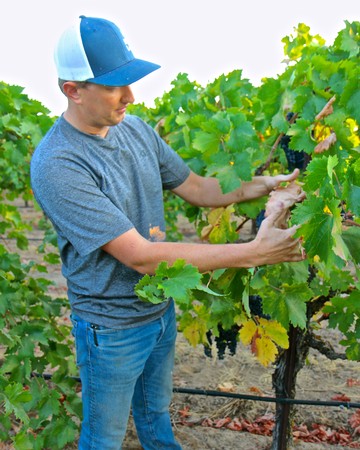
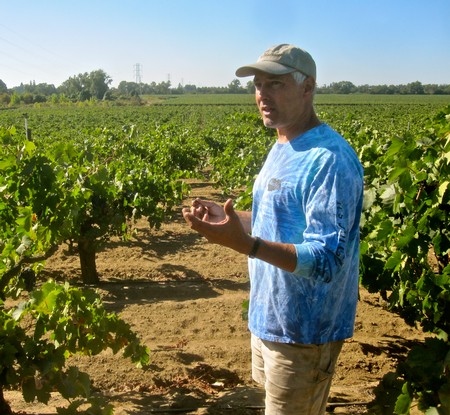
Aaron Shinn demonstrating heat stress on his 2017 Cemetery Vineyard vines
We had to work a lot harder to grow quality fruit in 2017. The three buzzwords that 2017 forced us to be conscious of were: rain, heat, rot. Last year was comparatively easy compared to this year.
We got a late start with the heavy winter rains, which lasted into spring. The fields were wet, we couldn’t get into them to prune. We battled constant mildew and crazy canopy growth. I don’t know a single Zinfandel vineyard in Lodi that didn’t have any rot.
This required constant passes to apply fungicides – every seven or so days, whereas normally it’s 14 to 21 days. To manage canopies we had to do additional shoot thinning and suckering to balance out the constant new growth.
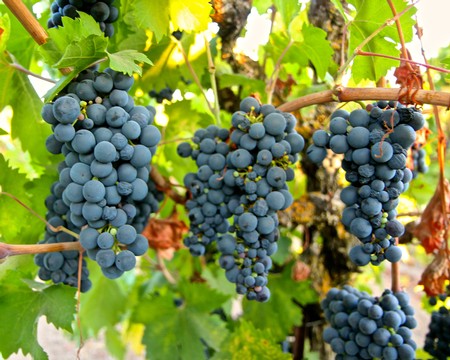
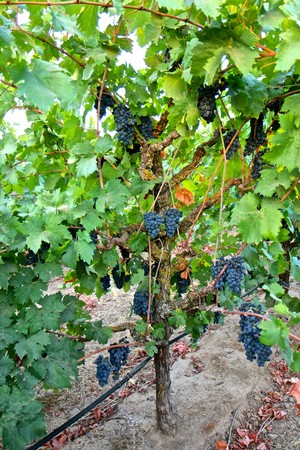
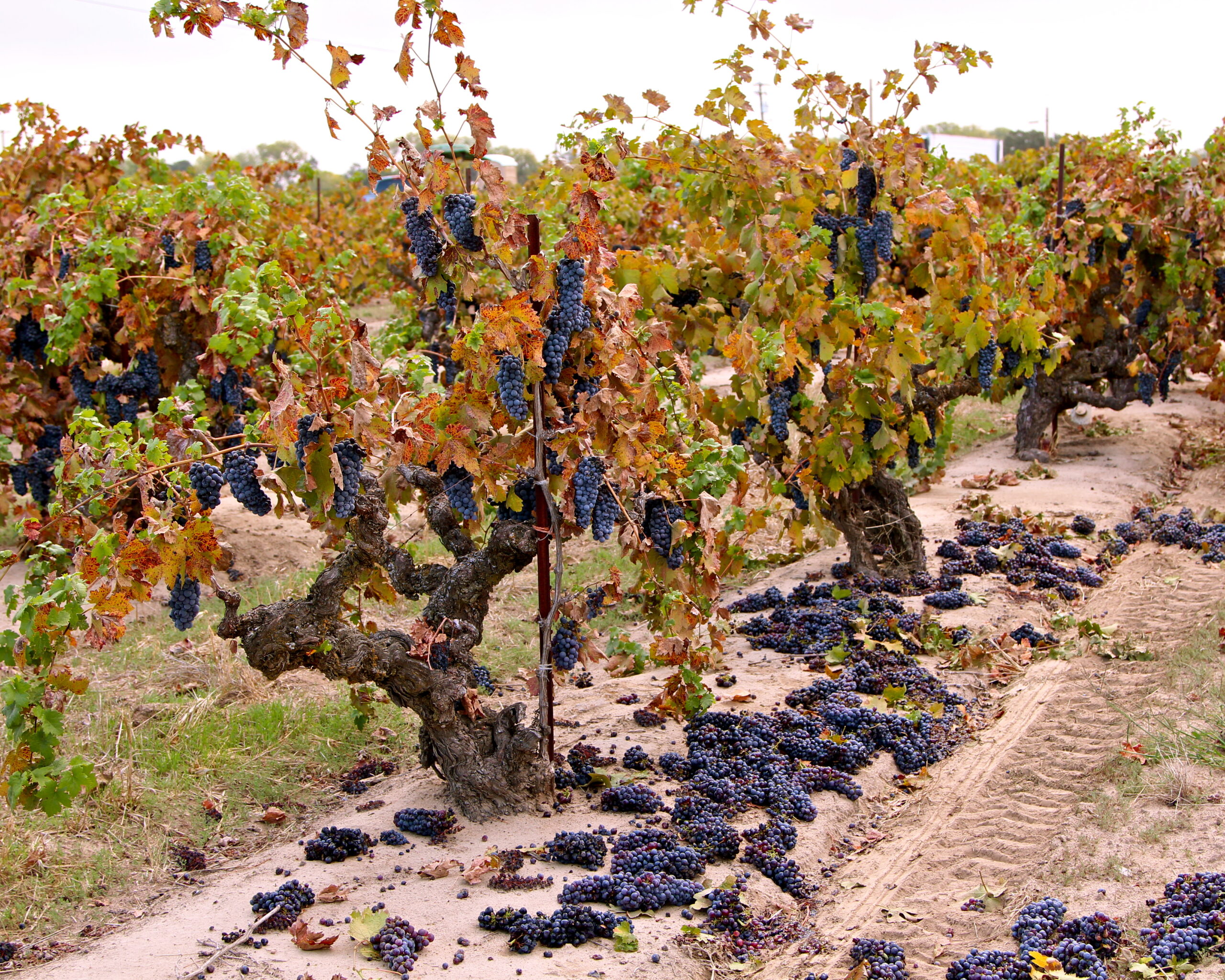
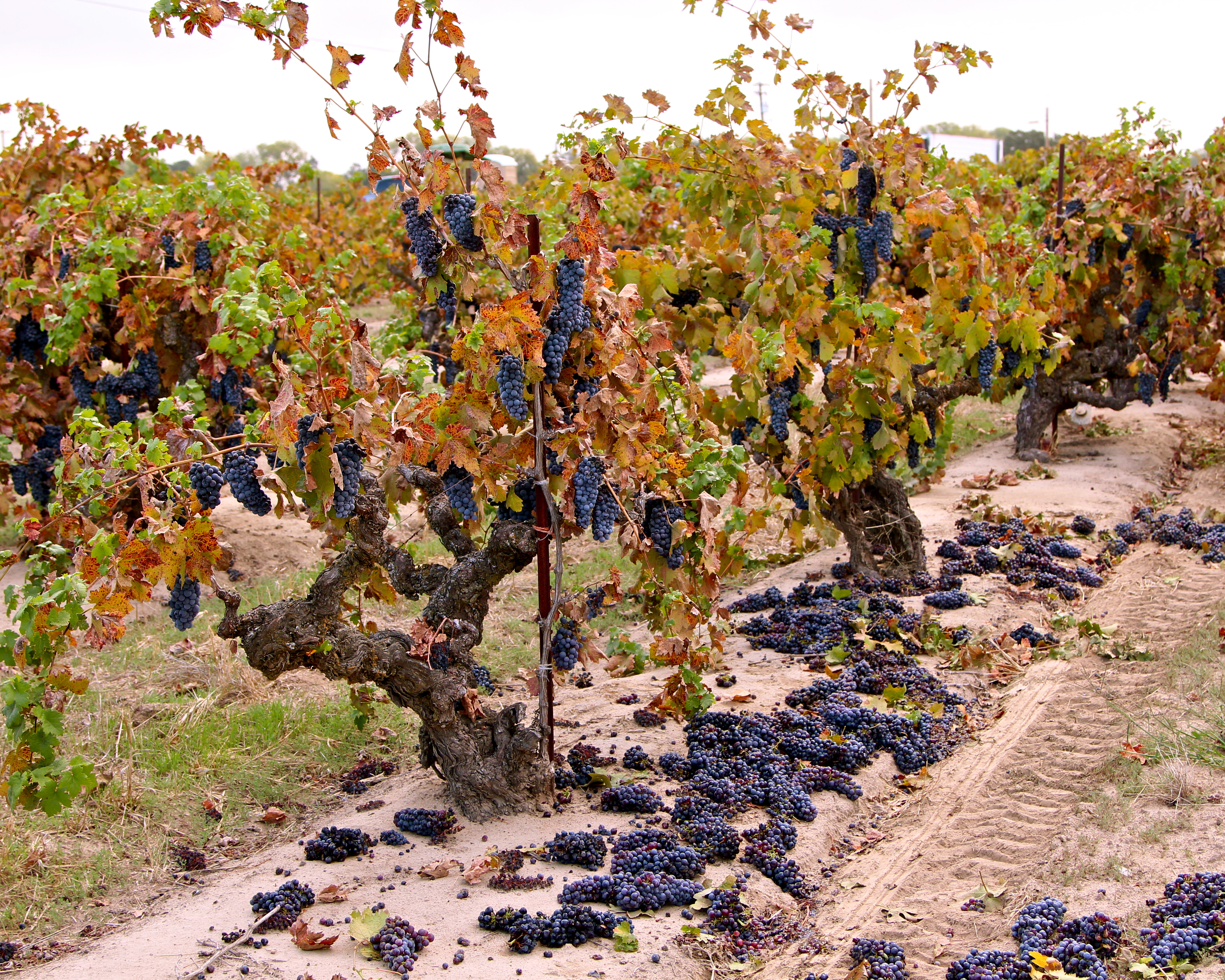
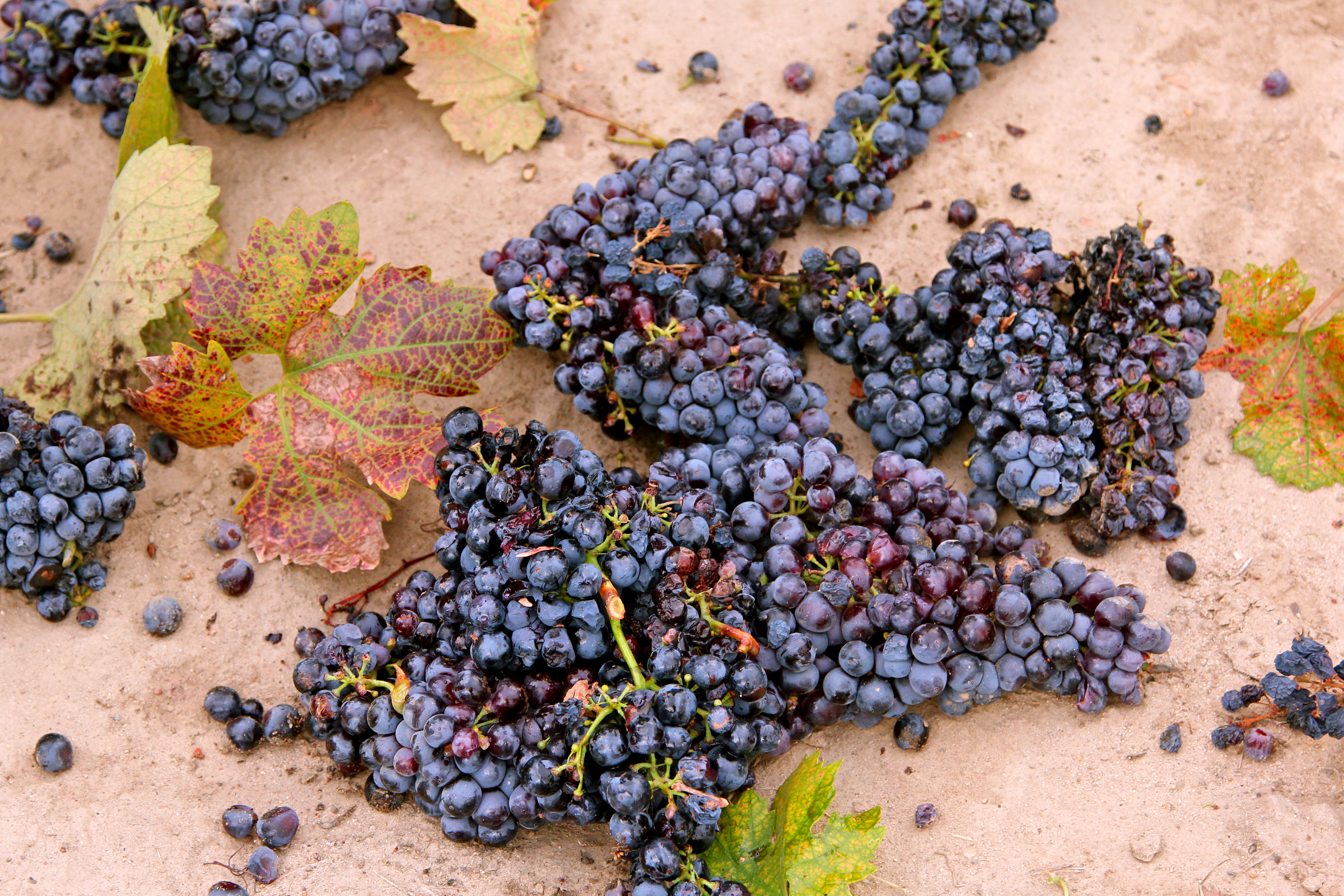
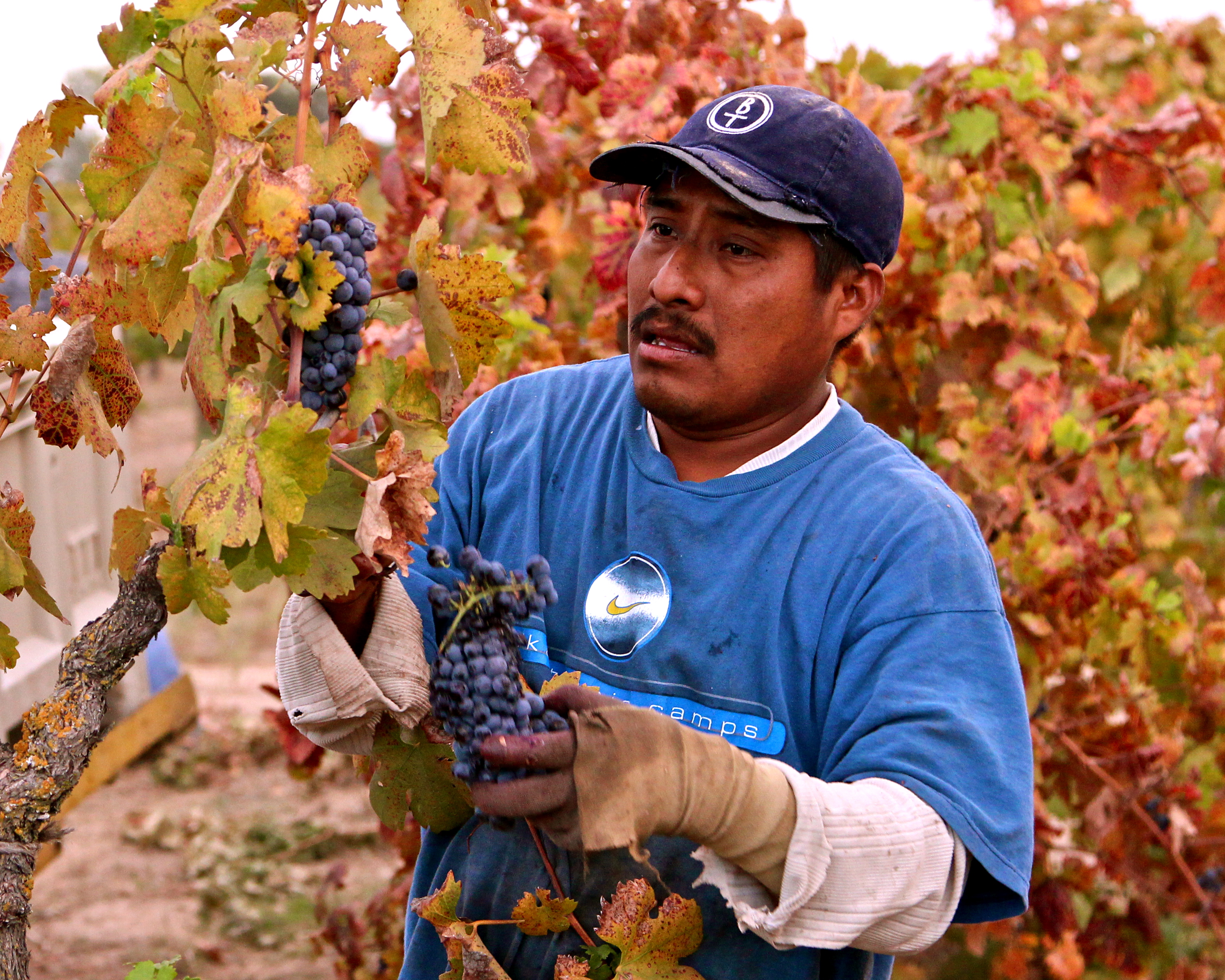
Story of 2017 in these Cemetery Vineyard clusters: partial sunburn and shrivel on top of the usual “hens and chicks” cluster morphology typical of Zinfandel
This vineyard is about 40 years old. For years it went to Mondavi’s WoodbridgeWhite Zinfandel program, but now it’s farmed for optimal red wine quality. But when there is a lot of water in the ground, any Zinfandel vineyard can set a big crop. Left to its own devices, this vineyard could yield up to 12 tons (per acre). But because we’re going for higher quality, we normally farm it for four and a half, five tons.
Zinfandel is also a thin-skinned variety, prone to rot. But this planting did not have as much rot as other vineyards because of our constant vigilance. If you make the time and spend the money to make the extra passes, you can overcome almost any obstacle.
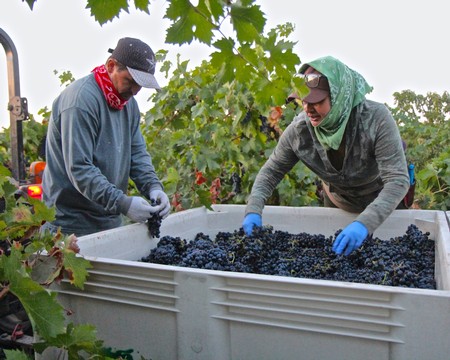
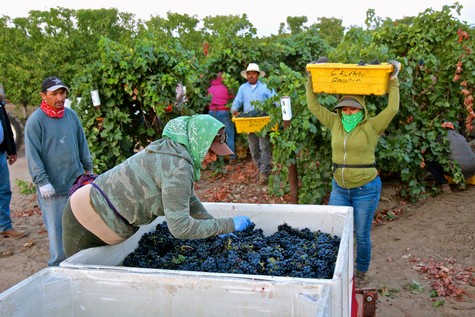
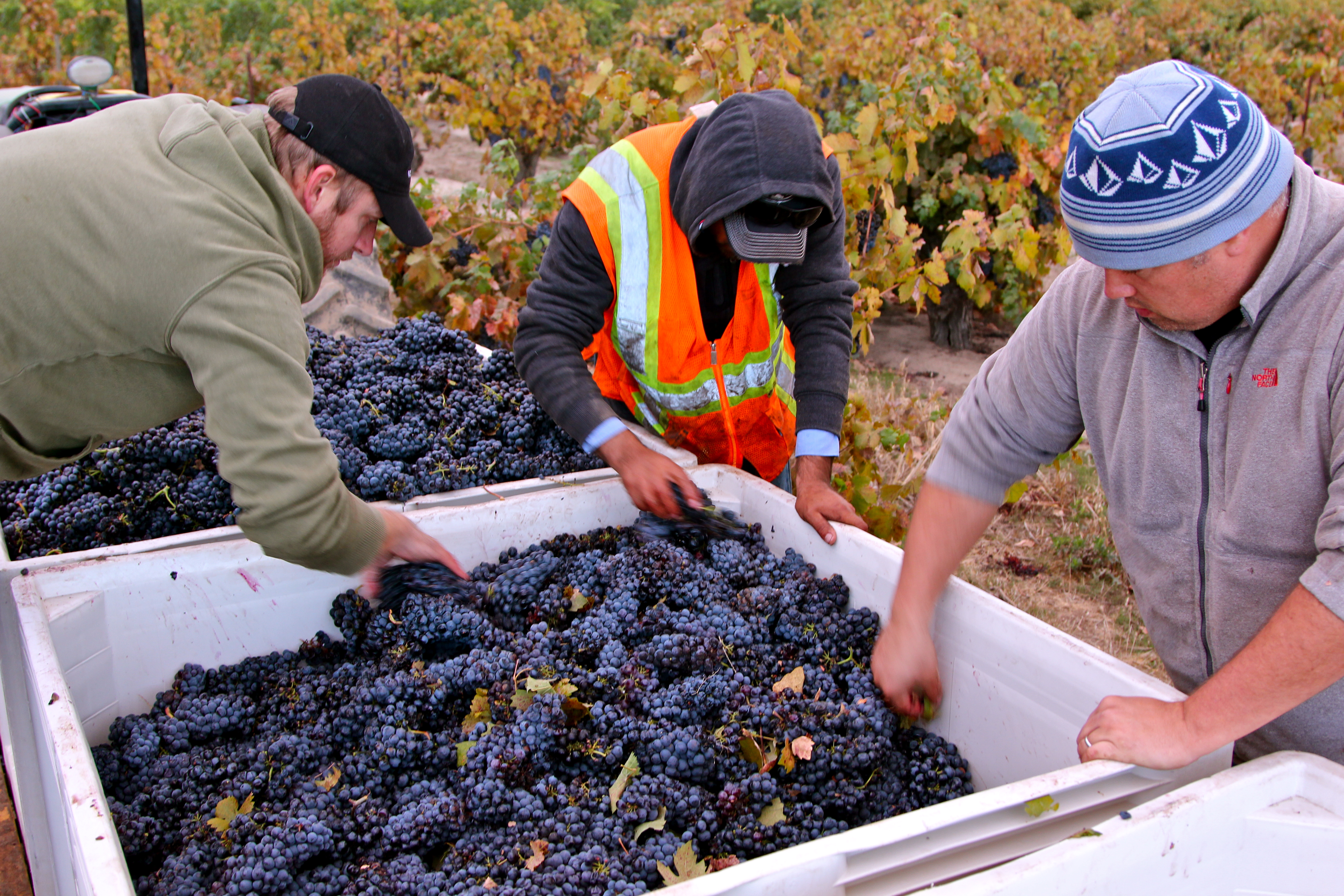
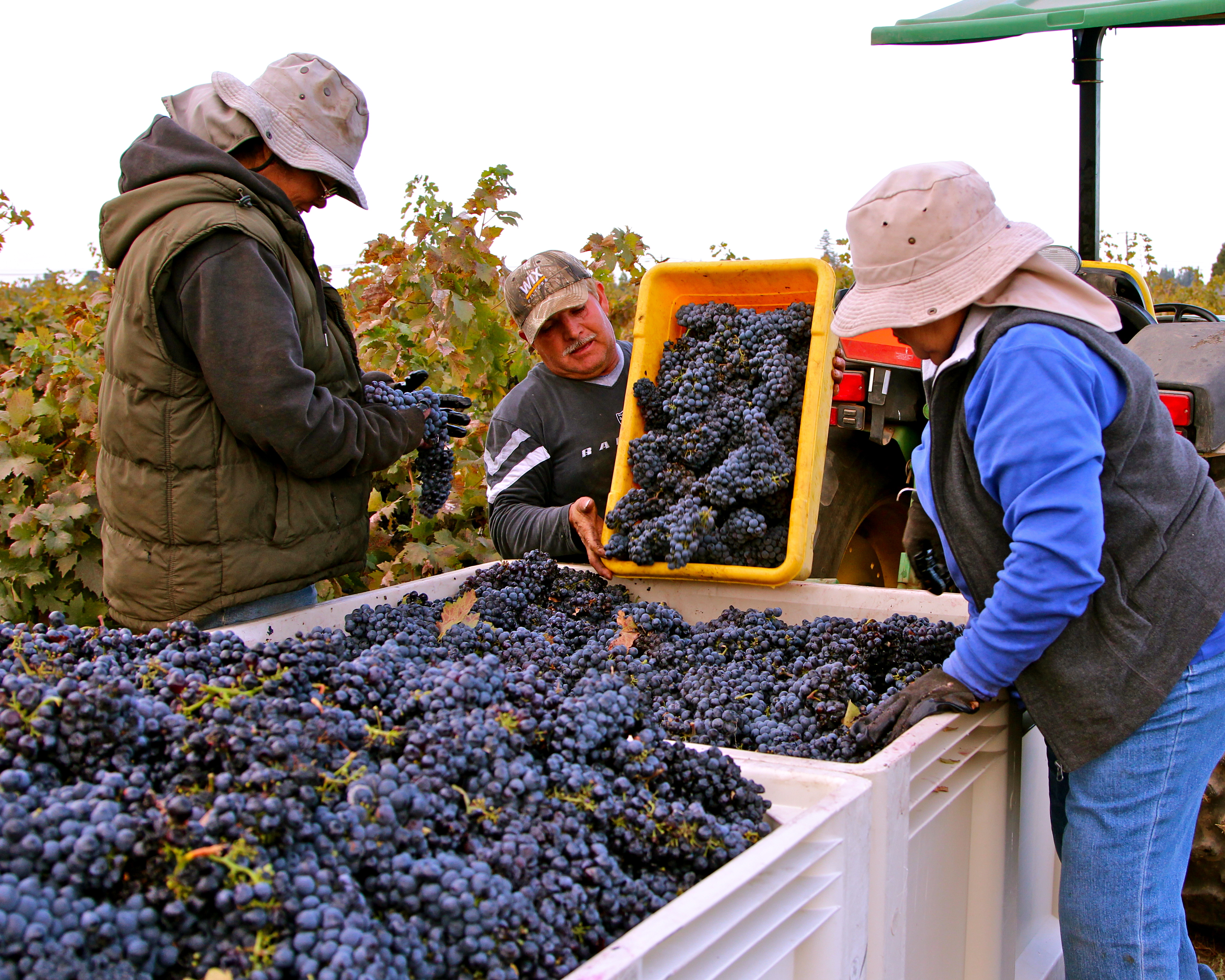
Cemetery Vineyard field sorters pulling out leaves and any imperfect clusters (with underripe berries, rot, sunburn, excess raisining, etc.)
The key was to allow enough air-flow under the canopy of each vine to allow grapes to dry out, and to thin out clusters so that they’re not growing on top of each other. But at the same time, we had to meet the challenge of all those 100° days that we had. Weeks and weeks of it had to take its toll. This is why we left the canopy intact on the south side of each vine where the sun hits the hardest, to protect the fruit from sunburn. The fruit that did end up with a little burn or shrivel from the sun, we either dropped when we did our cluster thinning, or they get sorted out at the bin as we pick.
But this is also a special site. Here the sandy soil is extremely deep. We don’t irrigate a lot anyway, but when you do the water runs right through the ground. The soil is so well drained that it makes the vines struggle a little bit, which makes for higher quality fruit.
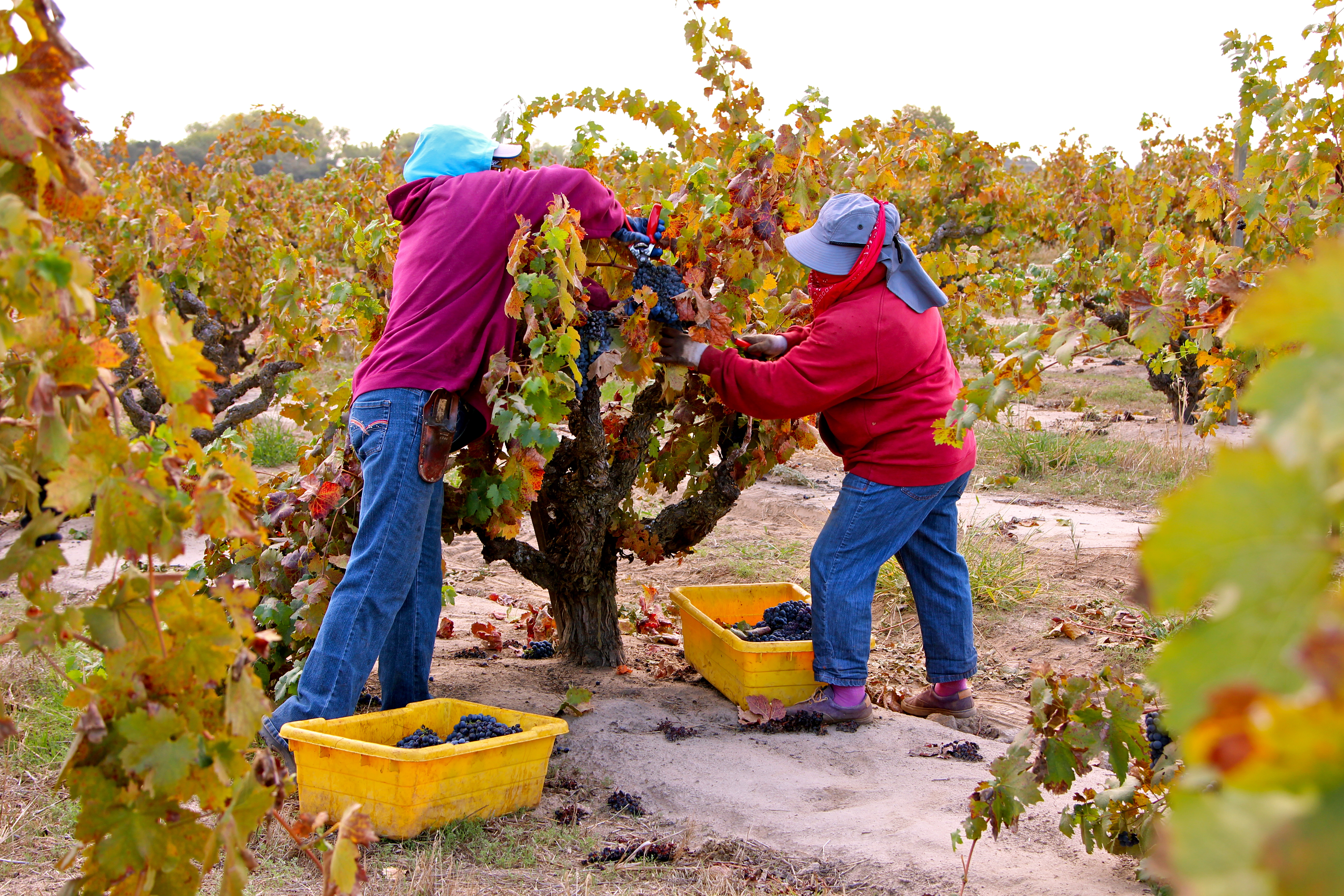
Open canopied, vertically positioned spurs on head trained Cemetery Vineyard Zinfandel
You’ll also notice that these vines are trained with spurs growing upwards (like a ladder, or “layered cake,” as one winemaker has described this style of head training). The advantage of this in years like 2017 is there is space between the spur positions, so fruit doesn’t have to grow bunched up against each other (possibly leading to increased mildew or rot).
Across the board, we’re looking at a pretty nice crop. For Lodi in general, the quality and yield will depend upon the amount of attention to detail put into each vineyard. If you worked to successfully suppress mildew, dealt aggressively with rot and managed canopies to resist heat and sunburn, you’re going to be very happy with the results.
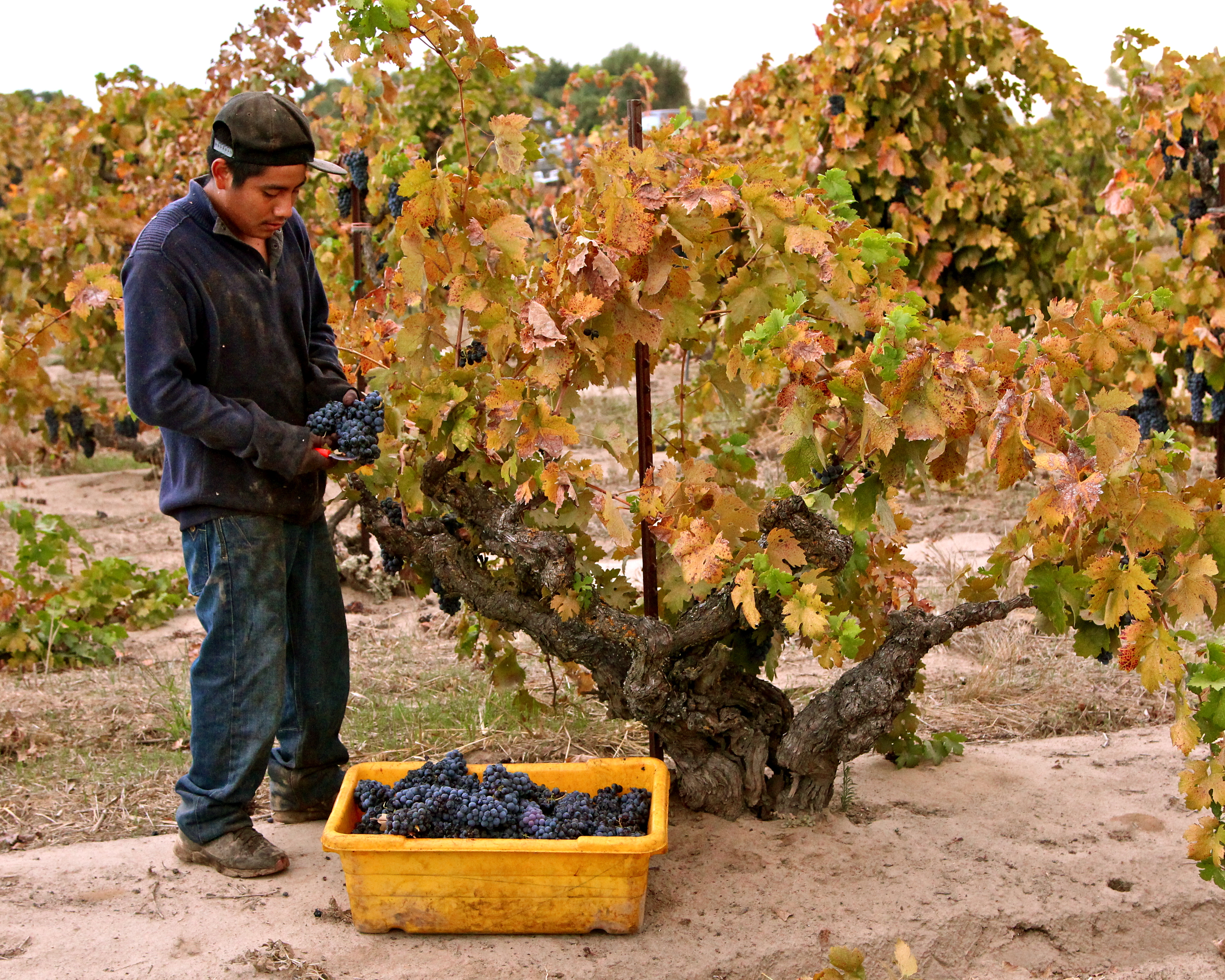
A few more shots of the 2017 Cemetery Vineyard Zinfandel harvest:
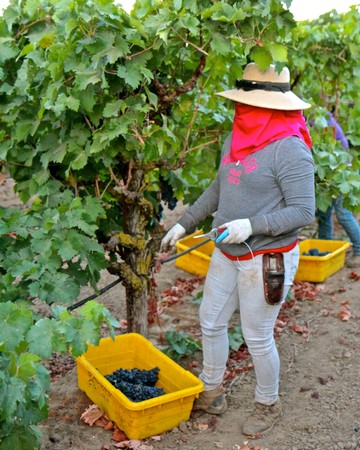
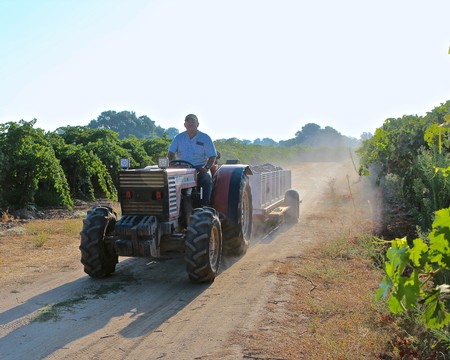
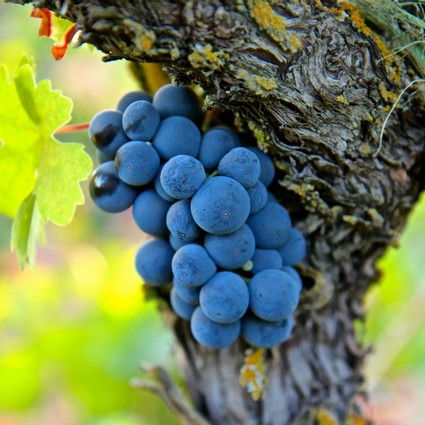
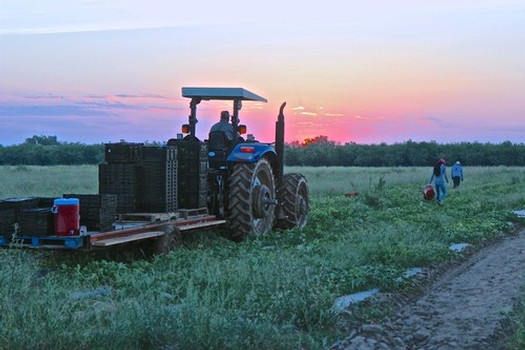
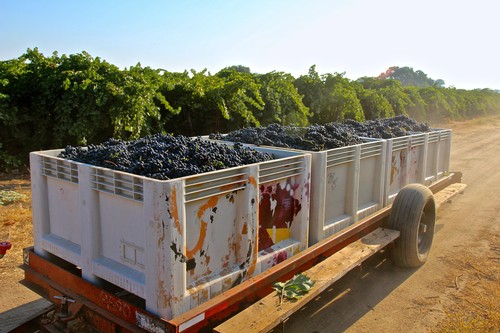
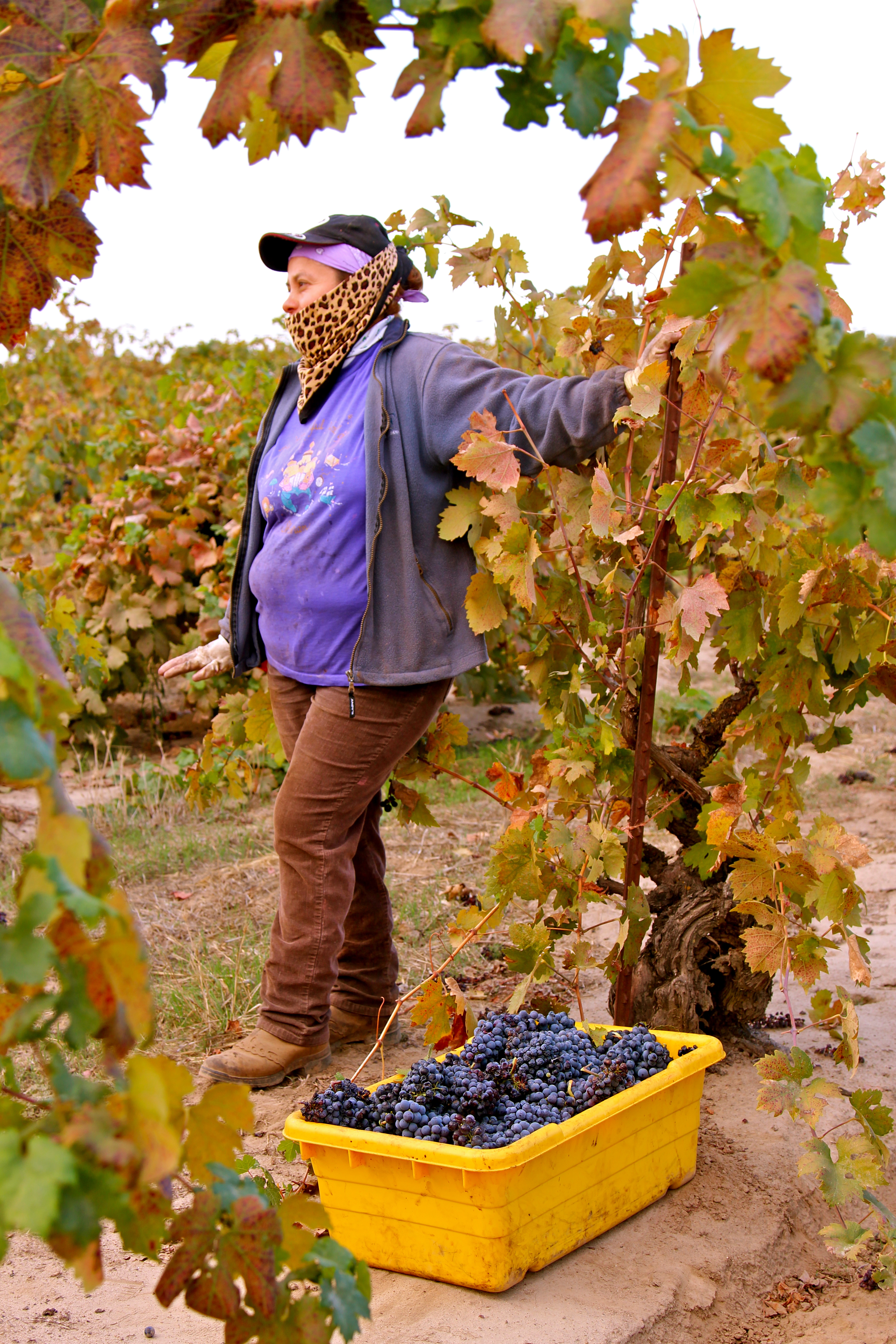
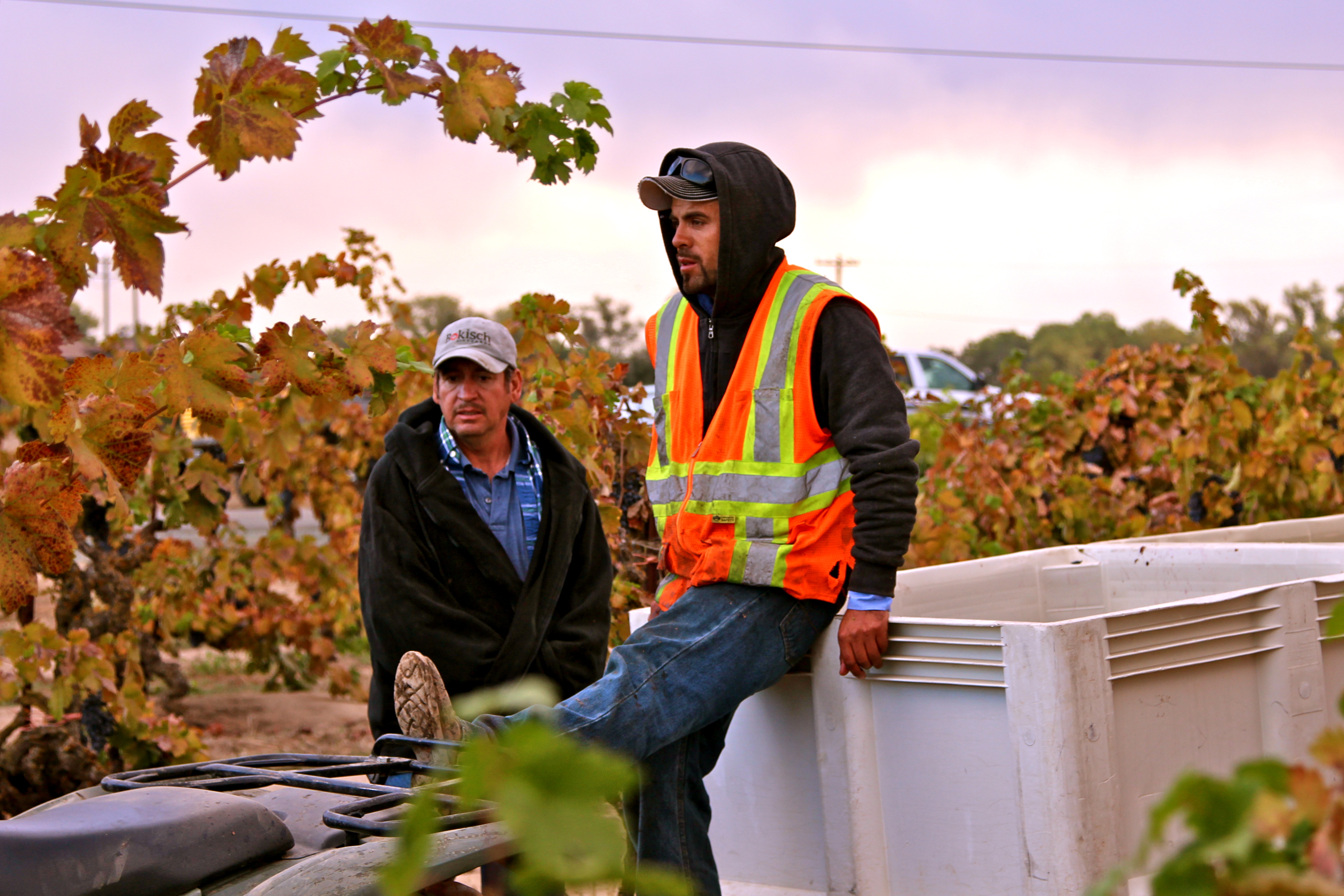
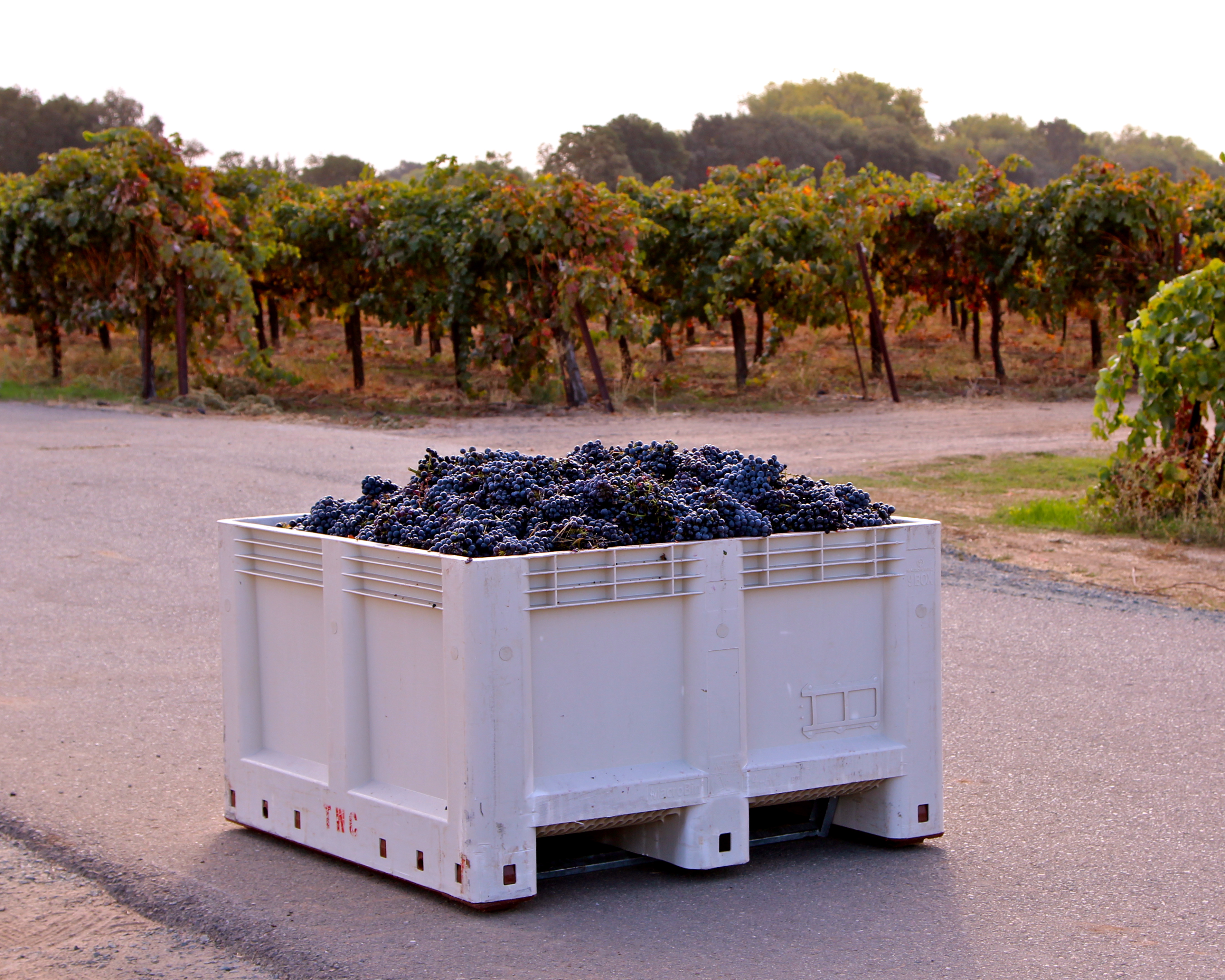
Cemetery Vineyard Zinfandel harvestThe 2017 harvest action in Cemetery VineyardPicking of Zinfandel growing on higher spurs of Cemetery Vineyard vineCemetery Vineyard Zinfandel picker pausing for a shotCemetery Vineyard Zinfandel in breaking morning lightPicking of Zinfandel growing off lower spurs of Cemetery Vineyard vineCemetery Vineyard owner/grower Aaron Shinn with 2017 harvestLady picker in Cemetery VineyardTractor transporting a ton and a half of Cemetery Vineyard Zinfandel headed for Macchia wineryClose-up of Cemetery Vineyard ZinfandelEarly morning melon harvest in field alongside Cemetery VineyardCemetery Vineyard Zinfandel loaded into Macchia Wines macro-bins
It may be all about the vino – the deliciously round, lush, pure and balanced wines of the Lodi wine region – during the Saturday wine festival at 2017 Lodi ZinFest (May 20, 2017), but you can bet that you will be able to experience the liquid joy of Delta grown grapes in a variety of other stimulating ways.
Starting with the culinary and educational:
“Up In Smoke” ZinFest Barbecue Experience
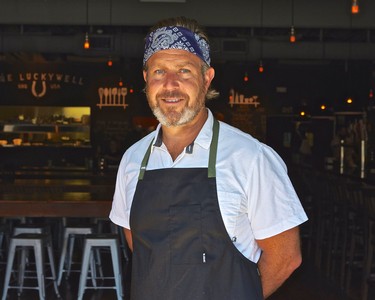
First, ZinFester will be able to pick up a few brilliant pointers from Chad Rosenthal of Food Network, and Executive Chef and owner of a handful of barbecue comfort food and Vietnamese restaurants in the Philadelphia area (including the acclaimed The Lucky Well and Bánh Street). Believe you me, Rosenthal eats, sleeps, dreams and breathes the intoxicating smoke of barbecued foods, which are the perfect match for Lodi’s exuberantly grape-centric wines.
Chef Chad Rosenthal
During three 45-minute demonstrations, Rosenthal will demonstrate his specialty. When we asked the Chef what he plans to do, he responded: “I will pick three of my favorite barbecue regions – Texas, Memphis and Alabama— and showcase a protein from each. Then I’ll use them in a creative way, while still keeping it ‘gritty’ and teaching true regional barbecue techniques. Texas will a beef brisket, Memphis will be dry-rub pork ribs and Alabama will be smoked chicken with a white BBQ sauce.”
When asked what distinguishes his style of barbecue from so many others in this country full of fantastic barbecue, Chef Rosenthal told us, “I cook what I love most, which is combining true southern BBQ with Asian flavors. You’ll also love what we do at Lucky Well, in Ambler, PA, where we focus on real-deal Memphis style dry rub BBQ – that may be my personal favorite!”
The “menu” Chef Rosenthal plans to demonstrate:
• Texas Smoked Beef Brisket • Memphis 15-spice Dry-Rub Pork Ribs with Mustard Slaw • Alabama Smoked Chicken Tacos with Lexington Red Slaw and White BBQ sauce
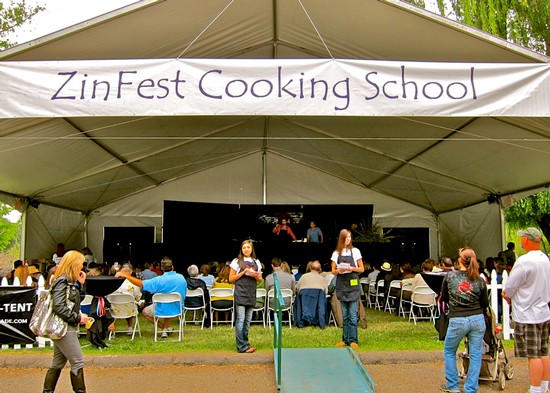
ZinFest Cooking School
With a yearly roster of regional celebrity chefs and local, award winning culinary experts, ZinFest always takes great pride in creating fun and informative cooking classes under a giant “ZinFest Cooking School” tent. Details will soon be announced, but we plan to feature one Lodi wine producer at each “class” — partnering a winemaker and chef because, well, aren’t the best wines meant for food, and vice-versa? Cooking demonstrations will occur once an hour during the duration of the Saturday ZinFest.
San Francisco Wine School educator Fred Swan
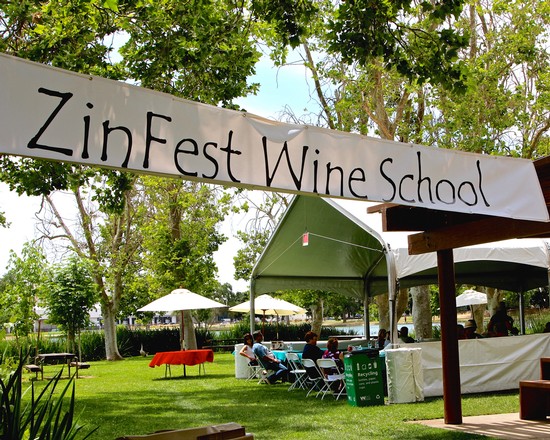
ZinFest Wine School
Under a separate tent, inquiring wine lovers will be able to experience the amazing diversity, stunning heritage, and culinary versatility of Lodi grown wine under the guidance of two celebrated guest educators from the Bay Area, plus a wham-bam wine and cheese experience conducted by two of the region’s own resident wine and culinary professionals.
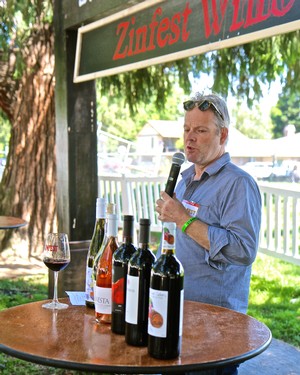
Cindy della Monica of Lodi’s beloved Cheese Central
3:00–3:45 PM – LODI WINE & ARTISANAL CHEESE MATCHING
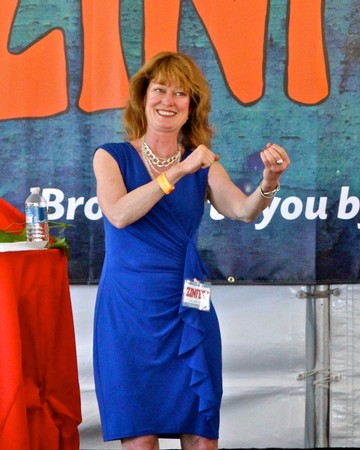
Randy Caparoso – Editor at Large for The SOMM Journal and resident author for lodiwine.com – will team up with Cindy Della Monica, the owner and acclaimed cheesemonger of Downtown Lodi’s own Cheese Central, in this deliciously fascinating tasting of a variety of Lodi wines selected to perfectly match some of the finest cheeses in the world. The five cheeses that Caparoso and della Monica will match to good ‘ol Lodi wines: Milton Creamery’s Prairie Breeze™ (Iowa), Cypress Grove™’s Humboldt Fog® (California), Spain’s Queso García Baquero’s Cinco Lanzas, Lazio in Italy’s Caciotta al Tartufo, and Roseville, CA’s Shaft’s Bleu.
Oak Farm Vineyards, producer of multiple award winning Lodi grown wines in 2016 (photo courtesy ofJohn Curley Photography)
While Lodi grown wines are more popular than ever, the region’s growers and vintners have certainly not stopped to rest on their laurels. They are well aware that consumers have a choice of many wonderful wines from elsewhere in California and all around the world.
Their goal, of course, is not just achieving a competitive or industry leading quality level, but also to continue to define what makes Lodi grapes and wines unique… special. What is it about the region that cannot be duplicated in any other part of the world? What makes Lodi wines different, and more desirable, on a sensory level? The more we tell this story, the more we increase the value of Lodi grown grapes, and the growing prestige and demand for Lodi grown wines produced by wineries within and outside the region.
You need not look far, though, to find proof of Lodi’s increasingly competitive, pro-active edge: the many accolades and awards garnered by growers and producers just over the past calendar year.
Let us count the ways in which 2016 has proven to be another auspicious year for the Lodi wine region…
Mohr-Fry Ranches’ Jerry (front) and Bruce Fry (photo courtesy of John Curley Photography)
Mohr-Fry Ranches is California’s Grower of the Year
According to CAWG: “The Grower of the Year award is the highest honor given by CAWG. It is bestowed to an individual, family or company that represents an outstanding example of excellence in viticulture and management. The recipient is an efficient and successful producer of quality wine grapes, recognized for innovation and leadership within the industry.
“Jerry Fry is the president and CEO, and Bruce Fry is the vice president of operations of the family-run Mohr-Fry Ranches in Lodi. The father and son are two of the most respected growers and leaders in the Lodi wine grape community and are known for their quality wine grapes. They advocate on behalf of wine grape growers and dedicate an enormous amount of time serving the industry and their community. Mohr-Fry Ranches was one of the original six Lodi growers to certify their vineyard under the Lodi Rules™ for Sustainable Winegrowing.”
Michael David Winery CEO Michael Phillips and President David Phillips (photo courtesy of John Curley Photographry)
Michael David Winery named Winery of the Year
Lodi’s first big achievement in 2016 came in a surprise announcement this past January 27 at the Unified Wine & Grape Symposium in Sacramento, when Lodi’s Michael David Winery was named 2016 Winery of the Year. According a Lodi News-Sentinel report: “The (Winery of the Year) award was announced during the three-day event’s State of the Industry address, completely catching the faction from Michael David off-guard, according to Melissa Phillips-Stroud, VP of Sales and Marketing.” Ms. Phillips-Stroud is part of the 6th generation of the Phillips family, who own and operate Michael David Winery and have been farming in the Lodi area since the 1860s.
How big a deal is this? Put it this way: The annual 3-day wine industry exhibition and symposium in Sacramento draws more than 14,000 industry representatives attending from all over North America. There are over 8,990 other wineries in North America, and over 3,990 wineries in California alone. The Lodi News-Sentinel added: “The award winner was chosen by Gomberg, Fredrikson & Associates, a wine industry consulting firm. The firm used metrics that measured exceptional brand building and outstanding growth to determine the victor.”
The Phillips family’s success story is a dramatic one: Within the space of 20 years, they have grown from being one of many longtime Lodi growers supplying grapes to numerous wineries into a winery that not only uses 100% of their own grapes (from about 750 acres of planted vines), but also buys from over 40 other Lodi growers to produce iconic, consistent award winning brands such as 7 Deadly Zins and Earthquake, now sold in every state of the union and in numerous countries in Europe, Asia, North and South America.
On top of that, Michael David Winery – and its agricultural arm, Phillips Farms – has been an important advocate of the region’s Lodi Rules™ program of sustainability, contributing significantly to the ever-increasing quality and prestige of Lodi grapes. Like Mohr-Fry Ranches, the Phillips family was one of the first to embrace these third party certified (in partnership with Protected Harvest) sustainable practices. Going even further, Michael David Winery was one of the first major producers to incentivize sustainability by establishing a program of awarding substantial bonuses to their own grower/suppliers upon certification of Lodi Rules.
The McManis family, who farm Lodi Rules certified vineyards in four of Lodi’s AVAs
McManis Family Vineyards honored with 2016 California Green Medal
McManis Family Vineyards earned this distinction by farming according to the Lodi Rules™ program of sustainability. According to the CSWA: “With a focus on constant improvement of practices and adoption of the latest farming and winemaking technologies, McManis Family Vineyards’ water use efficiency measures in the vineyard include the use of soil moisture sensors, flow meters and distribution uniformity tests; while their winery recycles water and averages one gallon of water to produce one gallon of wine, well below the industry average.
“Sustainable practices have also decreased energy use, diesel use and tractor work and limited the impact on soil. Making sustainability a core part of their business strategy has not only benefited the environment, surrounding community and employee retention, it has streamlined processes in the vineyard, winery and office, resulting in economic gains that help ensure a thriving business for future generations.”
Photo-spread of Lodi winemaker Adam Mettler in Wine Enthusiast Magazine (photo byPaul Aresu, courtesy of Wine Enthusiast)
Lodi’s Adam Mettler among 2016’s “Top 40 Under 40 Tastemakers”
Now, for a touch of glamour: Adam Mettler – who serves as Director of Winemaking for Michael David Winery as well as Winemaker for his own family’s Mettler Family Vineyards – was featured in a Wine Enthusiast Magazine cover story as one of the “Top 40 Under 40 Tastemakers 2016.” According to this internationally distributed publication, “This year’s tastemakers are the forward-thinking men and women who are changing how America imbibes” – a list of 40 individuals “from winemakers to distillers, importers to distributors and sommeliers to cicerones.”
In their multiple photo-spread and profile on “Adam Mettler, 37,” Wine Enthusiast wrote: “While he’s also responsible for wine production at Mettler Family Vineyards, it’s at Michael David Winery where Mettler’s stamina has been put to the test. Working closely with the Phillips family, which has farmed in Lodi since the 1850s, Mettler is laser-focused on maintaining quality while ‘continuing mind-blowing growth to over 700,000 cases of sales, and garnering top scores,’ he says. Michael David Winery’s 2012 Petite Petit was ranked Number 2 on Wine Enthusiast’s The Enthusiast 100 of 2015 list.”
Delicato Family’s Lodi Rules certified Clay Station Vineyard in Lodi’s Borden Ranch AVA, source of Hot Impact Brand Award winning wines (photo courtesy of Delicato Family Vineyards)
Wineries sourcing Lodi fruit among 2016 Hot Impact Brand Award List
According to Market Watch magazine: “The event, held on April 19th, honored 23 spirits, 17 domestic wines and 20 imported wines. All the brands must meet the following qualifications to receive the award: three consecutive years of double-digit growth or a 2015 volume increase of at least 15 percent, with special consideration given to top 10 brands that advanced at least 5 percent in 2015 and at least 15 percent since 2012. Spirits brands must deplete at least 200,000 nine-liter cases in 2015, while wines must have a minimum of 250,000 cases.”
Among the producers and their award winning brands utilizing Lodi grown fruit recognized by WSWA:
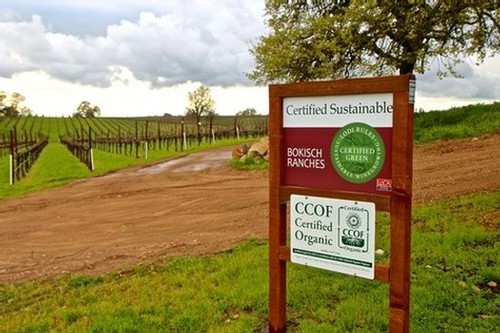
Bokisch Ranches’ Lodi Rules Certified Green Terra Alta Vineyard, source of several award winning wines in 2016
129 Lodi Rules Certified Green wines garner 2016 wine competition awards
How much a part has the Lodi Rules™ program played in the growing prestige of the Lodi wine region? Lodi Winegrape Commission’s Lodi Rules Committee Chair Aaron Shinn recently reported: “When Kevin Phillips of Michael David Winery told an audience of 300 wine bloggers (at the 2016 Wine Bloggers Conference held in Lodi this past August) that he pays growers a premium price for certified sustainable grapes, there was applause in the room.”
For a complete list of these 129 multi-award winning wines in their respective competitions, please visit this Lodi Growers page. And a big bravo to all these wineries and growers for doing Lodi proud!
According to Lodi Winegrape Commission’s Executive Director Wendy Brannen: “We are very proud of our growers and wineries and these exceptional honors and accolades. These individuals and companies are an inspiration to all of us to work hard and continue to raise the bar for Lodi. We are looking forward to seeing what accomplishments 2017 will bring.”
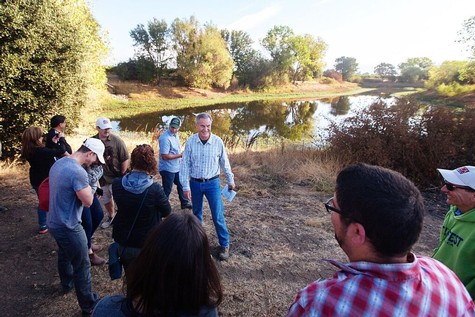
LangeTwins Family’s Bradford Lange demonstrating the riparian restoration alongside his family’s award winning Lodi Rules certified vineyards to visiting sommeliers (photo courtesy of John Curley Photography)
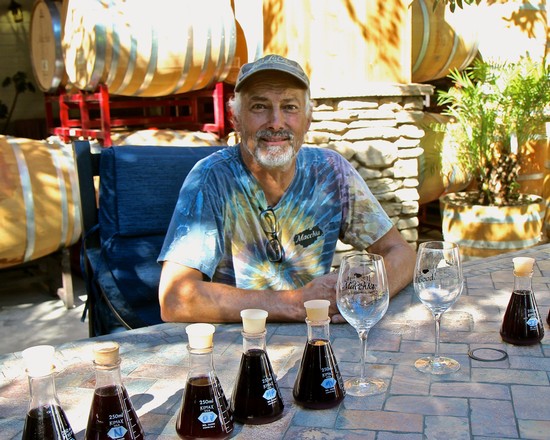
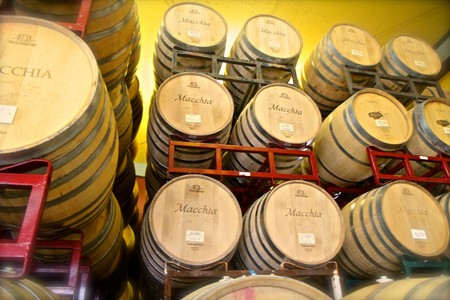
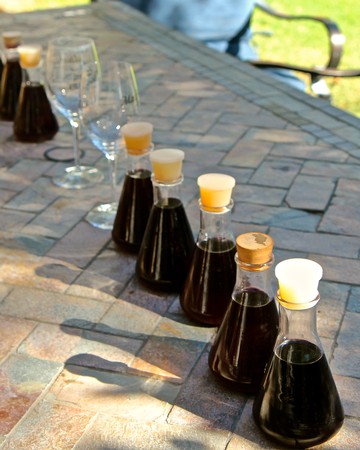
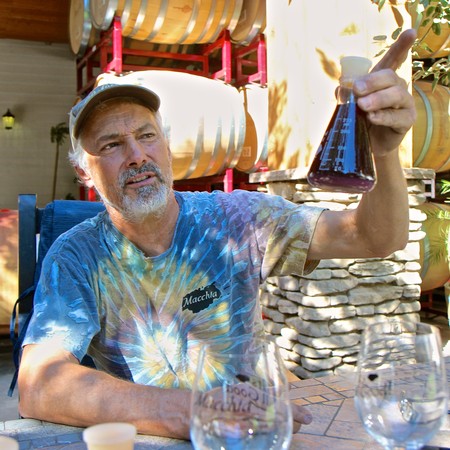
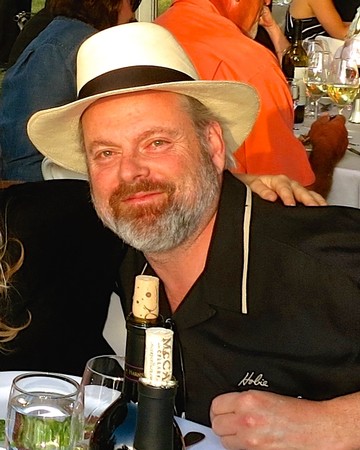
Macchia winemaker/owner Tim Holdener with 2016 Zinfandel barrel samples
It’s October 3, 2016, and Lodi winegrowers are talking about wrapping up the vintage within the next two weeks, as soon as it is humanly possible to bring in the rest of the Cabernet Sauvignon, Petite Sirah, Carignan, Barbera and other later-ripening black skinned grapes lingering in the fields.
Chalk it up to the recent spate of mild winters pushing bud break and flowering earlier in the season, or to weather events tantamount to global warming, whatever your political beliefs may be. Earlier vintages have been happening up and down the entire West Coast, not just in Lodi.
A more pertinent question might be, how does this bode for quality? If you ask Tim Holdener, the winemaker/owner of Lodi’s Macchia Wines, things are looking “fantastic,” particularly for Zinfandel, Lodi’s pièce de résistance.
While sitting down to share barrel samples of his 2016 Zinfandels two Saturdays ago (September 24, 2016), Mr. Holdener extolled: “It’s not just quality, but the quantity of 2016s that are excellent – above average. We didn’t expect to bring in as much tonnage because we saw that there was a little shatter (i.e. coulure, or unfertilized berries in grape clusters) out in the fields, but everything seemed to fill out, and better yet, we seem to have all the flavors we normally have, but at lower sugars.”
Asked to explain the relationship between sugars and flavors in Zinfandel grapes, Holdener explained: “If this was a normal year, we would be bringing in grapes that are sugar-ripe, but not phenologically ripe – without the brown seeds, the turned stems, and ripe flavors.”
Standard practice in commercial Zinfandel production includes adding water to fermenting musts to lower potential alcohol, and adjusting acidity to make up for what might be lacking naturally in high-sugar Zinfandel grapes. “This year we are getting the opposite,” says Holdener – “riper grapes with less sugar, which is ideal for the winemaker because it makes it easier to make a balanced wine without having to resort to the usual bag of tricks.”
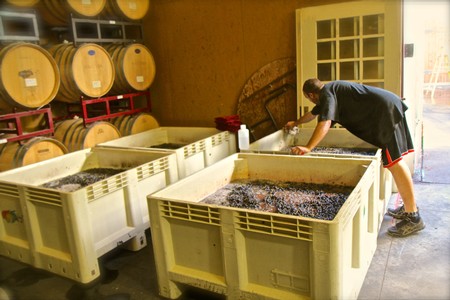
Fermenting macro bins in Macchia winery
When asked what was different about the weather in 2016, Holdener speculated: “I was surprised to learn that this year we had more 100-degree days than normal, but the vines had a good head-start; so there was plenty of hang-time, with lots of canopy to help grapes develop their flavors. Plus, the weather cooled off earlier in the month (September), and there were no rain events causing problems like rot or mold. Whatever the reasons, we have been picking grapes in almost perfect, clean shape. Brix (i.e. sugar readings) in the fields have been reading 22° to 23°, but taste more like grapes we get at 25° or 26°, with better acidity. If there ever was a year when Zinfandel is able to ‘make themselves,’ without much winemaker interference, 2016 is probably it.”
For the past 16 vintages, Macchia Wines has been producing a good half-dozen different single-vineyard Zinfandels under their black label marked by a vivid splash of tie-dye colors, marking their “spot” as a leading progenitor of Lodi wine country’s modern day quality push.
It is thanks to Zinfandel specialists like Holdener that, today, there is far more interest in Lodi’s special vineyards – once buried in the industrial sized tanks of giant, bulk wine producers – than ever before.
Zinfandel barrel samples at Macchia winery
Sure, there is also a Macchia “house” style: dependably opaque, deeply colored Zinfandels bursting with sweet, palpitating, primary fruit aromas; big and full in the mouth, and at the same time, velvety in texture and viscosity. Part and parcel of the Macchia signature has always been Holdener’s personal choice of hybrid oak barrels; assembled from a combination of French and American staves, combining the pungent sweetness of American oak with the more subtle, toasty veneer of the French. This is precisely why Macchia wine lovers are legion.
Nonetheless, terroir related characteristics attributable to individual vineyards can also be gleaned through Macchia fashioned Zinfandels. Since 2012, Mr. Holdener’s involvement as one of the original participants in the Lodi Native project – where heritage vineyards are handled as naturally and minimally as possibly, beginning with native yeast fermentation and ending with use of strictly older, neutral tasting barrels before unfiltered bottling – has only enhanced the Macchia approach, which has always put a spotlight on sensory qualities unique to vineyards as much as a winemaker’s touch.
Some of Holdener’s comments (in italics) on barrel samples of his 2016 Zinfandels, sampled in order of picking dates:
2016 Rous Vineyard – Every year Rous is the first or, at the latest, second vineyard picked. A lot of this is because this vineyard (planted in 1909 on St. George rootstock, off Victor Rd. on the east side of Lodi’s Mokelumne River AVA) is managed by a winemaker, Craig Rous, who does meticulous canopy management to offset his vineyard’s healthy, vigorous growth, and to make sure the clusters get lots of sunlight. This year we picked Rous on August 15. The numbers were ideal – lower sugars, higher acids than just about all my other vineyards – and even now at this early stage, you can taste the floral, violet-like fruit qualities and the luxurious mid-palate flavors that make this unmistakably “Rous.” This will be one of my more “perfect” wines in 2016, and I didn’t have to do a thing to achieve it.
Rous Vineyard owner/grower Craig Rous with his 117-year old Zinfandel vines
2016 Cemetery Vineyard – We picked this 100-year-old vineyard just two, three days after the Roud in mid-August. Because of its ideal sugar/acid balance, we fermented this vineyard (located near Lodi Cemetery on the east side of Lodi’s Mokelumne River AVA) two ways – with natural yeast for the Lodi Native program in half-ton macro bins, and inoculated in 1200-gallon open-top steel tanks. With the inoculated portion, we added enzymes and oak dust, which explains the wine’s deep, dark color and slight residual sugar – quite often, our larger tanks of inoculated wines take off quickly and then putter out, and so fermentation of last bits of sugar ends up taking longer than the native yeast wines. The Lodi Native portion is completely finished, probably because it was done in a 100-gallon bin – the color is lighter and more reddish, but the perfume, like cranberry and cherry, is much more pronounced at this time than the inoculated portion. The native yeast Cemetery also tastes like it has sharper, zestier acidity because of the dryness and the wine’s moderate weight of alcohol.
2016 Oblivious – I call this vineyard, located between Rous and the Cemetery Vineyard (east side of Lodi’s Mokelumne River AVA), Oblivious because the owner purchased the land under these ancient vines as an investment, not because he cares one single bit about the grapes. So I manage the farming myself, and he’s happy with the check I send him once a year. The vineyard is dry farmed, and has lots of dead spots – out of 10 acres, we may get 6 tons. The yield may be miniscule, but the quality is what any winemaker would consider a treasure. We picked the 2016 on August 21, you can already taste lots of pretty red fruit with blueberry notes, and lots of good, natural acid, because of the tiny berry size.
Tim Holdener in Dave Devine’s De Luca Vineyard (Clements Hills AVA)
2016 De Luca Vineyard – These vines, picked at the end of August, were planted in the 1980s by Dave Devine on slopes towards the end of Peltier Rd. (in the lower elevations of Lodi’s Clements Hills AVA, alongside the Mokelumne River). These are all head-trained vines, probably the most perfectly manicured in all of Lodi. The clonal selection, however, is one of U.C. Davis’ higher yielding varieties, so this 2016 is typical of what we usually get – very generous, ripe fruit, blackberries and red berries, and a big, round taste, a little light in the finish. Subsequently, this has been a good component in our Mischievous (multi-vineyard) blend – not quite the complete style of Zinfandel that we usually like to see in our single-vineyard program.
2016 Wegat Vineyard (Maley Bros.) – This year we picked our Maley (a classic far-west side Mokelumne River AVA growth, located on Ray Rd. between Turner and Woodbridge) at the beginning of September; almost 10 days after Todd Maley (owner/grower) picked for himself. I like to go for a rich, full “Voluptuous” feel you get from slightly riper grapes, but you notice that the 2016 still has the natural acidity that balances out the lush, soft, middle taste. Whether picked earlier or later, the wine always ends up with that fragrant, floral perfume and silky texture, which makes this vineyard one of the most distinctive in Lodi. Of course, this vineyard has always been part of the Lodi Native program from the beginning (since 2012). I inoculated my 2016, but it still meets all the expectations associated with this vineyard. It’s nice to know that there are certain spots in Lodi where, no matter what, you can always make a wine with its own sense of place.
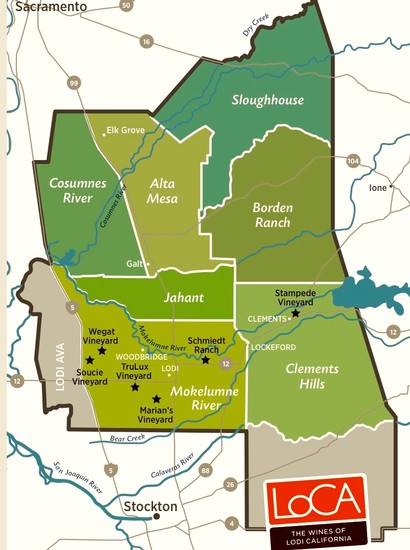
Map showing Lodi appellations and location of Lodi Native growths
2016 Mohr-Fry Ranches – Each year we bottle this vineyard, planted in 1942 (south/central side of Lodi’s Mokelumne River AVA), as “Generous.” We picked this during the first week of September; but again, typical of 2016, grapes came in at lower sugars and higher acids than normal, but you can still taste the deep, dark, almost chocolaty, raspberry fruit and full, broad, earthy feel that these vines always deliver. The Fry family knows what they’re doing – it’s no coincidence that they were picked as the 2016 Grower of the Year (by the California Association of Winegrape Growers). As winemakers, it’s good to be able to depend upon the impeccable quality we get from them each year.
2016 Clements Hills Vineyard #1 – This is one of our newer vineyard selections, located further east, deeper in the Clements Hills AVA; dry farmed, goblet-trained old vines, planted closer to the banks of the Mokelumne River, where there is less clay and a little more sand. We’re starting to learn not to expect big wines from Clements Hills plantings; but more balanced wines, with good structure despite soft, round qualities. The fruit in this 2016 is fragrant, ripe, lots of red berries.
Another one of our mid-September picks. Sugars soaked up at 26° Brix; a little riper than we expected, and so we inoculated and made adjustments with a little water and acid. The 2016 tastes exactly like where it comes from (east side of Lodi’s Mokelumne River AVA, right alongsideMcCay’s Lot 13 andTurley’s Kirschenmann Vineyard, all planted between 1915 and 1918), with its pretty cherry/red berry fragrance and zesty, almost delicate, fine feel.
2016 Watts Vineyard – McCay calls wines from these 75-year-old vines TruLux. Fact is, I’ve been working with this vineyard (located on west side of Lodi’s Mokelumne River AVA, just south of Kettleman Lane) longer than Mr. McCay, although he deserves a lot of credit for what he does with it. We picked in mid-September and inoculated it. When produced in my style, I like the way it ends up with that sumptuous, round, svelte feel – always, a real presence in the mouth – with a slight earthiness and shy yet floral fruit nose. Top to bottom, this vineyard doesn’t usually lack for anything, and in 2016 it is no different.
2016 Clements Hills Vineyard #2 – This is another century-old, head trained planting located along Hwy. 88, off Disch Rd. (between the little towns of Lockeford and Clements, in the Clements Hills AVA). It used to go to Cosentino, back in the day, and it makes a beautiful wine – fragrant, perfumey, almost violet-like, with delicate cherry-berry perfumes, and zesty natural acidity.
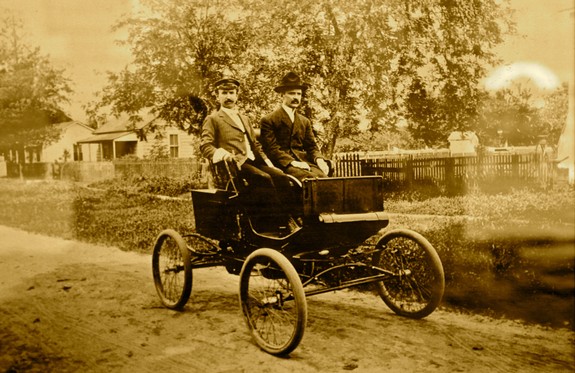
In the early 1900s Lodi was going places (even if the speed limit for horseless carriages driven by these two Lodi natives was just 8 MPH!)
110 years ago – on November 27, 1906, to be precise – an election was held in Lodi (population 2,000 at that time) to incorporate as a City. Finally, as local historian Toni Christman puts it in Our Time to Shine (2012), “citizens were well on their way to respectability.”
As with most rural American towns, “respectability” for Lodi did not happen overnight. Just two years earlier, in 1904, a motion to incorporate had been decisively voted down, primarily due to the opposition of saloon owners and other businesses. The tide turned, according to Lucy Reller and Ralph Lea in the Lodi Historian (Lodi Historical Society) newsletter, because “the opposition of the saloon keepers had a reverse effect and increased the desire of church people and the average citizen to incorporate.”
Up until then, writes Christman, “the town of Lodi grew like an unruly child, gathering strangers from all walks of life migrating from (nearby) Lockeford, Stockton, Sacramento in addition to other existing nearby settlements. Lodi was sometimes referred to as a ‘rum-guzzling’ town with young boys on the road to hell.”
So let’s paint a picture of this once-forsaken town, starting in 1846 when the first settlers of European descent arrived in the area we know as Lodi. The earliest arrivals settled on the name “Mokelumne,” for the Mokelumne River winding through the area on the way to the Delta from Sierra Nevada. Mokul is a corruption of the native Plains Miwok tribe’s word for river; umne referring to “people of.” By 1846 the Miwok population had all but disappeared; particularly following a calamitous plague ravaging San Joaquin Valley in 1832.
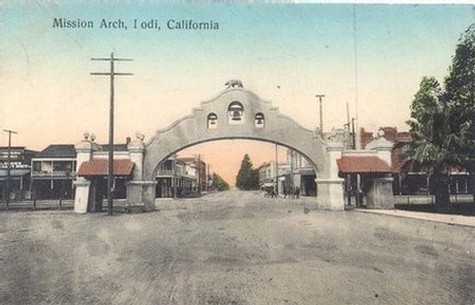
Early 1900s postcard depicting the Lodi Arch and an unpaved Pine St.
In 1869 a group of the area’s original landowning settlers persuaded Central Pacific Railroad to make Mokelumne one of the stops between Stockton and Sacramento. The town’s first business buildings, at the corner of present-day Sacramento and Pine Streets – where the landmark Lodi Arch would later be erected in 1907 – were built alongside the railway station; a site chosen because it sits on slightly higher ground, less prone to the Mokelumne River’s frequent (at the time) flooding.
But aside from the obvious difficulty of pronouncing Mokelumne, locals knew another name eventually needed to be chosen because the town was often confused with nearby communities with similar names – particularly Mokelumne Hill and Mokelumne City – which continuously hampered mail delivery and delayed shipments of goods and supplies.
But why the name “Lodi?” According to Christman, one opinion “holds that it honored a famous trotting horse bred in Woodland, California, raced in Sacramento. Another theory says settlers from Lodi, Illinois promoted the choice. A third possibility recalls the Italian site of Napoleon’s first victory against the Austrians. Lodi in Italian means beautiful. Whatever reason you choose, in 1874 it became Lodi.”
However, in the 1870s and 1880s, the newly christened Lodi was still a classic Western American town. Writes Christman: “In 1881, Lodi was considered wild, uncontrolled and causing great distress to peaceful residents. Partiers patronized too many saloons spending too much money gambling on cards, or horse, dog and turkey races. Then for lack of anything else, they threw their hard-earned dollars away on turtle races!
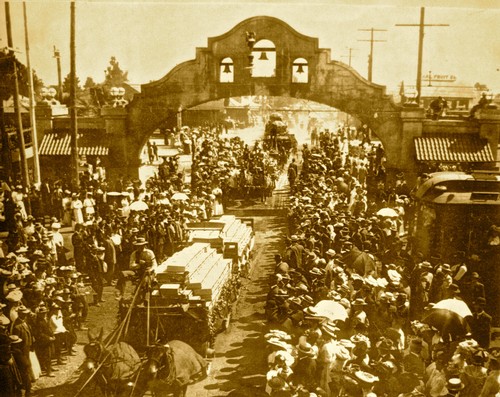
Part of mile-long procession of grape carts coming through Lodi Arch during 1907 Tokay Festival
“Inhabitants carried sports to extremes as a diversion from everyday life. On Sundays, and Holidays, especially July 4th, the business world would close its doors and shopping came to a standstill. Sacramento Street would come alive with bystanders, bettors, and spectators lined up taking pleasure in observing the horses and dog races. Well-attended baseball games against nearby towns provided additional Sunday wagering opportunities in both money and prizes. These wagering events were sometimes followed by a dance at the Sacramento Street Park.
“Dog racing was not always performed on a track using Greyhounds. In the early 1900s, participants picked a large field then proceeded to turn their dogs loose on wild rabbits. The first dog to catch a rabbit won the race…
“Authorities attempted to curb illegal gambling practices in Lodi. The Club Saloon in 1902 had the nickel-in-the-slot machine, only to meet its fatal fate. The three slot machines (one-armed bandits) in Lodi Hotel in 1903 were given a fond goodbye with their faces turned facing the wall. In the refined Chinatown community, income needed to pay debts was instead being lost on lottery tickets.”
Then there were animals – not wild ones, just an overwhelming domestic population. Writes Reller and Lea, it wasn’t until 1895 that the County Board finally appointed a “Poundmaster” to “pick up dogs, pigs, horses and cattle, etc. from the streets of Lodi during the day, but at night most people opened their gates to allow animals to eat grass and Lodi looked like a country fair.”
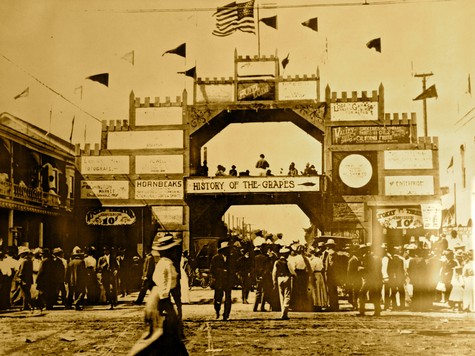
The “Lodi Fun Arch” built behind the permanent Lodi Mission Arch for the 1907 Tokay Festival
Although Lodi’s population was never to grow at the rate of more urban communities like Sacramento to the north and Stockton to the south, it quickly became renowned as an agricultural community. In 1876, according to Christman, the “the world’s largest crop, 3.4 million bushels of the grain (wheat), was raised around the outskirts of Lodi.” When wheat and barley prices failed, local farmers turned to watermelons, and by the early 1890s Lodi had a new title as the “Watermelon Capital of the Country.”
It would be grapes, of course, that would eventually emerge as the region’s most enduring crop. Christman tells us, “Swiss immigrant Mr. Magley was said to have planted the first vineyard in 1848 on Turner Road. The projected wealth from this new crop beckoned relatives and acquaintances in the Dakotas, who hastened to this land of plenty.” By 1905, Lodi was known worldwide as the “heartland of the delectable Flame Tokay grape,” and by 1907 Lodi was shipping out over $10 million (over $240 million by today’s currency) in grapes for the table or for wine production.
Most of Lodi’s new arrivals between the 1890s and 1920s were of German descent. Aside from mud-holed streets and the promising agricultural opportunities, what they found in their new home was less than acceptable from a social standpoint.
Writes Christman, “Race tracks plus about 14 saloons far outnumbered its four Churches. Abstemious Germans were appalled by a main street lined with bars sporting brass railings, spittoons, scantily dressed fast ladies of the night, loud piano music and mugs of beer for five cents. Worse, those establishments were open all evening; including, heaven forbid, Sunday! Because there were too few churches for the population, religious services were often held in saloons.”
During the first decade of the 1900s, the arrival of a more “respectable” Lodi populace led to the establishment of no less than a dozen new churches of various denominations; and “this rough ‘n ready settlement,” according to Christman, was steadily transforming into “a God-fearing town.” There were catches, however, to this newfound piety. Adds Christman, “By WWII, when Lodi’s population was approximately 8,000, nearly half were of German descent. The joke among these folks was: knock on any Lodi door and a relative will answer. In later years, the joke became: if you want to date someone, find out first if you are related!”
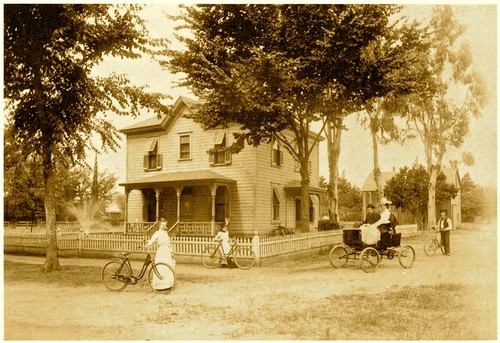
1900: The family home of Dr. Wilton Mason, who owned Lodi’s first horseless carriage,
Hence, in December 1906, when Lodi’s newly appointed Board of Trustees began to meet to establish order, new laws and revenue sources, the following were among the first ordinances passed:
• Saloon licenses are $100 for three months, plus $12 for billiard tables. • A quarterly fee of $50 for patent medicine sales using music to attract attendance (i.e. medicine shows). • Other license fees; including $10 for real estate offices, $15 for hotels, $3 for “storekeepers” or “traders.” • No “trading” on Sundays. • Saloons open only from 6 AM to 12 PM, and closed on Sundays. • Saloon windows must be high enough to prevent youngsters from peering in. • Minors possessing liquor must have a note from a parent. • No gambling within City limits. • Disposal of “filth, rubbish, offal and slops,” plus a law prohibiting “swill carts” from leaking. • No “animals at large on City streets.” • Misdemeanor charges for “vulgar and abusive language in public,” “whistling in public halls,” and “singing in saloons.” • A speed limit (for suddenly fashionable horseless carriages) of 8 miles per hour. • Unlawful to leave horses unhitched.
Even more importantly, Lodi’s incorporation as a City would almost immediately lead to the establishment or improvements of essential services such as utilities (especially for gas, electricity and water), sewage disposal, fire hydrants, and street paving.
Finally, in a burst civic pride, Lodi rank and file mobilized to announce its presence to the rest of the world by organizing the Tokay Carnival – a 3-day celebration of the region’s supreme grape and the region’s economic “arrival,” symbolized by the Mission style Lodi Arch that still stands today, at Pine Street and Sacramento Street (see our previous blogpost, In 1907 Lodi celebrated grapes like no American city never-ever has).
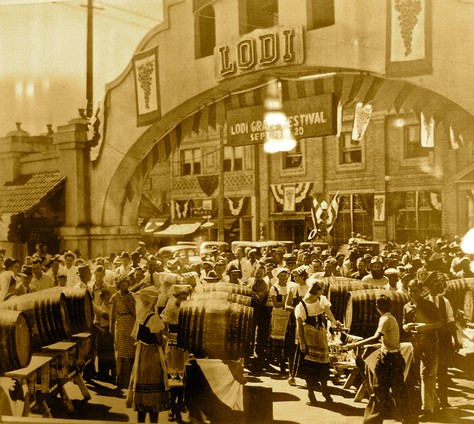
German themed Lodi Grape Festival under Lodi Arch during late 1930s
Where is the City of Lodi (population now just over 63,000) at today? We asked Lodi’s current Mayor, Mark Chandler, who told us:
The City is now governed by an elected City Council made up of 5 members. We elect a Mayor and Vice Mayor among ourselves, and direct staff (principally the City Manager) to carry out our decisions. The City Manager has an executive team comprised of the City Attorney, City Clerk, Planning Director, Public Works Director, Electric Utility Director, Police and Fire Chiefs, Parks and Rec Director, etc. The City employs about 380 employees; plus there are volunteer advisory boards and commissions who provide recommendations to the Council regarding their issues.
One of our most pressing issues today is economic development – increasing jobs and employment by bringing new companies to Lodi and growing the ones already here. We want to expand hospitality infrastructure to leverage the success of the wine and tourism industries. Public safety (especially reducing crime, gang and/or drug related) is a major concern, and as well as Public Parks (rehabilitating Lodi Lake and other parks where deferred maintenance is diminishing the visitor experience). And of course, finance – such as dealing with the looming public employee retirement service obligations – is a major priority.
EndFragmentIf you ask most locals, Lodi has come a long ways, but the future looks just as bright and wide-open as it did 110 years ago. As the Lodi Sentinel proclaimed, reporting on plans for the September 19-21, 1907 Tokay Carnival:
Lodi will show to the world what she produces by displaying the real product before their eyes and (we’ll) decorate the town with vines and grapes, making this city resemble a living vineyard as near as possible… Let us show them… Santa Barbara and Pasadena became famous on account of their flowers; oranges made Los Angeles, and fruit made San Jose famous – let grapes make Lodi famous.
Which, to some extent, is exactly what has come to past… what with recent recognitions such as Wine Enthusiast’s “Wine Region of the Year,” Lodi has been “showing” itself to the world with aplomb-plus!
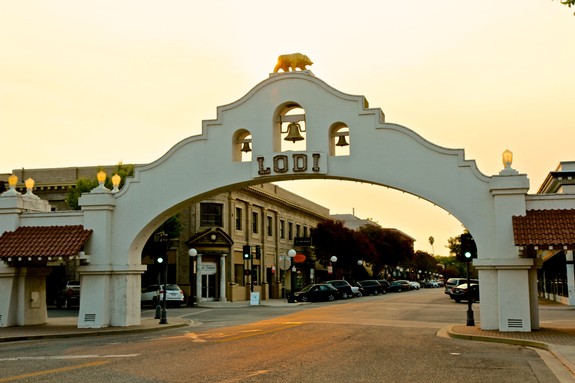
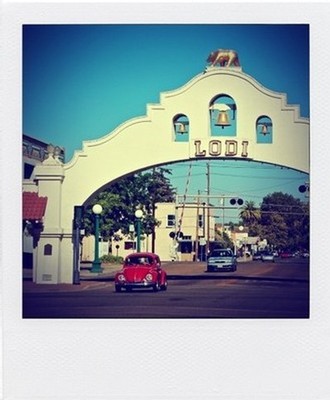
Lodi’s triumphant Mission Arch, still standing after 110 years
What is good wine without food? As the late, great wine sage Andre Simon put it, “Food without wine is a corpse; wine without food is a ghost; united and well matched they are as body and soul, living partners.” Amen, bro’!
There is a reason why our yearly Lodi ZinFest Cooking School is one of our most popular events: It is the naturally lush yet balanced, fruit forward qualities of Lodi grown wines that make them such an easy match for an endless variety of dishes.
This year’s ZinFest’s guest chefs are more stellar than ever. Each of our chefs will not only demonstrate dishes, but will also be talking about why their dishes are such great matches for the wines you will be able to taste with them.
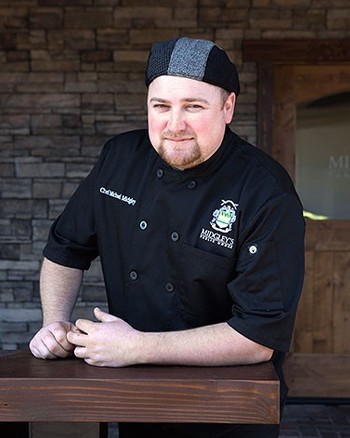
Celebrity Chef Michael Midgley
The line-up:
1:00 – 1:40 PM – Michael Midgley, Midgley’s Public House
Dish: Cheese Stuffed Meatballs
Wine: 2012 d’Art Wines Lodi Barbera
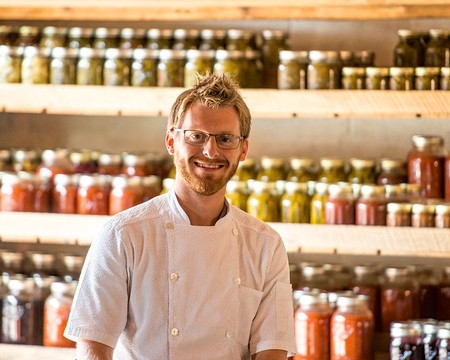
Chef Michael Midgley is Stockton’s own celebrity chef, known as much for his big, entertaining personality as much as for his cooking chops, which he has been honing since the age of 14. Midgley’s Public House is a culmination of this experience, which includes an Executive Chef stint at Manteca’s Ernie’s Food and Spirits, and appearances on Food Network’s “Cut Throat Kitchen” (where he was a top winner), Bravo’s “Top Chef” and “Top Chef Masters,” and Esquire Network’s “Knife Fight.”
Chef Tony Lawrence
2:00 – 2:40 PM – Chef Tony Lawrence, Global Wine Chef and winechefforyou.com
Dish: Summer Braised Sweet & Spicy Bean Corn Bacon Salad on Black Bean Flour Tortilla
Wine: 2013 Jessie’s Grove Lodi Petite Sirah
The 2016 ZinFest will be Philadelphia’s Chef Tony Lawrence’s nth appearance (he’s such a favorite, we’ve lost track of how many times, he has appeared!); and we are always thrilled because he is one of the few culinary wizards who is also a trained sommelier and serious connoisseur of wine, a certified wine & food pairing specialist, and a frequent speaker, writer, and professional food & wine judge. His 35 years of experience includes degrees from The Culinary Institute of America at Greystone and the Napa Wine Academy, and as the former chef of the NFL’s Philadelphia Eagles.
Dish: Lemon, Herbed, Ricotta Gnocchi with Peas and Asparagus in a Garlic Cream Sauce
Wine: 2015 Jeremy Wine Company Lodi Albariño
Since 2004 Chef Heather Lea’s Stockton based Elle’s Custom Catering (named after her daughter Elle) has been San Joaquin Valley’s premier event-maker. Her specialty is “keeping it fresh,” and she is known for her seasonal menus showcasing the Valley’s rich agricultural heritage.
4:00 – 4:40 PM Chef Tony Lawrence, Global Wine Chef and winechefforyou.com
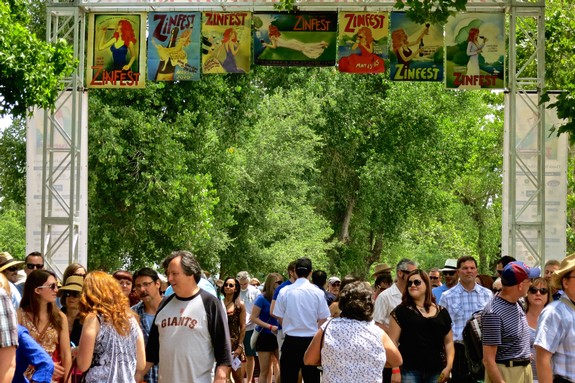
Entrée to ZinFest Wine Festival in Lodi’s bucolic Lodi Lake Park
Next month’s Lodi ZinFest Wine Festival (Saturday, May 14, 12-5 PM) will be chock-full of opportunities for Lodi wine lovers experience things they love most (like barbecued foods and wines) or to expand their wine knowledge with the guidance of two of the state’s most respected sommelier/educators, under the cozy tent of our ZinFest Wine School.
Under the biggest tent of all will be our ZinFest Cooking School. Let us share the details of the cooking demonstrations we have planned for our Cooking School in a future blogpost. Meanwhile, here is what ZinFesters can look forward to under our “Barbecue” as well as our Wine School tents…
Guest “Up In Smoke” Chef, Lance Smith from The Millworks Restaurant (photo by Jewel Wicker, jwicker@pennlive.com)
Needless to say, us LoCA folks are of fervent belief that this type of cooking goes fantastic with Lodi’s plump, juicy, freshly fruit forward yet sturdy wines; and we’ll be serving some of these wines to go with the dishes demonstrated by Chef Lance under his tent.
So come on, baby, light those fires:
12 PM – Brown Sugar and Zinfandel Glazed Pork Ribs with Crispy German Potato Salad (Matching wine: 2013 LangeTwins Family Lodi Zinfandel(
1:30 PM – Beer Can Chicken Tacos with Ash Salsa and Green Tomato Pico de Gallo (Matching wine: 2012 Borra Lodi Fusion Red – Syrah, Petite Sirah, Zinfandel, Alicante Bouschet)
3 PM – Texas Red Clay Spiced Lamb Kabobs with Cucumber Mint Yogurt, Rhubarb & Berry Relish (Matching wine: 2013 Fields Family Lodi Tempranillo)
Lodi Wine School guest speaker, Master Sommelier Catherine Fallis
Lodi Wine School
For, like, the nth year in the row, LoCA‘s own Randy Caparoso (also the Editor at Large of The SOMM Journal), will be hosting two outstanding guest educators of sterling sommelier credentials, and a total of three engaging seminars presented in a fascinating yet fun, stimulating way. Your lesson plans, should you choose to accept them:
1 PM – Attention Shoppers, Insider Tips from a Master Sommelier
The one and only, ever-popular and entertaning Catherine Fallis MS (a.k.a. Grape Goddess®; Planet Grape® LLC; resident Summertime In a Glass Master Sommelier) returns to Lodi Wine School to lead this elucidating seminar as only, well, a goddess of grapes can. First, on the fine art of “blind tasting.” And second, on whether or not it is possible to tell the difference between $10 and $35 wines, or even a $70 wine. We can’t tell you the names of the 6 wines you will be tasting with Ms. Fallis because, well, this will be a blind tasting (bottles poured from paper bags). But what you may learn about your true druthers, when tasting without seeing the labels, may very well surprise or even shock you!
Lodi ZinFest guest speaker, San Franciso Wine School’s Fred Swan CSW
2 PM – A Tour of European Wine Countries Via Lodi
Fred Swan CSW (Certified Specialist of Wine; San Francisco Wine School; NorCalWine.com) is one of the state’s most urbane and erudite wine scholars. What better guide, to whisk you off on a tour all around the wine world — without leaving your seat? That is to say, he will lead a tasting of fantastically delicious Lodi grown wines made from grapes originating in Germany, Spain, Portugal, Italy and France. Travel is so broadening! The wines:
Germany – 2014 Markus Lodi Nimmo (Kerner, Gewürztraminer, Riesling Bacchus)
France & Spain – 2015 Acquiesce Grenache Blanc
France – 2014 Onesta Lodi Cinsaut Rosé
Spain – 2012 Bokisch Lodi Graciano
Italy – 2012 Uvaggio Lodi Barbera
Portugal – 2011 Toasted Toad Lodi Souzão
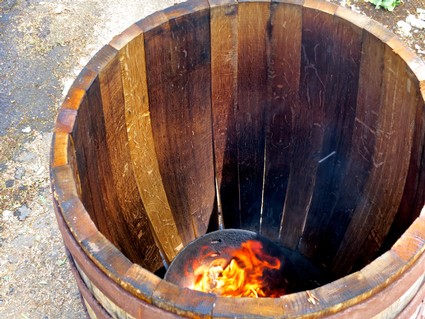
Oak barrel on fire at Lodi ZinFest
3 PM – Single-Vineyard Lodi Zinfandels – What’s the Fuss?
Calling all Zin geeks! LoCA’s resident wine author Randy Caparoso will lead you on this revealing taste-tour through Lodi’s east and west sides; zooming in on the sensory differences impacted by subtle differences in terroir found in the very finest, heritage growths, planted on the both sides of town. Here’s your chance to learn about Lodi grown Zinfandel from the geekiest of wine geeks! The wines:
2013 m2 Soucie Vineyard Lodi Zinfandel
2012 McCay Lot 13 Lodi Zinfandel
2012 McCay TruLux Vineyard Lodi Zinfandel
2013 Lodi Native Stampede Vineyard Clements Hills-Lodi Zinfandel
2013 Lodi Native Marian’s Vineyard Mokelumne River-Lodi Zinfandel
2014 Oak Farm Indigenous Cemetery Vineyard Lodi Zinfandel
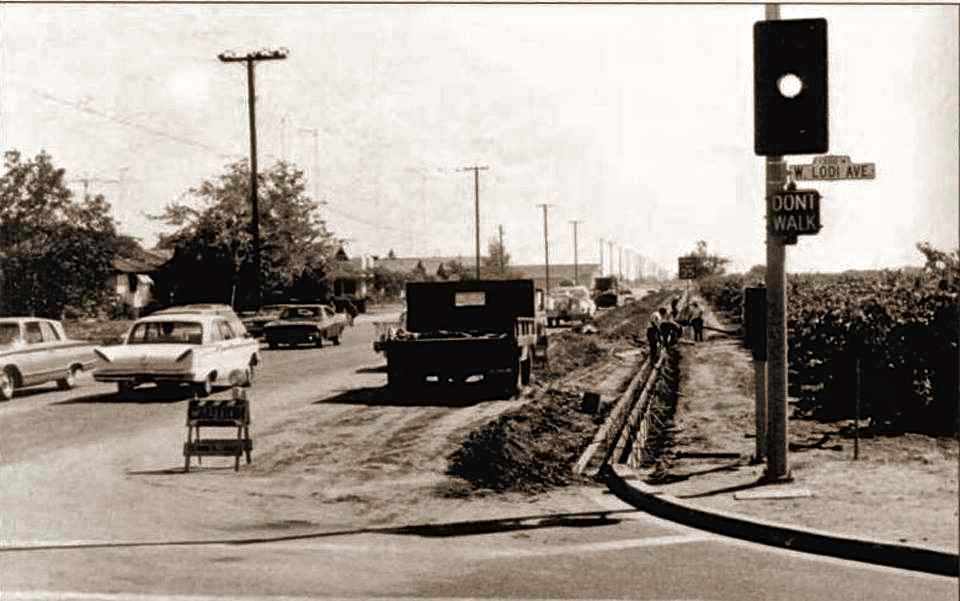
Lodi in 1969: new sidewalk being installed along vineyard lined Ham Ln. at Lodi Ave.
1969. If you weren’t born yet, we envy your youth, but feel sorry you missed it.
There were good times in 1969. There was a little thing called Woodstock, which everyone and their friends’ friends claimed to have “almost” attended. Neil Armstrong set foot on the moon. Sports fans had their “Miracle Mets” and “Broadway Joe” Namath. Star Trek was just cancelled, which only got Trekkies warmed up.
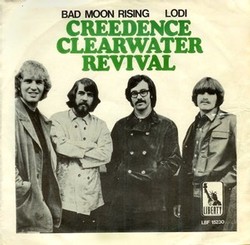
Green River
Still, it’s a heckuva lot easier to sing than “New York, New York,” and mercifully sap-free, unlike “San Francisco with Flowers In Your Hair.” Sure, it’s a about a musician feeling sorry for himself; but most fans would take “Lodi” any day, over almost any other song about a town or city.
“Lodi,” as we’ve reported here before, was never a true tale. Mr. Fogerty was never a down-and-out musician playing in a club in Lodi – his career shot out of a cannon into big-time venues barely weeks after he got out of the Army in 1967. According to the man himself, communicating with fans on creedence-online.net, “The first time I ever heard the word ‘Lodi,’ I thought it was the coolest sounding name, so I saved it for the longest time…
“I sat down and wrote about being on the road,” adds Fogerty, “being a musician – not the happy, glamorous part. Rather, I projected myself ahead maybe 10 years, as a country musician singing that minor hit I had 10 years ago. There I was… I wasn’t in Los Angeles, not even in Cucamonga. I’m way out in Lodi! The song went from ‘Lodi’ to ‘Oh Lord, stuck in Lodi, again,’ not a happy thought.”
As fate would have it, “Oh lord, I’m stuck in Cucamonga again” didn’t work. So it’s Lodi that ends up with the kick-butt song.
1969, as posted earlier this month (see Lodi’s Johnny-come-lately history), was also the year when the wine industry reported sales of dry table wines exceeding sweet, fortified dessert wines for the first time since pre-Prohibition days. The Lodi wine region’s 15 or so wineries, unfortunately, were more equipped for the production of dessert wines, bulk wines or brandies.
As a city, Lodi celebrated 100 years of existence in 1969. At the time, its population was 28,691. As of 2014, the U.S. Census Bureau puts it at 63,950. Enough for, say, a Safeway, a Walmart and three Starbucks; but evidently not for a Whole Foods or Trader Joe’s. Which is fine by most Lodi natives, who much prefer that growth be restrained enough to maintain a green expanse of surrounding agriculture – pushed back against urban encroachment from Stockton to the south and bedroom communities of Sacramento to the north, and unregulated growth of strip malls and subdivisions from within.
Although it would take Lodi another 25 years to really get into the premium quality varietal wine groove, it wasn’t like the region was doing nothing. According to a 1970 U.C. Davis report on the “California Grape Situation and Outlook” delivered by Extension Viticulturist A.N Kasimatis, “North San Joaquin Valley (which would become defined as the Lodi Viticultural Area in 1986) accounted for 25% of the1969 California wine grape crush,” whereas “California’s famous coastal winemaking counties account for a mere 8% of the total 1969 crush…”
At that time, most of California’s wine grapes were being crushed in neither Lodi nor in coastal regions; but rather in Central and Southern San Joaquin Valley (some 64% of the state’s total, grown from Modesto to Bakersfield), going into the bulk wines and dessert wines that most Americans were consuming.
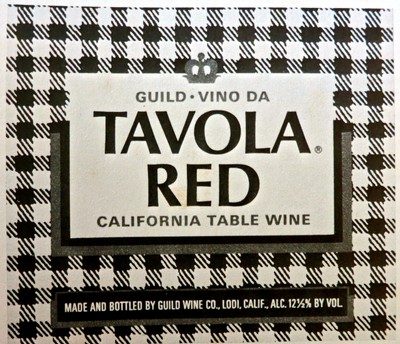
’60s era label for Lodi grown jug wine produced by Guild, a huge multi-winery co-op
Kasimatis shares some interesting figures reflecting the transitional stage taking place in Lodi in 1969: reporting a total of 21,720 acres of table grapes (i.e. Flame Tokay) planted in Northern San Joaquin Valley, compared to 34,950 acres of wine grapes. Cognizant of the growing consumption of wine in the U.S. at the time, Kasimatis also makes note of the “diminishing role of the seeded table grape” in the market; reporting that “some 90% of the tonnage was crushed” (primarily for bulk wine production), with “only 10% going for fresh sales.”
1969, in other words, was also a year signifying a beginning of the end of the era of Tokay as a dominant fresh market commodity – a factor underlined by the fact that there was also 2,390 acres of newly planted, non-bearing wine grapes going into the ground in Lodi (much of it displacing ancient Tokay vines) that year.
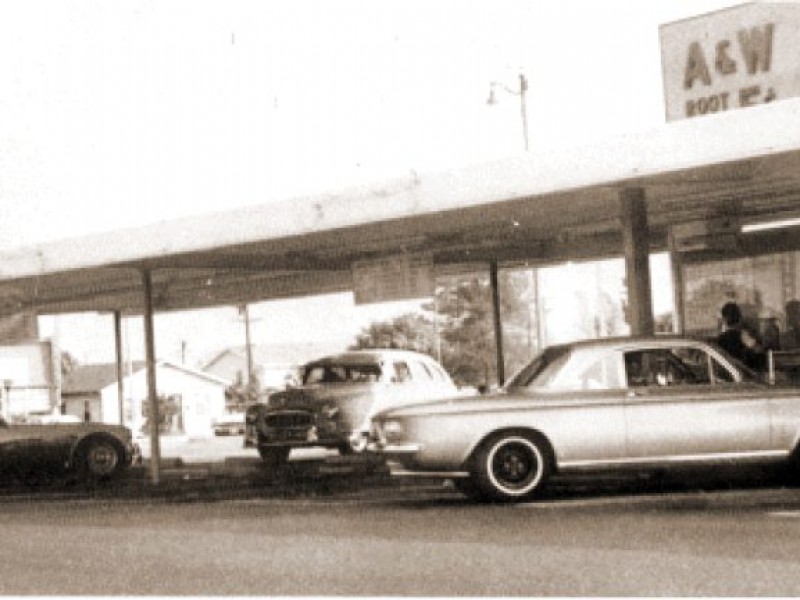
Lodi Ave.’s A&W Root Beer drive-in in ’60s: the first and original location of this fabled restaurant chain
To give you another idea of how the California wine industry looked at the time, here is the list (cited by Kasimatis from a San Francisco Weekly Wine Report) of the most widely planted red wine grapes in 1969 which, again, reflects the reality of what consumers were really drinking at the time (grapes like Carignan, Zinfandel and Grenache going primarily into bulk or dessert wines):
Carignan (27,713 acres)
Zinfandel (22,071 acres)
Grenache (13,293 acres)
Alicante Bouschet (7,852 acres)
Mission (7,229 acres)
Petite Sirah (4,459 acres)
Cabernet Sauvignon (3,572 acres)
Pinot Noir (2,347 acres)
Mataro (a.k.a. Mourvèdre; 2,082 acres)
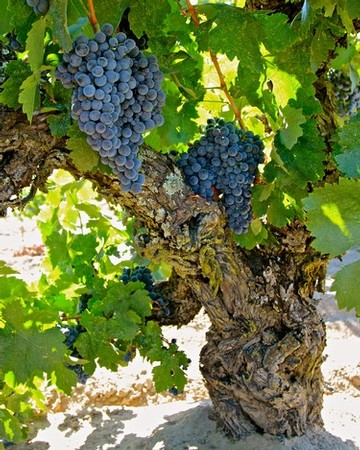
Carignan-my-wayward-son: ancient Carignan vines like this once dominated vineyards in Lodi and all of California
The list of 1969’s most widely planted white wine grapes in California also demonstrates predominant consumer tastes for sweet dessert wines or “jug” whites:
Palomino (7,340 acres)
Colombard (6,391 acres)
Chenin Blanc (2,552 acres)
Burger (2,496 acres)
Chardonnay (1,722 acres)
Riesling (1,286 acres)
Sauvignon Vert (a.k.a. Muscadelle; 1,270 acres)
Sylvaner (1,199 acres)
Sémillon (1,174 acres)
Sauvignon Blanc (1,127 acres)
These were different times in so many ways, but one thing will never change: those songs will always be hecka-great!
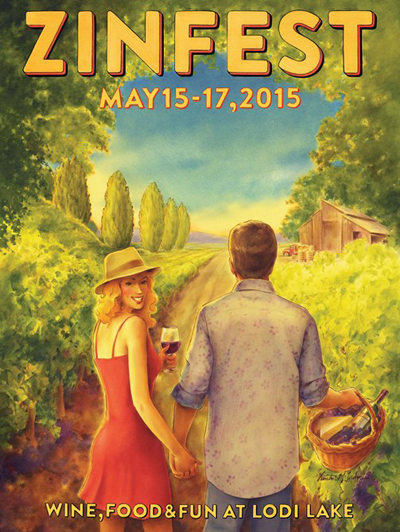
Where does the time go? Don’t look now, but the 2015 Lodi ZinFest Wine Festival is just 30 days away — happening this coming Saturday, May 16 (12-5 PM)!
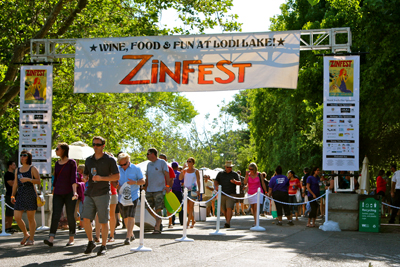
Simply put, Lodi wine doesn’t get any funner than this yearly affair, taking place in the gorgeously lush “island” setting of Lodi Lake Park, amidst giant ancient weeping willows bowing beside blue refreshing waters of the Mokelumne River. Also as in previous years, over 40 of Lodi’s finest artisanal wineries will be pouring over 200 different Lodi grown wines — and not just Zinfandel!
Sure, Lodi produces about 40% of California’s Zinfandels – always a juicy, jammy, wine-lustful affair, and today, finer, zestier, more elegant than ever. But Lodi also grows over 100 varieties of the great European wine grapes classified as Vitis vinifera. At Lodi ZinFest, you’ll also be able to taste powerful, rich red wines made from soulful sounding grapes like Touriga and Graciano, sexy winsome whites like Albariño and Verdelho, and o sole mio refreshers like Barbera and Moscato… and more!
When you’re ready for a sit, you’ll be able to enjoy wine-oriented cooking tips under a big tent at the ZinFest Cooking School, or bolster your wine smarts under another tent at the ZinFest Wine School. Then when you’re ready to begin movin’ with the groovin’, you’ll be able to tap your feet at the ZinFest Piano Bar or shake it all over to the sounds of live bands taking to a big stage.
For wine lovers who mean business, there is also the ZinFest Wine Shoppe, where you’ll be able to purchase most of the (otherwise) hard-to-get wines offered at the tasting booths. Then, for more fun-fun-fun-’til-your-daddy-takes-your-wine-glass-away, at one point some of Lodi’s best known winemakers will be taking to the waters: in a friendly race, as part of the 2nd Annual ZinFest Vintners’ Regatta, around Lodi Lake in floating vessels (of sorts) made from wine barrels! If this year’s race is anything like last year’s, it’s either sink or swim for Lodi’s finest… and some of them did indeed sink and swim :).
Tickets are $55 in advance or $65 at the gate ($10 for non-imbibing designated drivers), and can be purchased by visiting zinfest.com (call us at 209-365-0621 for further information or questions).
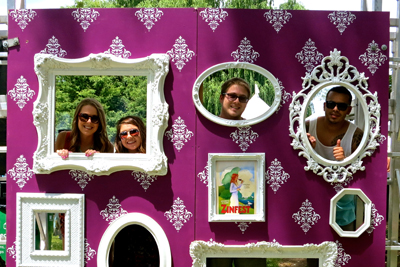
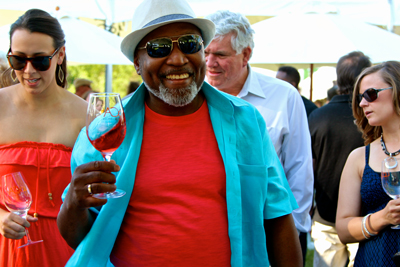
Every picture tells a story: take a gander (below) at the fun at previous Lodi ZinFests, and block our your May 15-17, 2015 weekend right now!
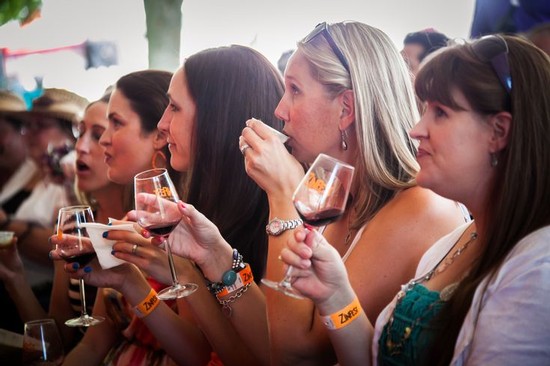
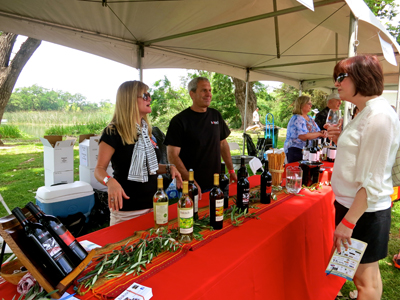
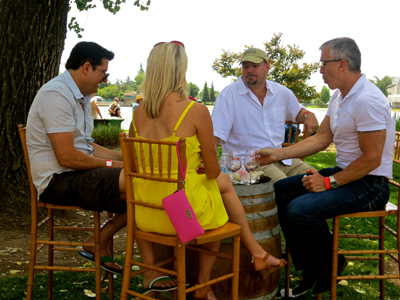
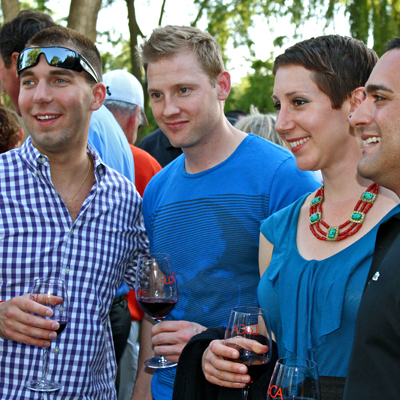
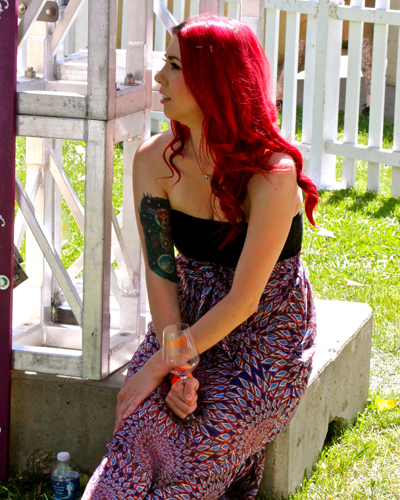
Welcome to ZinFest!Tim Holdener, Macchia’s winemaker/owner, winner of last year’s 1st Vintners’ RegattaCool blonde bolstering wine smarts at ZinFest Wine SchoolPerfectly adult fun at Lodi ZinFestPeace out at ZinFest Piano BarChef Tony knows how to do the ZinFest swirlThe Bokisch Vineyards crew pouring their sexy Spanish whites and redsHandy barrel-table by the lakeGood times, friends, wines at ZinFestZinFest poster girl look-alikeLodi wine = love at ZinFestEndless variety of refreshing wines at ZinFestLodi winegrower… a really big deal!Groovin’ time on Lodi Lake
Piles of discarded Zinfandel clusters next to 97-year old Kirschenmann vines
Lodi grows a greater variety of grapes than any other wine region in California, but Zinfandel is still the specialty – the pièce de resistance. Tegan Passalacqua, the grower/winemaker of Turley Wine Cellars, manages his company’s Zinfandel plantings in Lodi, Napa Valley, Sonoma County, Paso Robles, as well as Contra Costa and Amador County. So it’s safe to say that he’s seen a lot, and has a very broad perspective.
But even Passalacqua couldn’t quite account for why, in 2013, the Zinfandel harvest started pretty much on schedule at the end of August (early bud break this past Spring moved the time table up about two weeks ahead of normal), but it took another six, seven weeks for some of the quality driven vineyards to fully ripen.
Tegan Passalacqua (right) field sorting Zinfandel
Passalacqua owns the Kirschenmann Vineyard: Zinfandel vines originally planted in the super-sandy soils on the east side of Lodi’s Mokelumne River AVA in 1916. Passalacqua sells the fruit from Kirschenmann to Turley Wine Cellars and a handful of other wineries (such as Bedrock Wine Co. and Odisea). Theoretically, low yielding, own-rooted 97-year old Zinfandel plantings like Kirschenmann are the first to reach maturity – which contemporary winemakers such as Passalacqua think of as hitting somewhere between 24.5° and 25.5° Brix (i.e. sugar readings), giving a finishing alcohol of around 15% — and younger plantings carrying bigger fruit loads take a little longer to ripen. But reality, or Mother Nature, rarely follows the script.
Kirschenmann Zinfandel picker
Last week Monday (October 7, 2013), as he watched two separate picking crews hired by Bokisch Ranches harvest the rest of his Kirschenmann Vineyard, Passalacqua told us, “I’m not sure why the vines slowed down this past month. We picked most of our old vines everywhere else weeks ago. Amador County, which is usually the last to come in, is all done. Dogtown (Turley’s Lodi-Clements Hills AVA planting) came in nearly a month ago. We had a little bit of mite issue (robbing leaves of little bit of chlorophyll needed for photosynthesis) here, which could have stressed the vines and slowed them down, but I don’t know if that’s the explanation. Every vintage has its peculiarities.”
In ironic reference to the myth common in the industry outside of Lodi that this is a “hot” winegrowing region (Lodi’s average temperature readings are roughly on the par with the mid-sections of Napa Valley and Sonoma County), Passalacqua quipped, “Maybe it’s the cool climate of Lodi.”
Macchia’s Tim Holdener sampling visitors with just-fermented and pressed Zinfandel juice last week
Tim Holdener, the owner/winemaker of Macchia Wines who also sources Zinfandel (plus Barbera) from both Lodi and Amador County, told us pretty much the same story. “This year we really had two harvests in Lodi,” according to Holdener. “We started out gangbusters at the beginning of September, and then slowed to a crawl. Zinfandel that hit 22°, 23° Brix that we thought would be ready to pick three weeks ago suddenly stalled out. Could have been the cooler weather or the fact that the heat earlier on had pushed the grapes sooner, but whatever it was, the grapes just sat with the same sugar levels for at least a couple of weeks.”
Last week Holdener finally finished up his 2013 Zinfandel harvest with pickings from Keith Watts’ Zinfandel block south of W. Kettleman Rd. (the same block that McCay calls Truluck’s), and Primitivo (a Zinfandel clone) from Maley’s Davis Rd. property. Says Holdener, “The stuff that that came in earlier in September is amazing – good acid balance, no rot or mold. The stuff that came in later, with vines a little more stressed with browning leaves, has been more rustic — typical of mid-October harvests with a tiny bit of rot or raisin, but nothing major that couldn’t be sorted out before going into the crusher.
Rejected “red berried” Zinfandel clusters
“If there has been any real issue this year,” adds Holdener, “it was the higher than usual incidence of red berry (something winegrowers also call “water berry” – visibly red, as opposed to purplish-black, colored grapes that are low in sugar, and watery rather than fruitful in the taste), which we also dropped in the field or at the sorting table.”
In Kirschenmann Vineyard last week we saw that the incidence of red berry was so high that nearly a quarter of the clusters that the pickers were loading into the macro-bins were immediately picked out and dropped to the ground by Passalacqua and his field sorters. A few minutes after the action started at 7 AM, the piles of discarded fruit next to the bins sparked a little bit of friction with one of the picking crews (paid by the tonnage), and they began to time their drops into the macro-bins to go in simultaneously to make it more difficult for the sorters to weed out the red berried clusters. Insurrection among the old vines.
Mid-field “conference” in Kirschenmann Vineyard
This, of course, did not sit well with Passalacqua, who immediately called the crew chief back into the vineyard. Picking was halted a couple of times for mid-field conferences (a second one by Alex Lopez, the vineyard manager of Bokisch Ranches). After explanations were made and warnings issued, eventually everyone got back on the same page. The message: wineries like Turley Wine Cellars would rather leave a huge percentage of their fruit on the vine or tossed to the ground rather than let inferior grapes get into their wine, which sell for ultra-premium prices ($45 to $60 for single-vineyard bottlings of Turley Wine Cellars Zinfandel).
Said Passalacqua, “I wanted them to understand that I lose a lot of money, too, whenever grapes are dropped to the ground. There is an ultimate goal – we want people to think Lodi Zinfandel belongs in the big leagues. I think it does. But it starts here, in the vineyard – we don’t work any magic in the winery.”
Michael McCay at wine press
Michael McCay of McCay Cellars owns another block of Zinfandel planted in 1916 located just east of Passalacqua’s Kirschenmann Vineyard, which he picked the week before. He concurred with both Holdener and Passalacqua; telling us, “It’s no secret that Zinfandel has been challenging this year. But by and large we haven’t had major problems like mildew and rot – the things we usually have to contend with. We pulled out all the stops to make things happen – managing watering, shoot thinning, veraison thinning, clipping off shoulders from clusters – but that has not stopped some vineyards from ripening sooner than expected, and some vineyards from ripening much later than expected.
Kirschenmann Zinfandel harvest
“If anything this year, because of the red berry the sorting table has been huge. For example, we picked 4.2 tons of Zinfandel from Lot 13 last week. After we did our sorting we ended up with less than 3 tons actually making it into the fermentors. It hurts, but you gotta do it.
“There’s still a little bit of fruit to come in, and vines are tired. They’ve been pushed to the max and are ready to lay down and die. By the same token, because we haven’t had problems with rot or mildew, the Grenache, Syrah, Tempranillo, and especially the Petite Sirah have all been spectacular this year – perfect sugars, terrific acid balance, beautiful flavors.
“I’m confident that in 2013 Lodi will be taking another big step!”
A few more shots of the 2013 Kirschenmann Vineyard Zinfandel harvest:
Pickers from Bokisch Ranches’ year-round all-women vineyard crewsBoksich Ranches vineyard manager Alex LopezKirschenmann Zinfandel pickerBokisch picker in KirschenmannBokisch Ranches sorting team in KirschenmannKirschenmann Zinfandel ready to be loaded and sent to TurleyMarkus Bokisch and Tegan Passalacqua in Kirschenmann Vineyard
Yesterday (August 21, 2013) Borra Vineyards picked their Kerner grapes, which are grown by Brett Koth at his family’s Mokelumne Glen Vineyards, tucked into the tip of the Mokelumne River’s “Peninsula” (where the river bends into an upside-down u-shape, on the east side of the Mokelumne River AVA). The Lodi AVA‘s Mokelumne Glen, for the record, cultivates the most extensive collection of German and Austrian grapes (over 40 varieties, whites and reds) on the entire West Coast.
Kerner, in case you’re also wondering, is a white wine grape of German origin – a crossing of Riesling and another grape called Trollinger. Borra’s crafty winemaker, Markus Niggli, blends Kerner with smaller percentages of Riesling (also grown by the Koths) to produce a fantastically crisp, light, dry and lemony/minerally/apple-fresh white wine under the winery’s “Artist” label. We recently named the 2012 Borra Artist Series Lodi White Wine ($18) as one of the 10 Most Interesting Wines of Lodi.
While tasting the Kerner being harvested at 6:00 in the morning by the Borra picking crew, led by longtime Borra vineyard manager Manuel Maldonado, Mr. Niggli expressed his enthusiasm for the earlier-than-than-usual 2013 harvest. “Kerner is as bright and clean as we’ve ever seen it – in perfect shape, no mold, just right. The grapes have more acid than the 2012, and all the fresh Kerner fruit flavors are there, at just around 22.5° Brix (i.e. sugar readings by percentage).
“A lot of the quality has to do with the way Brett manages the vineyard. The vines are very healthy, he uses no sulfur, and this year he’s kept all the pests under control, even with organic practices.
“Kerner,” adds Niggli, “is one of the grapes that we believe will put Lodi on the map as a great region for white wines. A lot of people wouldn’t expect it because of all the prejudice against the region, yet we are making beautifully fresh, light, dry white wines from these grapes. I’d put them up against any other California whites. On top of that, we are making these wines out of grapes from Germany!”
Earlier this week – this past Monday, August 19 – Turley Wine Cellars winemaker/vineyard manager Tegan Passalacqua was also extolling the prowess of Lodi’s growers during his break-of-dawn picking of the Bechthold Vineyard. Bechthold is the oldest continuously farmed vineyard in the Lodi AVA: planted by Joseph Spenker in 1886, and still proudly owned by Spenker descendant Wanda Woock Bechthold.
All 25 acres of the Bechthold Vineyard is planted to the Southern French grape known as Cinsaut (also spelled Cinsault); and as such, is undoubtedly the oldest, not to mention most coveted, Cinsaut planting in the world.
Turley produces an irresistibly luscious, slinky, fruit-forward red wine from the Bechthold grown Cinsaut. While checking out the large-berried clusters being hand picked by the Phillips Farms vineyard crew (since 2008 Bechthold Vineyard has been leased to Michael David Winery’s viticultural arm, and is now farmed by Michael David V.P. of Operations Kevin Phillips 100% organically), Passalacqua told us, “The Cinsaut is outstanding this year, primarily because the vines are healthier than they’ve ever been. Kevin has really styled the vineyard out.
“Keep in mind that 2013 has been one of the most stressful years we’ve ever seen in terms of heat, and it’s our earliest pick yet (Turley’s previous earliest pick of Bechthold Vineyard was August 29).
“This year we’re seeing the most acidity preserved in the Cinsaut yet. In most years we’re picking as soon as we start to see the acidity drop. This year we haven’t had to worry about that – we’re picking at the sugar level we like (Passalacqua estimated the Bechthold Cinsaut’s sugar last Monday as being around 22.4°, 22.5° Brix). I attribute this to healthy grapes, and the healthiest grapes come from organic farming. I don’t care what you say, organic winegrowing works!”
Earlier in the day this past Monday – starting at 2 AM, and working under portable field lights until the 6:20 AM sunrise – the Bokisch Ranches crew was out in the rolling hills of their Borden Ranch AVA growth, Vista Luna Vineyard, hand picking Pinot Noir (at lower sugars for sparkling wine producers) as well as Albariño for their multiple winery/clients.
Like other Lodi growers, Bokisch Ranches is running 10 days to two weeks ahead of most vintages; but not because of the rash of 100°-plus days this summer, but because bud break and flowering this past spring was 10 days to two weeks earlier than usual.
As we get deeper into the vintage, winegrower Markus Bokisch will undoubtedly take a few minutes out of one of his sleep-deprived days to update us on the particulars of harvest 2013 thus far. Meanwhile, we have a few vivid pictures to share, each telling a thousand words of their own:
The newly arrived Sorelle Winery is fashioning some of Lodi’s most exquisite wines…
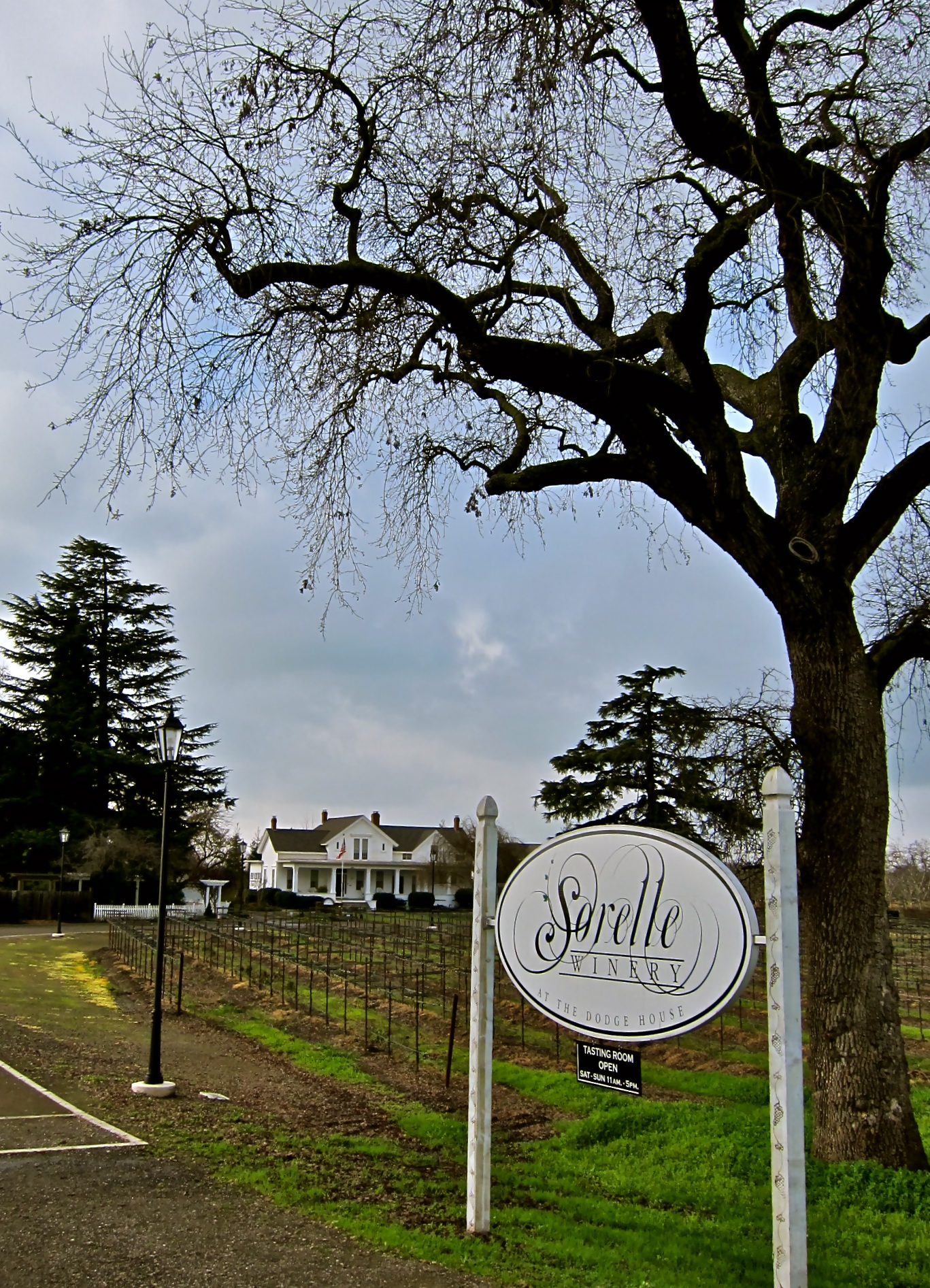
Lodi’s verdant farmlands and vineyards stretch southwards all the way into Stockton zip codes; and one of the region’s newest, brightest, and (already!) multi-award winning stars is Sorelle Winery, located on Hwy. 88 near the Calaveras River, at the southeast corner of the Mokelumne River AVA, just south of Eight Mile Rd.
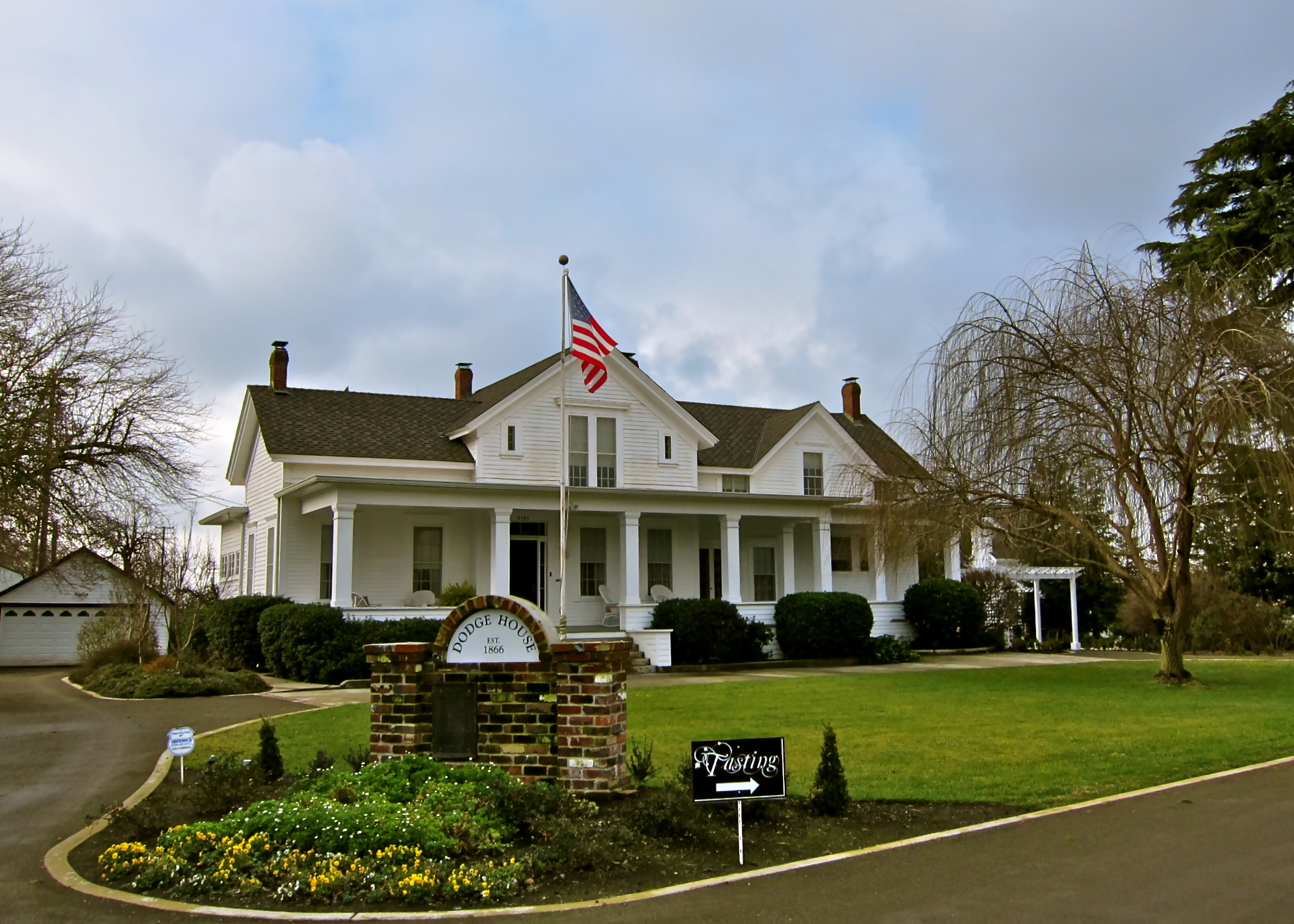
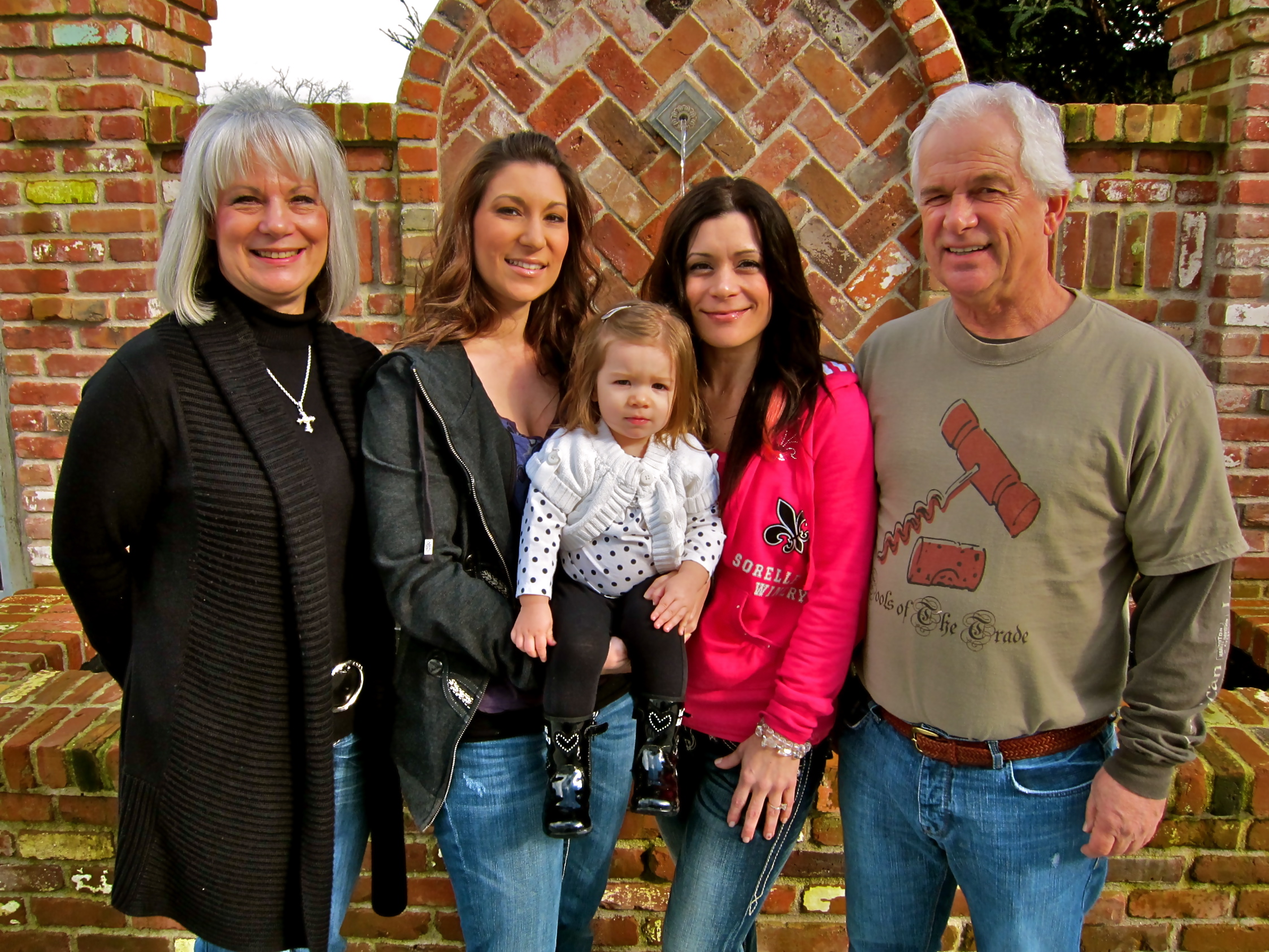
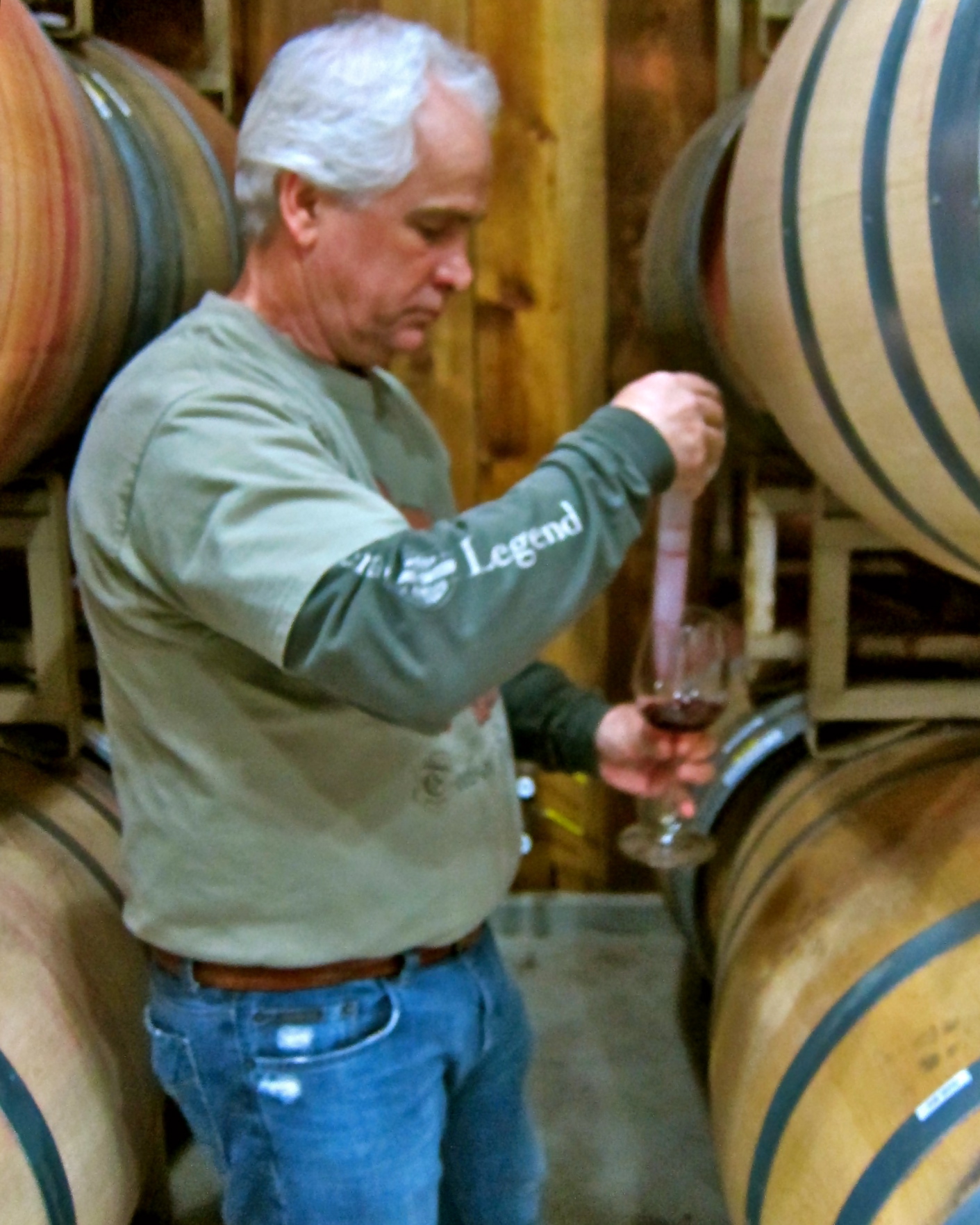
Sorelle is Italian for “sisters,” and in this case, there are two of them involved: Kim Scott, and her younger sibling, Melissa. But there is a man behind the women: it is their father, Mike Scott, who has done all the work building the winery and planting the vineyard for the benefit of these charming sisters, on a 4 acre site long known as “The Dodge House,” purchased by Mr. Scott in 2007. Very cool dad.
Tre generazioni of Scotts
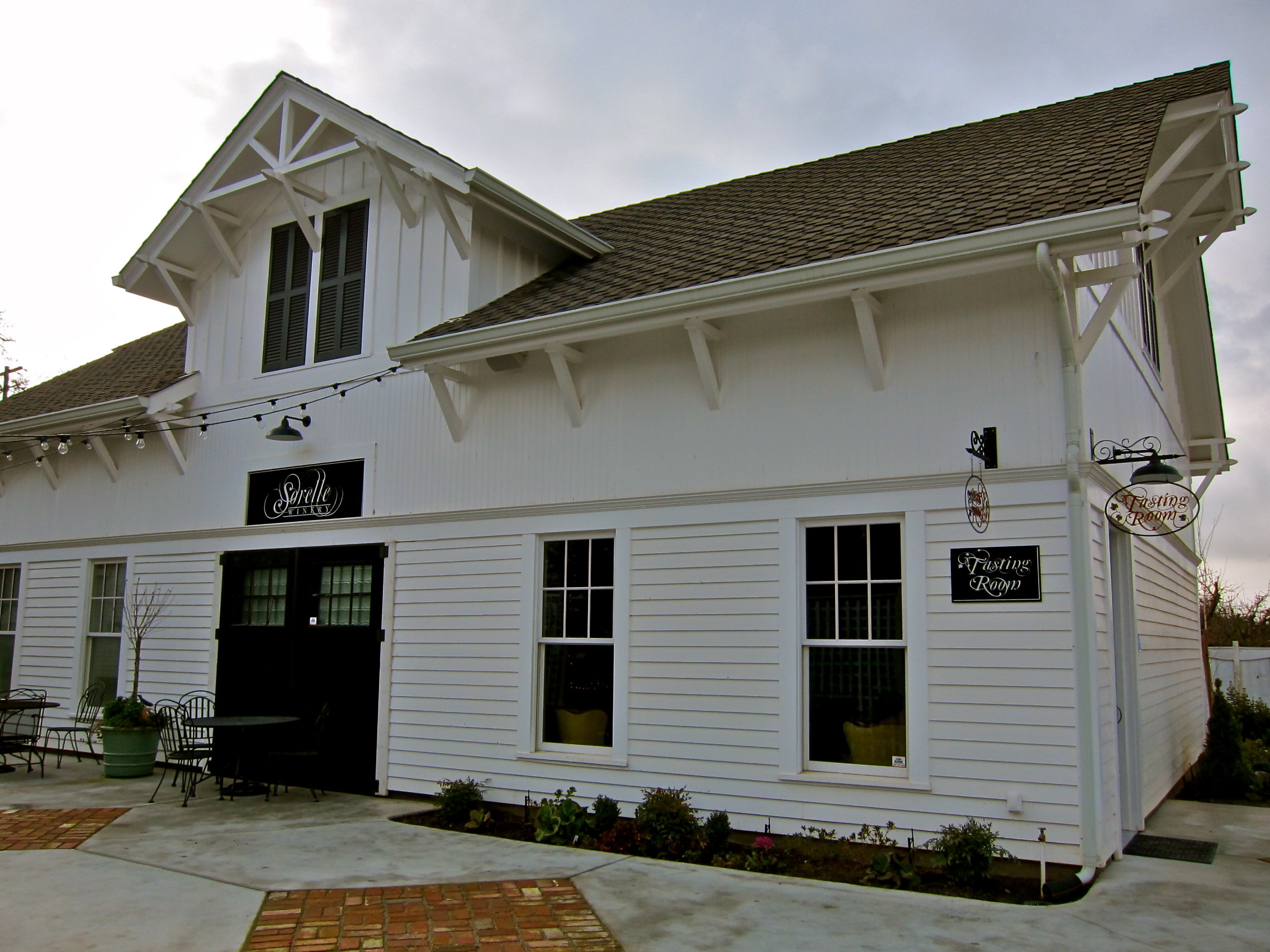
“I’ve been driving by this property practically everyday since I was a teenager,” says Scott, “and when I started looking for places in Lodi to build a winery, it had fortuitously become available.” The white paneled home sitting elegantly among the vines, with walnut and cherry orchards on each side, was originally built by Jonathan Holt Dodge in 1866, and is currently in the process of being lovingly restored by the Scotts. The Sorelle Winery and tasting room (open to the public Saturdays and Sundays, 11 AM-5 PM) behind the house was built to look as if it were erected in the exact same time period, although it was completed just this past August 2010, with a warm, natural, high arched interior paneled with 100 year old pine shelving. A must-see for Lodi wine lovers.
“The property was originally fertile fishing grounds for the Plains Miwok Indians, and around 1825 John C. Frémont, and his guide Kit Carson, were among the first Americans to camp out probably right here where we’re standing. The Dodge family also started a successful vineyard on the property, which was originally 900 acres, and it was planted with the help of George West, the pioneering grower who founded El Pinal Winery.
“The old vines I used to see in the front yard when I was a kid were torn out about ten years ago and planted to walnuts, but the first thing I did when I bought the property in 2007 was take out those trees, which were blocking the view of the house from the highway, and replant with Sangiovese and Barbera grapes.”
Why Italian varieties? “My wife Joanne is the Italian in the family, not me,” Scott tells us. “But we both felt that it should be Italian grapes defining the heritage we can pass on to our daughters. We already have a third generation — Melissa’s baby, Emma, is now one and a half!”
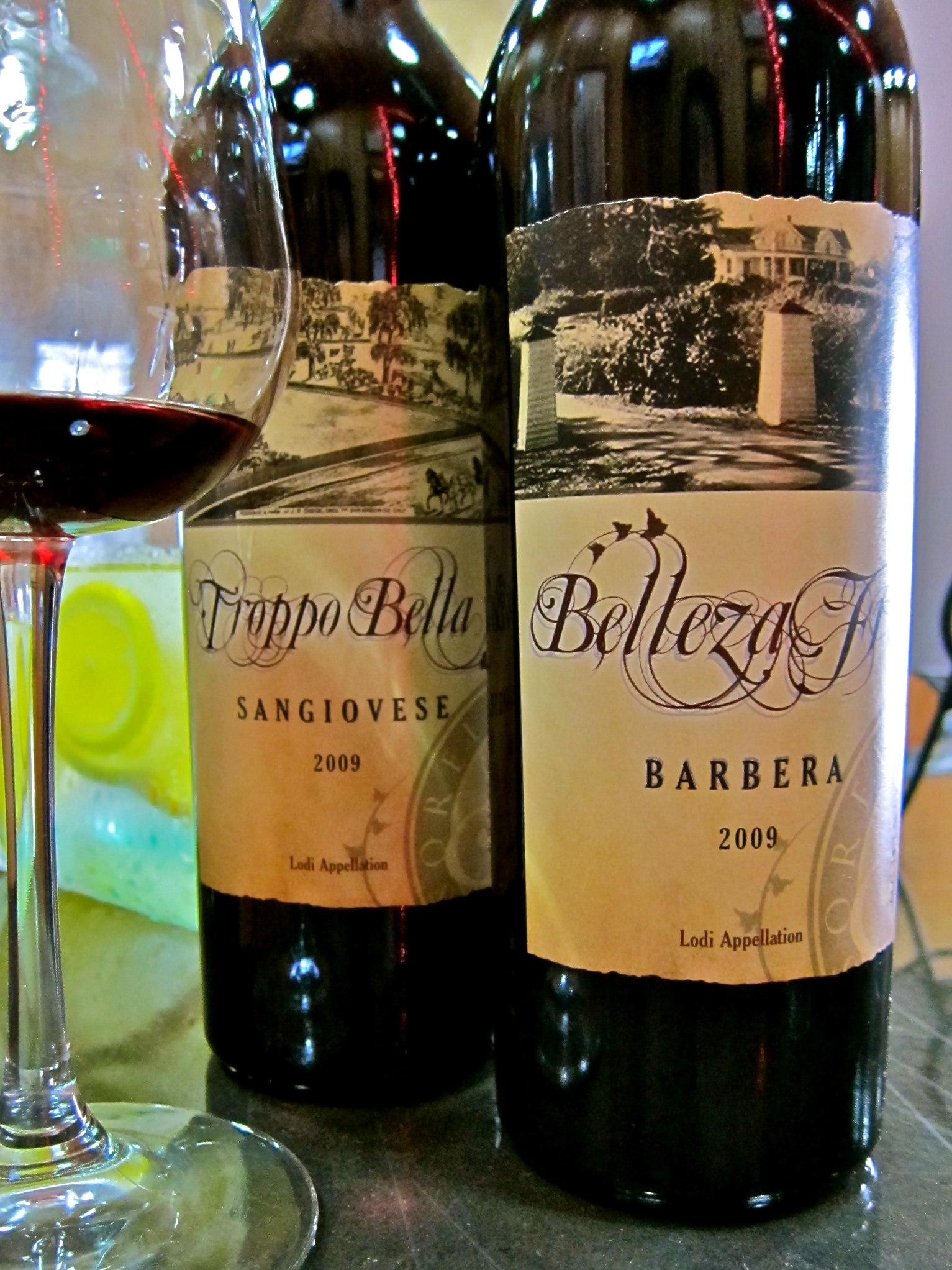
How much cooler can this story get? How about this: at the San Francisco Chronicle Wine Competition this past January, two of the Scotts’ very first releases were singled out by those frightfully discriminating judges for a Gold Medal (the 2009 Sorelle Sangiovese) and a Bronze (the 2009 Sorelle Primitivo). That’s like an NFL or NBA expansion team capturing a world championship in the first year: it just doesn’t happen.* New wineries are supposed to put out funky wines of uneven quality while feeling their oats; not wines of startling focus, clarity and originality, which aptly describes what Sorelle is already producing.
Then again, for many a Lodi wine lover it’s what’s in the bottle that counts most, not so much this fuzzy feelgood wine country story. We don’t know the full story behind how Mike Scott has achieved so much success so fast. Insofar as what we do know, we’ve been warned, he’d have to kill us if we told. Therefore, suffice to say: across the board, what you find in the bottles under the elegantly composed Sorelle labels is absolutely fresh, cool and delicious. Tasting is believing, as gleaned through our tasting notes:
Grazia
2009 Sorelle, Belleza Fra Lodi Barbera ($25) – This is the one Sorelle red that did not medal at the Chronicle Competition, and we’re mystified: it is so crisp and precise in pinpoint balance and varietal perfume, it makes you wanna cry. Luscious burst of dark cherry in the nose, subtly framed by sweet, polished, cinnamon spice-like French oak; fulfilled on the palate by a zesty medium body, fresh and mouthwatering, the crisp acidity and gentle fruit and oak tannins lending deft support to the sensuous fruit sensations. Belleza fra is Italian for “beauty within,” and it’s been a long time since we’ve experienced a Barbera with as much purity of fruit, and allowed to gaze at the grape’s compelling qualities (especially the zest and spiced black cherry notes) in almost naked hallelujah.
Troppo Bella
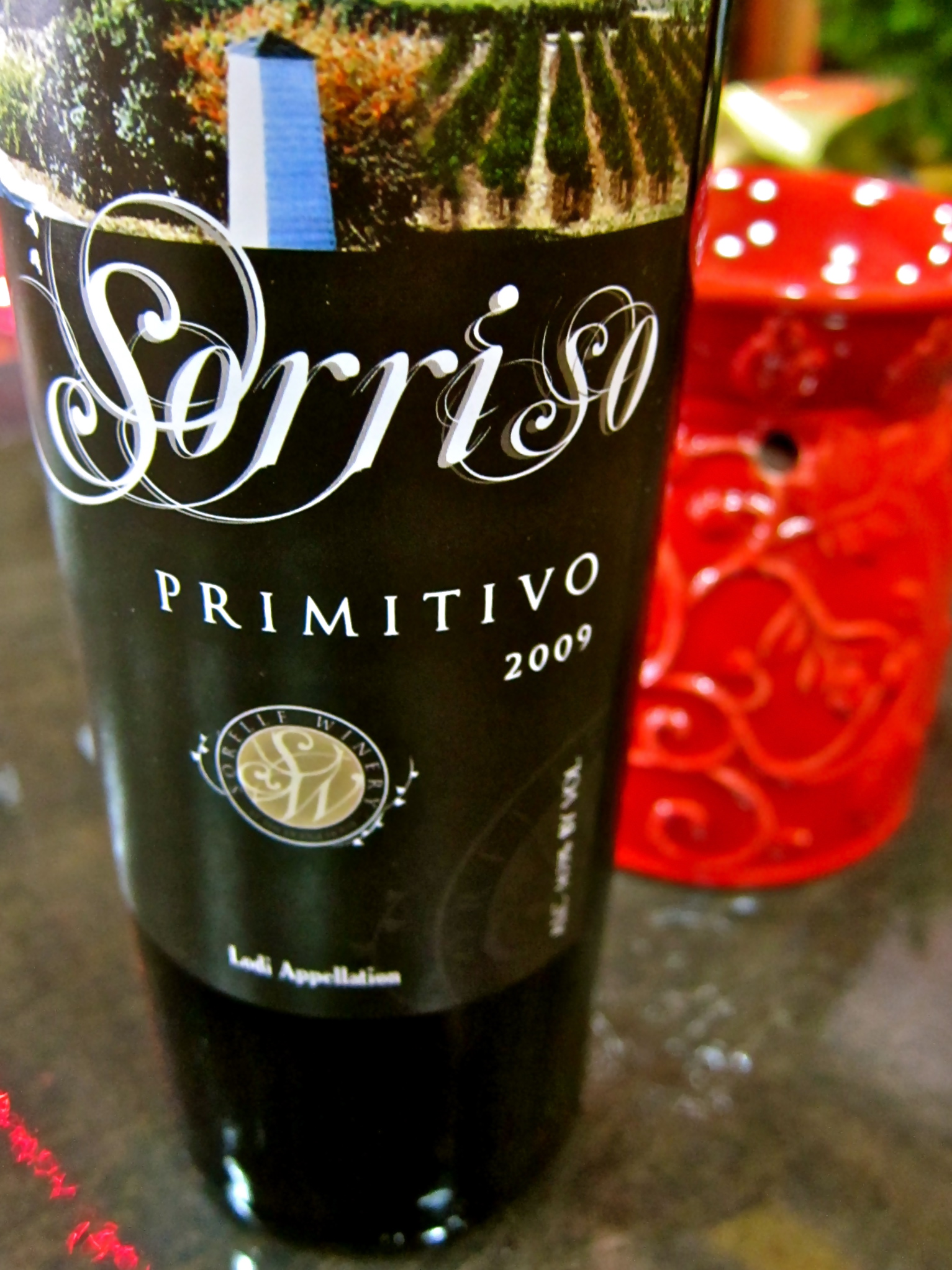
2009 Sorelle, Sorriso Lodi Primitivo ($22) – Primitivo is the anal twin sister of Zinfandel — genetically identical but more even ripening, hence never really prone to the often wild, unruly, straitjacket swings so typical of the Zinfandel grape — and Sorelle captures that discreet charm to perfection: a bright, flowery, red cherry fruit fragrance with just a touch of that varietal jamminess; sleek and medium-full on the palate, little tugs of French oak and natural fruit tannin in the middle, stretching out into a soft, silky, elongated finish with wisps of smoky wood at the end.
“Winemaking,” says Mr. Scott, with rather unconscious aplomb, “really is a gratifying art form.” And Lodi wine lovers are all the more grateful!
The Sorelle Winery & tasting room
* Lodi’s McCay Cellars and Fields Family Wines also reaped Chronicle golds for their first releases, but we’re not counting them in this conversation since their principals honed home winemaking skills and grew wine grapes for years prior to starting their commercial ventures.