Author: Randy Caparoso

  • 1929 book on black grapes sheds fascinating light on the history of California wine

    1929 book on black grapes sheds fascinating light on the history of California wine

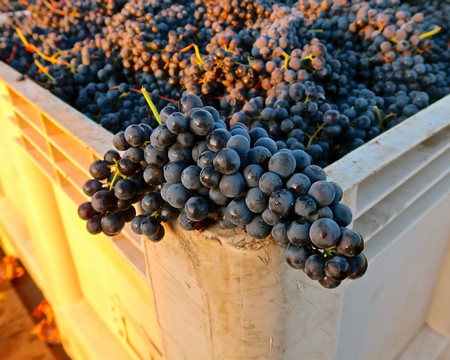
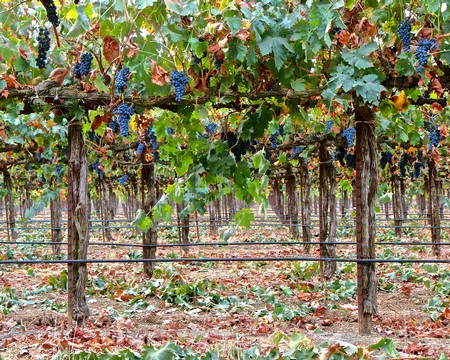
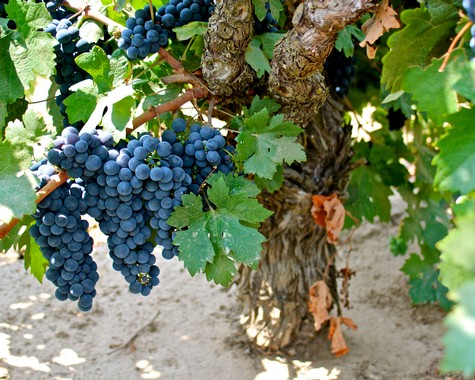
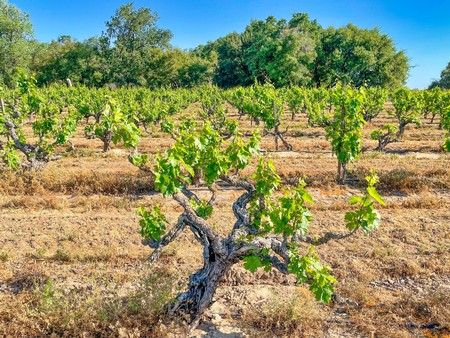
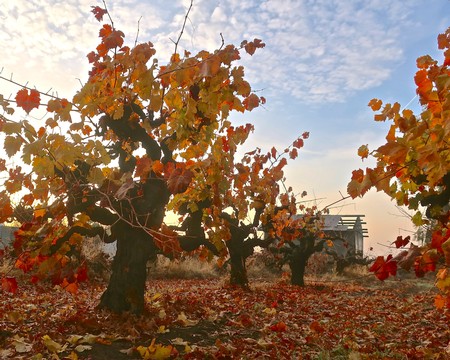
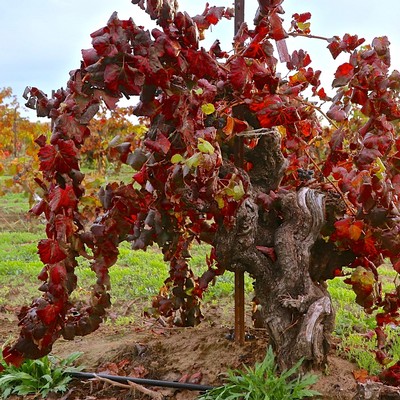
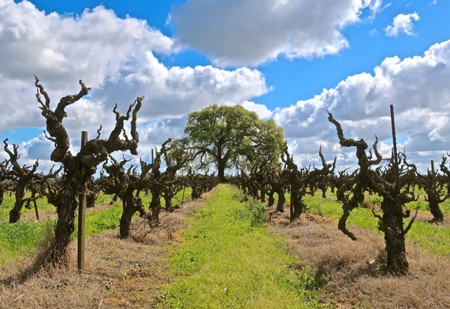
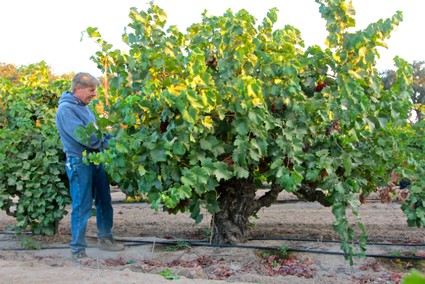
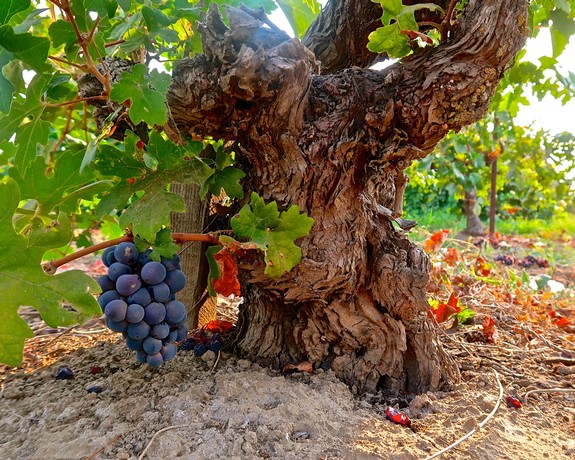
    Close-up of Lodi’s old vine Zinfandel planted in the 1920s to meet the increased demand during Prohibition years, when Perelli-Minetti’s groundbreaking research on grapes was conducted and published in “Black Juice Grape Varieties In California.”

    At the start of the 1920s, the California wine industry was still in its infancy.

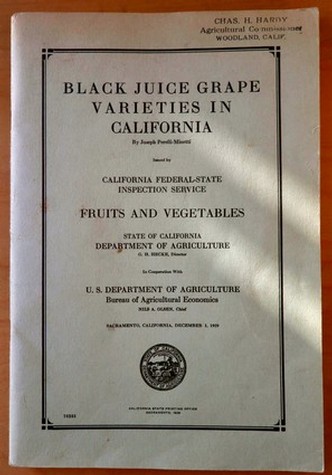
    Yet a reading of a 1929 publication entitled Black Juice Grape Varieties In California—authored by Joseph Perelli-Minetti for USDA‘s State of California Department of Agriculture—provides a fascinating glimpse into how far the science of winegrowing had advanced since the 1850s, and how far it has come between the 1920s and today.

    This 80-page book, consisting of highly detailed photographs and notes on leaf and cluster morphologies of 38 of the major black-skinned varieties cultivated during the 1920s, was loaned to me over the holidays by Tegan Passalacqua.
    Passalacqua, the winemaker of both Turley Wine Cellars and his own Sandlands brand, is an avid (or, you can also say, obsessed) scholar of California wine history. It is an understatement to say that Passalacqua’s minimalist yet science-driven approach to viticulture and winemaking is strongly influenced by his respect for what has been historically done long before he was thought of.

    The 1920s in itself is a fascinating era. While, on one hand, commercial wine production at that time was illegal (nationwide Prohibition lasting from 1920 to 1933), the U.S. Department of Agriculture still recognized wine grape farming as a major industry, demanding supportive research in order to stimulate further investment and market growth.

    In fact, in regions such as San Joaquin County during the 1920s, both acreage and grape prices soared during the 1920s, primarily because of a loophole in the Volstead Act that allowed American households to produce up to 200 gallons a year of their own wine.

    Historically, varieties of Vitis vinifera—i.e., cultivars belonging to the European family of wine grapes—were not brought in from East Coast nurseries until after California statehood, which happened on September 9, 1850. Before that, the only European grape cultivated in California was Mission (now also known as Criolla or Pais), planted along El Camino Real by Franciscan missionaries between 1769 and 1833.
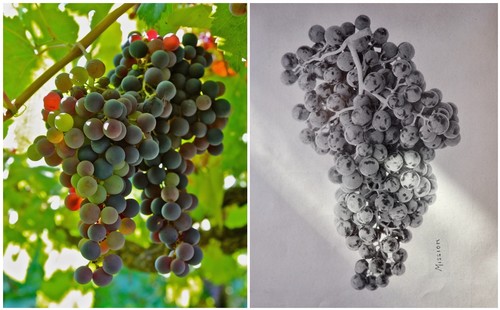
    Comparison of Mission grape clusters: On left, a recent photograph was taken in Lodi’s Somers Vineyard; on the right, the image was published in 1929’s “Black Juice Grape Varieties In California.”

    Wherever there were settlers of European descent, however, there was wine. Even during the 1930s, there were purportedly as many as two dozen commercial wineries operating in the Los Angeles area—their primary stock and trade, a strong, brandy-fortified “white” made from Mission known as Angelica (a sweet semi-generic style of wine still produced by a few handcraft wineries today).

    Once settlers began pouring in from all over the world to the newly established state of California, enterprising growers in counties as far-flung as Sonoma, Napa, Santa Cruz, San Luis Obispo, Los Angeles, San Bernardino, San Joaquin, and Amador were shipping over dozens of grape varieties, and trying them all out in newly established vineyards.

    In San Joaquin County, for instance, a Massachusetts transplant named George West established a nursery in Stockton in 1852. Along with a bevy of trees, fruits, and flowers, West immediately began to bring in grape varieties from Boston—his initial shipment, reportedly 40 different cultivars of European origin—on a yearly basis.

    By 1857, Ezekial Lawrence, one of the City of Lodi‘s founding fathers, made note of the fact that there were at least 10 acres of grapes grown in the vicinity of the riverbank settlement. At that time this region, located just north of Stockton and south of Sacramento, was known by its indigenous California name, Mokelumne.
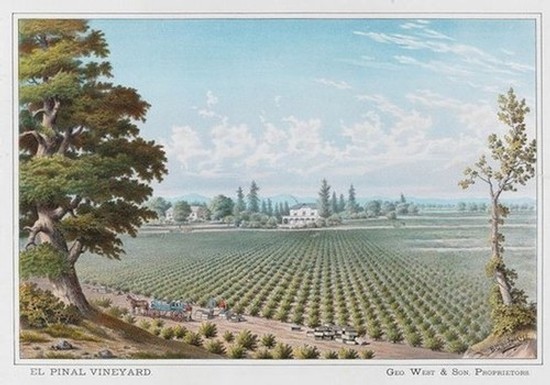
    Postcard image of El Pinal Vineyard dating back to the 1860s. Dr. Dean L. Mawdsley collection, California State Library.

    Recognizing the huge commercial potential of grapes for wine production, George West founded El Pinal Winery with his brother William in 1858, establishing their own vineyard in the Stockton area while also contracting farmers in Lodi to plant as many as 30 different grape varieties at a time. The initial idea, of course, was to throw as many of them as possible against the wall to see what sticks—a practice duplicated throughout the state.

    While the farming industry in the vicinity of the Mokelumne River was barely ten years old by the end of the 1850s, the area was already highly valued for its deep, rich soils—long evidenced by the watershed’s lush grasslands and deep-rooted valley oaks—and steadily warm yet moderate climate, highly conducive to multiple crops, from grains to grapes. To this day, Lodi remains a grape-dominated agricultural zone, whereas vineyards once dotting Los Angeles or nearby Sacramento and Stockton have all but disappeared.

    Because Perelli-Minetti’s 1920s research in Black Juice Grape Varieties In California offers such interesting insights into the evolution of California’s wine industry, I think it is most useful to quote excerpts directly from the introduction, which was penned by W.F. Allewelt.

    One of Allewelt’s first points is on the prevalence of mixed grape planting in vineyards, a common practice since the 1850s, resulting in the popularity of a wide range of generic blends such as “Burgundy” and “Claret,” consisting of any number and types of grapes:

    Originally the older commercial wine grape plantings in California, particularly those in the northern coast districts of Sonoma, Mendocino, Napa, Solano, Contra Costa, and Santa Clara counties, very largely were of mixed varieties. This was partly due to a mixture of the cuttings as originally introduced from Europe, and distributed from the first plantings here; and partly intentional by planting mixtures of varieties desired for certain vintage blends.
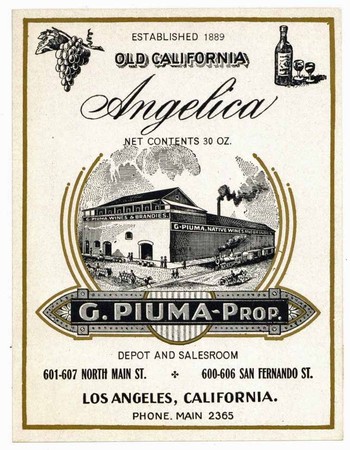
    Late 1800s label for G. Piuma Angelica, a generic fortified dessert wine made in Los Angeles primarily from the Mission grape.

    Allewelt comments on the immediate impact of Prohibition on the make-up of plantings in vineyards, particularly with respect to varieties most suitable for long train rides to grape markets on the East Coast:

    With the increase in production during recent years and the rapid development of eastern shipment, the question of variety has become one of major importance. Different varieties are adapted to particular and special uses, and some of the varieties formerly most desired for use in California are not, ordinarily, so desirable for eastern use on account of poor carrying qualities. These factors have brought about a marked differential in the values and prices paid for the different varieties…

    One of the book’s more interesting observations is on the graphic impact of terroir, or differentiations of site conditions in California, which made differentiation of cluster morphology somewhat challenging:

    The difficulty in identifying black wine grape varieties is due not only to the large number of varieties that are very similar in their characteristics but also to the fact that many of these varieties behave in widely different ways under different conditions. Soil texture, structure, composition, and moisture all have an important effect, as well as climatic conditions, which vary not only between districts but also between different seasons in the same district.

    Many of the factors entering into the detailed descriptions of varieties in this work are more or less variable. Where this is the case the description is made of typical fruit most commonly occurring in those districts where the variety is properly adapted.
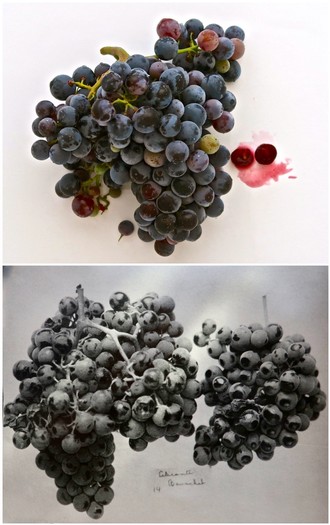
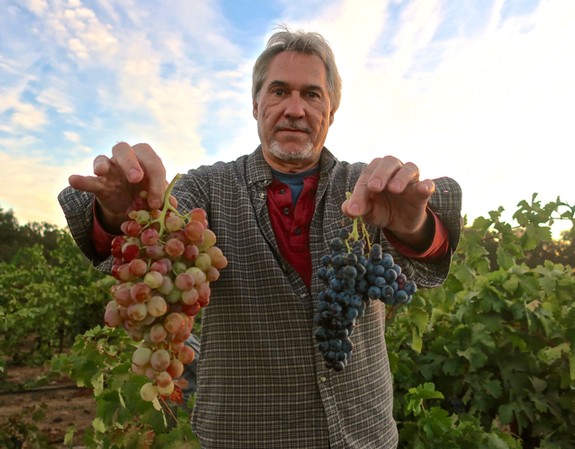
    Two depictions of Alicante Bouschet: Above, a recent photo of a cluster picked in Lodi demonstrating the grape’s red pulp; below, a plate from 1929’s “Black Juice Grape Varieties In California.”

    There is an interesting discussion of Alicante Bouschet, a teinturier (i.e., black juice variety) cultivar highly favored during Prohibition for its sturdiness useful for cross-country shipping:

    While the color of the juice of the Alicante Bouschet is distinctly red, grapes of this variety from some districts in certain seasons have had very light flesh and juice, this being particularly true in the case of young vineyards in hotter districts…

    In his discussion of variations of growing conditions in the different districts, Allewelt makes an interesting reference to Cornichon—nowadays, known as the extremely obscure French Vitis vinifera (also known as Purple Cornichon or Olivette Noire)—as well as Tokay (a.k.a., Flame Tokay), the latter once Lodi’s most widely planted grape (up until the 1970s):

    The color of the grapes themselves is influenced by soil and climate, and the typical color described is that commonly found in localities where the variety is properly adapted. In this respect, however, there appears to be much less variation in the black wine varieties than in some others, particularly Tokay and Cornichon.

    The size of bunches and berries shows some variation between districts, being generally smaller in non-irrigated districts than in those vineyards where irrigation is practiced. The fertility of soil, pruning methods, and volume of crop produced also influence the factor of [grape cluster] size. The form and density of bunches described are most commonly found in normal crops.
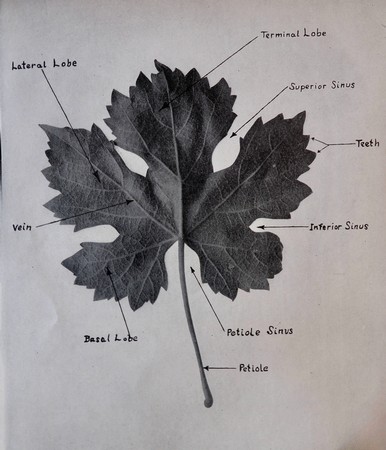
    Diagram of grapevine leaf morphology in “Black Juice Grape Varieties In California.”

    Despite the challenge of finding uniformity in grape morphology across districts cited in the book, Passalacqua sees this 1929 publication as a historical benchmark, saying, “These 1920s texts were the first wave of information helping to keep people in the California wine industry honest. By looking at the photos of grapes and leaves, a grape grower or winery could ascertain whether or not they were getting the grapes they were supposed to be getting.”

    Although the 1929 book presages the era of varietal labeling on California wines by some 25, to 30 years, Passalacqua reminds us that not all pre-Prohibition bottlings were generic blends: “There were some varietal wines made, particularly with Zinfandel and Cabernet Sauvignon, even before the 1920s. This book was extremely useful because it allowed people to see the differences between grapes, offering a true ampelography [i.e., the science of grapevines], or guide, even if not all of the information available to the authors at the time was accurate.”
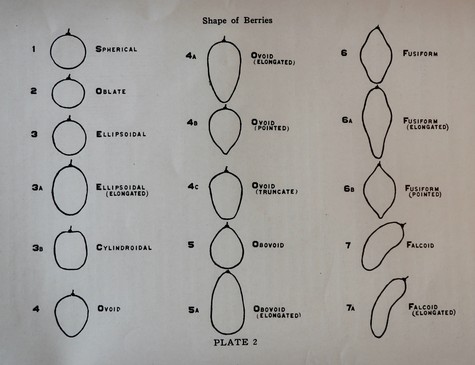
    Plate depicting grape berry shapes in 1929’s “Black Juice Grape Varieties In California.”

    To give you an idea of the red wine grapes considered most important during the 1920s, here is the listing in this book:

    Alicante Bouschet
    Alicante Ganzin
    Aramon
    Barbera
    Béclan
    Black Pinot
    Black Prince
    (also identified as Rose de Peru and classified primarily as a table rather than wine grape)
    Blue Elba
    Cabernet Sauvignon
    Calmette
    (identified as synonymous with Grand noir)
    Carignane
    Charbono
    Crabb’s Black Burgundy
    (also identified as Refosco)
    Friesa
    Gamay
    Grignolino
    Grand noir
    (synonymous with Calmette)
    Grenache
    Jacquez
    (identified as synonymous with Lenoir)
    Lenoir (synonymous with Jacquez)
    Limberger
    Malbec
    Malvoisie
    Mataró
    (listed separately from Mourvèdre, even though today we know it is the same grape)
    Mission
    Mondeuse
    Mourastel
    Mourvèdre
    (listed separately from Mataró)
    Nebbiolo (synonymous with Spanna)
    Petit Bouschet
    Petite Sirah
    (identified as synonymous with Durif, Serine and Syrah)
    Portuguese Blue
    Salvador
    Serine
    (synonymous with Durif, Petite Sirah, and Syrah)
    St. Macaire
    Syrah (synonymous with Durif, Petite Sirah, and Serine)
    Tannat
    Téoulier
    Trousseau
    Valdepeñas
    Zinfandel
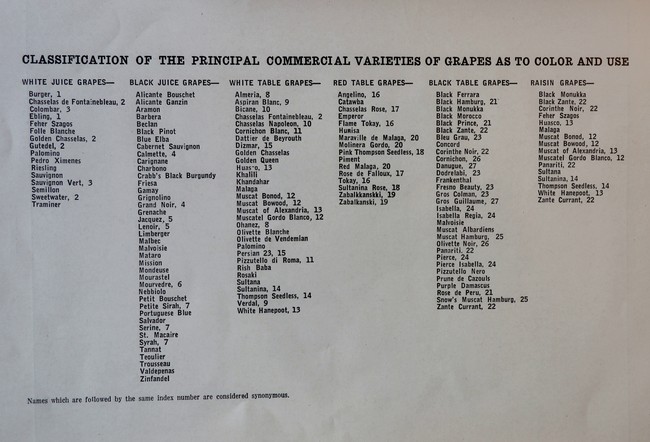
    Page listing California’s most important commercial wine grapes in 1929 from “Black Juice Grape Varieties In California.”

    Some of my own remarks on a few of the grapes in this 1920s listing:

    Black Pinot. According to UC DavisFoundation Plant Services, Black Pinot is one of several nineteenth-century synonyms for the grape known far better today as Pinot Noir. Although known to have been cultivated in California as early as the 1880s, according to Foundation Plant Services’ essay on The Pinots, “the early history of Pinot noir was marked by confusion as to varietal identification… and lack of integrity in the production of wine produced in the [generic] name of ‘Burgundy’… the confusion would not be resolved completely until the 1970s.” Hence the fact that, at least in the 1920s, the California wine industry was pretty much oblivious to the charms of Pinot Noir, largely because the grape performs optimally in colder climate regions which weren’t even explored in California until the 1980s and after.
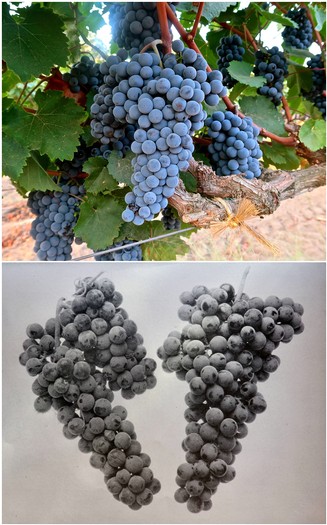
    Two shots of Charbono: Above, a recent photo of a Mokelumne River-Lodi planting; below, the plate from 1929’s “Black Juice Grape Varieties In California.”

    Charbono. Although once touted, up until the 1970s, as one of the state’s most prestigious grapes—particularly in Napa Valley—in 1999 UC Davis identified the correct name of Charbono as being Bonarda (as it is known in Argentina), which also makes it synonymous with the Douce noir of France’s Savoy region. It is still grown and bottled in California as Charbono.
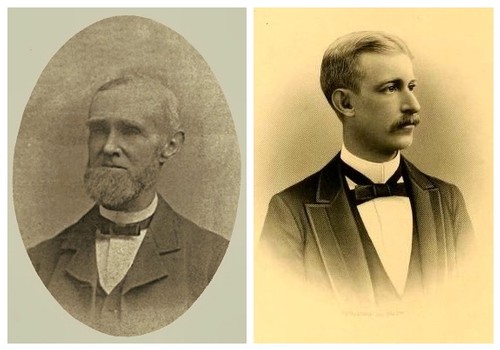
    Two of California’s leading nineteenth century grape pioneers: Napa Valley’s Henry Walker Crabb (left), and George West (right, founder of Stockton’s El Pinal).

    Crabb’s Black Burgundy. A somewhat fabled grape associated with Henry Walker Crabb, who between the 1860s and 1880s cultivated one of the largest collections of grape varieties in the state, in the vicinity of Oakville, Napa Valley (including the famed To-Kalon Vineyard). During the entire twentieth century Crabb’s Black Burgundy was considered to be synonymous with the Northern Italian grape Refosco, reputedly because of similarities in resulting wines—hence Perelli-Minetti’s citation. Recent DNA analysis has shown this not to be the case, and that the grape known as Crabb’s Black Burgundy was, in fact, a Savoie, France grape called Mondeuse noire, with no relation to Refosco.
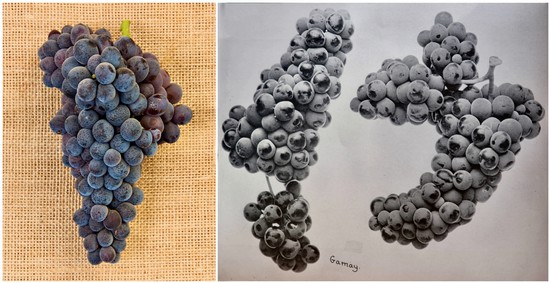
    Two shots of the cultivar once mistakenly grown as Gamay in California; On the left, Valdiguié (Foundation Plant Services); on right, the plate of the misnomered Gamay in 1929’s “Black Juice Grape Varieties In California.”

    Gamay. Although Gamay noir is famous as the primary black grape of France’s Beaujolais region, up until 30 years ago almost all of the grapes planted as Gamay (a.k.a., Napa Gamay) in California vineyards were actually a variety called Valdiguié (the latter, originating in France’s Languedoc-Roussillon). The grape was not conclusively identified as such by UC Davis until 1980. Up until that time, there was also a variety bottled as Gamay Beaujolais, which turned out to be neither a true Gamay nor Valdiguié, but rather a clonal variant of Pinot noir. California wineries were allowed to bottle both misnomered varietals as “Gamay” up until 1999. True Gamay noir does exist in California but is far more popular as a varietal red in regions such as Willamette Valley and British Columbia.
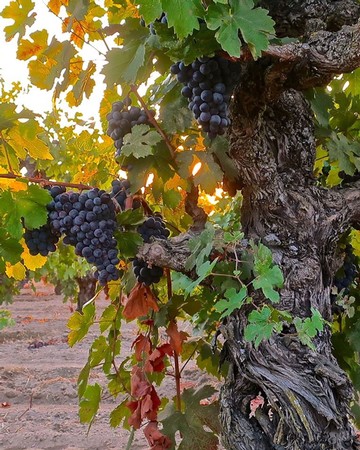
    Recent photo of Cinsaut—the grape formerly known as Black Malvoisie—in Lodi’s historic Bechthold Vineyard.

    Malvoisie. Up until 2004, this grape was identified by UC Davis as Black Malvoisie; when, in fact, it is synonymous with the Southern French grape far better known and in higher demand than Cinsaut (a.k.a., Cinsault). Because of this simple matter of nomenclature, historic plantings such as Lodi’s Bechthold Vineyard (25 acres originally planted in 1886 as Malvoisie) became overnight sensations. Prior to 2004, no commercial winery wanted a black-skinned grape called Malvoisie. The redubbed grape went from virtual obscurity to fame, and Bechthold itself was named California State Fair’s “Vineyard of the Year” in 2014.
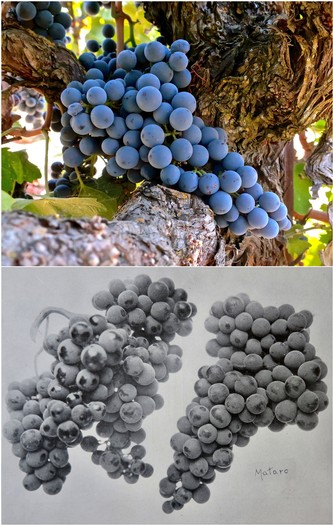
    Two shots of Mourvèdre: Above, a recent photo of the cultivar in Lodi’s Mettler Family Vineyards; below, the plate labeled as Mataró in 1929’s “Black Juice Grape Varieties In California.”

    Mataró. For most of the twentieth century, Mourvèdre was cultivated as Mataró in California, although the two names are listed as if they were separate cultivars in Perelli-Minetti’s 1929 treatise. According to University of California researchers, both monikers, along with Monastell, originated in Spain, although the grape is called Mourvèdre in Southern France and Mataró was the parlance typically utilized by California’s Portuguese immigrants. By the start of the “Rhône Ranger” movement in California during the 1980s, it was widely understood that Mataró, Mourvèdre, and Monastrell were synonyms of the same grape.
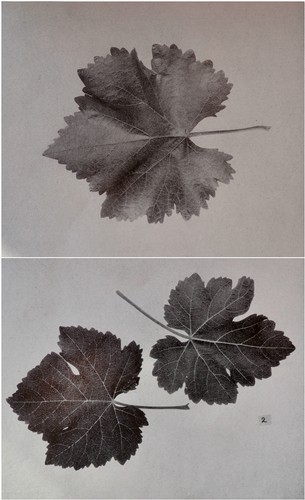
    Plate comparisons of grapevine leaves: From the Mission grape (top) and Petite Sirah (bottom), in 1929’s “Black Juice Grape Varieties In California.”

    Mourastel. Although there are plenty of early 1900s references to the Mourastel grape cultivated in California, the only use of this name found in textbooks today is in reference to the South-West French grape called Fer, for which Petit Mourastel is an even more obscure synonym. It was not until recently, thanks to DNA analysis, that the identification of grape varieties has become more of an exact science. Up until then, the multitude of synonymous or similar names has often led to confusion, speculation, or errant assumption, even when misrepresentation is given in good faith. Just to give you one example, in the early 2000s a good number of California vineyards were planted to a grape called Monastrell, a well-known Spanish synonym for Mourvèdre (a.k.a., Mataró)—but not to be confused with the long discarded Mourastel, nor Moristel (the latter, a completely different Spanish grape). Although this particular selection of Monastrell was sourced from a reputable plant breeder in Portugal, it was found that the grape was neither a Monastrell nor any kind of variant of Mourvèdre, but in fact a Spanish grape called Graciano. Based upon descriptions in other early publications, Passalacqua believes that the “Mourastel” cited by Perelli-Minetti in the 1920s was, in fact, also a Graciano unbeknownst to the author. Foundation Plant Services originally released the misnomered Portuguese selection in 2007 as Monastrell. Following DNA testing, it was re-released in 2019 by its correct name, Graciano (FPS 08). Be as it may, growers who originally thought they had a clone of Mourvèdre (in commercial demand as a French “Rhône” grape) in their fields were suddenly forced to adjust to the fact that they have a Spanish grape—albeit one with plenty of its own positive attributes—on their hands. Since the late 1990s, as it were, Lodi’s Bokisch Vineyards has developed a sterling reputation for its varietal Graciano—in this case, a cultivar correctly identified in the field from the very beginning.
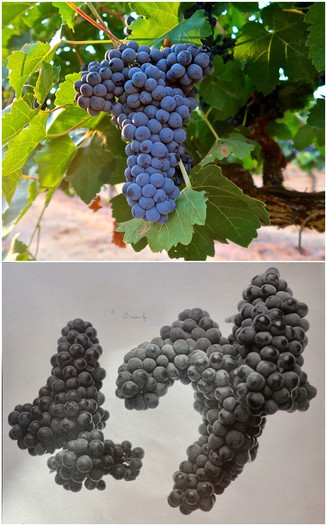
    Two shots of Petite Sirah with its typical hammer-like shoulder: Top, a recent photo of the grape in Lodi’s Mokelumne River appellation; below, a plate from 1929’s “Black Juice Grape Varieties In California.”

    Petite Sirah. As recently as the mid-1990s, Petite Sirah was mistakenly believed in California to be a clonal variant of Syrah; in fact, even today the variety is bottled as Petite Syrah by some wineries. In 1997 UC Davis established, once and for all, that almost all the Petite Sirah grown in California is identical to the variety known in France as Durif, an 1860s crossing of Peloursin and Syrah grapes attributed to a Montpellier, France botanist named François Durif. It has been speculated that the Durif grape was introduced to California as early as 1884, and almost immediately became known as Petite Sirah, most likely because it was thought to be a Syrah, and also because it was often interplanted with actual Syrah (and sometimes with its co-parent, Peloursin).
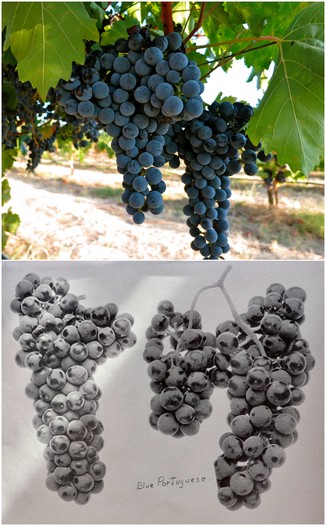
    Two sides of the grape known as Blauer Portugieser: Top, from Lodi’s Mokelumne Glen Vineyards; bottom, the plate for Portuguese Blue in 1929’s “Black Juice Grape Varieties In California.”

    Portuguese Blue. Although this cannot be confirmed, based upon language alone (a dicey proposition when it comes to grape varieties), in all likelihood this is the same grape better known today as Blauer Portugieser—something of a misnomer in itself, since the grape of this name originated in either Hungary or Austria rather than in Portugal. Although the origin of its name is lost in time (probably in the 1700s), it has recently become more popular in Germany than anywhere else. While today it is almost unheard of in California, Blauer Portugieser is actually grown in Lodi’s Mokelume Glen Vineyards, along with over 50 other grapes of German or Austrian origin.
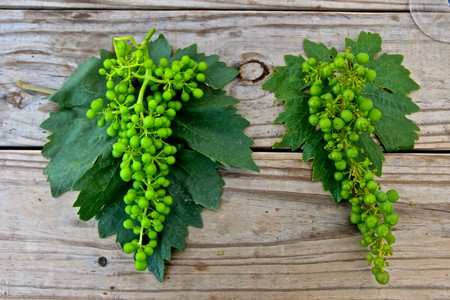
    Comparison of grapevine leaf size and morphology: Tempranillo (left) vs. Zinfandel (right), both samples grown in Mokelumne River-Lodi.

    Valdepeñas. A grape far better known as Tempranillo, although listed by the USDA as Valdepeñas (a.k.a., Tinta Valdepeñas) for most of the twentieth century because clonal material of this grape disbursed throughout the state came from a University of California experimental station in the Foothills (in operation during the 1880s), which identified the selection as Valdepeñas rather than Tempranillo. It wasn’t until 2000 that Foundation Plant Services conclusively confirmed that the plant material long known in California as Valdepeñas is a selection of Tempranillo. Among Lodi-based wineries, Tempranillo has become arguably the most popular varietal red wine after Zinfandel, although most of the plant material cultivated here has come from more recent selections imported from Spain by growers such as Bokisch Vineyards.
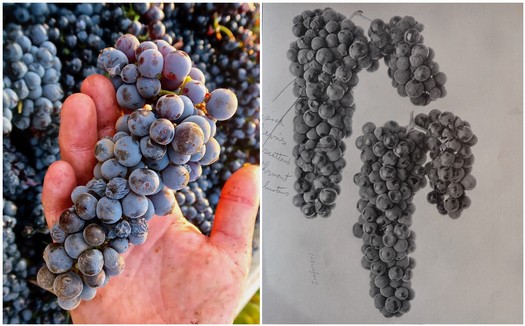
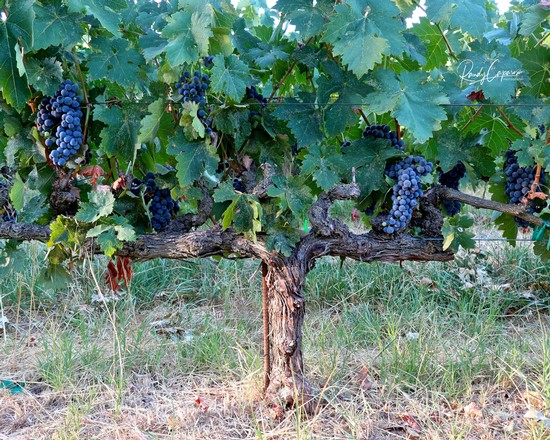
    Two sides of classic California Zinfandel: Left, from an ancient vine (over 100 years old) Mokelumne River-Lodi growth; on right, the plate from 1929’s “Black Juice Grape Varieties In California.”
  • 2022 Lodi Tour of Tempranillo, the varietal’s history and what makes Lodi’s style so unique

    2022 Lodi Tour of Tempranillo, the varietal’s history and what makes Lodi’s style so unique

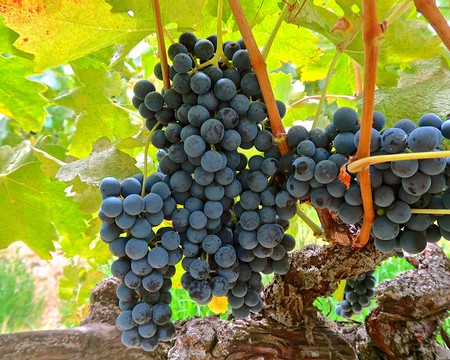
    Spanish selection of Tempranillo grown in Bokisch’s Las Cerezas Vineyard in Lodi’s Mokelumne River AVA.

    Prepare thyself for Lodi‘s annual Tour of Tempranillo; 2022’s iteration taking place the weekend of November 12-13, timed to follow International Tempranillo Day (November 10, 2022).

    As in the past, the 2022 Lodi Tour of Tempranillo will be a no-reservations-required, complimentary drive-around event. This year, 10 Lodi wineries will be opening their doors to offer special tastings, many of them with multi-bottling flights, Spanish inspired food bites and weekend-only-discounts (see some of the details for each winery at the end). All you need do is show up and say, ¡olé!

    Wherefore Tempranillo (in Lodi and elsewhere)?

    Over the past 20 or so years, the Tempranillo grape has proven to grow very, very well in Lodi. This is why well over a dozen wineries in Lodi now produce varietal bottlings of Tempranillo.

    In terms of acreage, the most recent California/USDA reports show that 119 acres of Tempranillo are grown in the Lodi appellation, which is 12.8% of California’s entire acreage (929 acres total).

    As with the 100-plus other varieties of Vitis vinifera (i.e., the classic European family of wine grapes) cultivated in the appellation, the reason why Tempranillo produces distinctively fragrant, finely balanced styles of Tempranillo in Lodi is because of climatic suitability. Specifically, Lodi’s Mediterranean climate—essentially, cool, wet winters and warm, dry summers marked by significant diurnal swings (cool nights and warm-to-hot days during peak summer months)—which, in fact, characterizes most of California’s coastal wine regions.

    Close-up of Tempranillo in Bokisch’s Las Cerezas Vineyard.

    Tempranillo, as can be surmised by its name, is a black skinned grape of Spanish origin. It is also grown in Portugal, where it is primarily known as Tinta Roriz. The grape’s primary nomenclature, it’s been said, derives from the Spanish word temprano, or “early,” in reference to the fact that Tempranillo ripens earlier than other red wine grapes in Spain.

    In Lodi, Tempranillo is not the earliest grape to reach optimal ripeness—Zinfandel is typically picked first in our region—but it is certainly ready to be picked several weeks earlier than Bordeaux varieties such as Cabernet Sauvignon and Malbec, deeply pigmented Italian grapes such as Teroldego and Nero d’Avola, or even Graciano, another Spanish grape often grown alongside Tempranillo.

    Roman mosaic depicting the wine god Bacchus excavated in Spain’s Ribera del Duero wine region.

    It is speculated that Tempranillo has probably been cultivated in Spain for as long as 2,000 years. There is no actual proof of that; but there are mosaics dated back to the Roman Empire in regions such as as Ribera del Duero, one of Spain’s major Tempranillo regions. Tempranillo is Spain’s most widely planted red wine grape, forming the backbone of wines associated with other prolific wine regions such as Rioja, Toro, Penedès, Navarra, Valdepeñas and La Mancha.

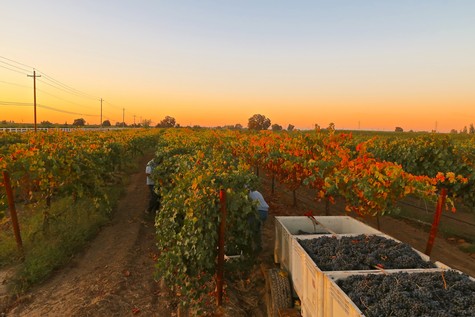
    Tempranillo harvest in the Anaya family’s Potrero Vineyard in Lodi’s Clements Hills AVA.

    Tempranillo was introduced to California by the 1880s, where it was originally known as Tinta Valdepeñas. It was listed by this name among the varieties cultivated at the UC Davis Foothill Experiment Station in Jackson, Amador County, which was where Dr. Goheen “rediscovered” selections in 1963 (at a time when the station had been long abandoned). For most of the 20th century, California grape crush reports listed the grape simply as Valdepeñas (rather than Tempranillo), and it was considered a minor variety; primarily because most of it was planted in warmer regions of the Central Valley, where it produced nondescript wines, going into “jug” wines or sweet fortified bottlings.

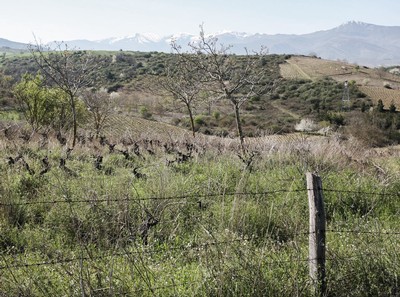
    Stray vines on the site of the historic Foothill Experiment Station in Jackson, Amador County.

    Modern day interest in Tempranillo in the U.S. began with plantings in Washington’s Red Willow Vineyard (Yakima Valley) in 1993. In 1994, Earl Jones founded his Abacela Estate in Oregon’s Umpqua Valley for the specific reason of specializing in Tempranillo. Jones planted selections of the grape sourced from both the U.S. as well as Rioja in a region he observed to be in closer latitudinal alignment to the North of Spain, as well as having the warm summers and cool autumns approximating regions such as Rioja and Ribera del Duero. Abacela’s impact is such that there are now over 40 other producers of Tempranillo in Oregon alone. The winery’s continuing work with the grape has also clearly demonstrated the grape’s propensity towards longevity and complexity when accentuated by extended, and aggressive, oak aging—something Spanish vintners discovered centuries ago. Tempranillo loves oak!

    Anaya family’s Potrero Vineyard Tempranillo harvest.

    It was in 1996 when Markus and Liz Bokisch first established their Bokisch Vineyards in Lodi. Mr. Bokisch felt that his first planting of the grape—in Terra Alta Vineyard in Clements Hills, characterized by its rocky, red clay-based Redding series soil, rolling hills and Mediterranean climate—was an ideal site for plant material that he had sourced directly from Spain.

    Up until recently, Bokisch Tempranillos have been produced in a supple, moderately weighted, very subtlely oak influenced style inviting immediate consumption; although the winery has recently begun experimenting with cuvées aged much longer in wood in keeping with classic styles of Spain, which seem to gain breadth and structure from oak tannin and barrel oxidation. Today, Bokisch’s FPS Clones 12 and 12.1—referred to as Tinto Fino selections from Ribera del Duero—are also among the dozen or so selections of Tempranillo made available to other growers and vintners throughout the American winegrowing industry.

    Lodi’s earliest Tempranillo planting on record, originally planted on the east side of the Mokelumne River AVA in the mid-1990s, now owned and farmed by McCay cellars.

    Also in Lodi during the late 1990s, the late Alan Kirschenmann planted a small block of Tempranillo for Mitch Cosentino in one of the sandiest pockets of the Mokelumne River AVA, east of the City of Lodi. Just a quarter mile away, the Bokischs planted Tempranillo in their Las Cerezas (“Cherry Road”) Vineyard. Both plantings have since matured (the Kirschenmann block now owned and farmed by McCay Cellars) and have proven that Tempranillo can produce perfectly “varietal” (i.e., meaty and dense, like new leather) qualities in lower elevation, sandy loam soils, as opposed to the rocky clay hillsides traditionally associated with the grape.

    Lodi vintners and growers blind taste Lodi Tempranillos with visiting sonmeliers this past May 2022.

    The distinctive Lodi style

    This past April 2022, on the occasion of a visit of sommeliers from across the country, we conducted a blind tasting in which we endeavored to identify the sensory qualities distinguishing Lodi-grown Tempranillos (see our post, Sommeliers assess the state of Lodi Albariño and Tempranillo).

    Our findings: Lodi-grown Tempranillo is strongly “red fruit” oriented. That is, Lodi-grown Tempranillos exhibit, across the board, lots of red or black cherry aromas and flavors, sometimes more like raspberry, strawberry, pomegranate and ocasionally like red licorice, almost always with a mild touch of a earthiness (suggesting loam or dried leaves), coupled with gentle, rounded tannin.

    Dropped Tempranillo on the sandy clay loam soil of Lodi’s Jahant AVA.

    The significance of this predominantly red fruit and soft tannin profile is that this is markedly different from what you find in most of the classic regions of Spain, where Tempranillo-based reds often mix red fruit with darker black or plummy fruit qualities in their varietal profile. These deeper and denser fruit qualities also account for the reason why Spanish Tempranillo bottlings typically possess strongly earth-toned and oak influenced characteristics—the intrinsic depth of Tempranillos grown in Spain is more conducive to barrel aging—and are often suggestive of leather, tobacco, olives, roasting meat, “animal,” and other aggressive qualities.

    Spanish Tempranillos fall into a wide range of characteristics not so much because of chosen styles wrought by centuries of tradition, but rather, the fact that they are grown in a far wider range of climate, topography and (generally higher) altitude—collective circumstances often defined as terroir, a factor accounting for specific sensory attributes typifying resulting wines—than what can be found in Lodi.

    Incoming Tempranillo at Lodi Crush in Downtown Lodi.

    Lodi Tempranillos share more uniformity of red fruit profiles, on top of predictably soft, supple tannin qualities for this reason: the region’s uniformity of Mediterranean climate, topography and altitude. To be specific, all of Lodi’s plantings fall within 50 to 150-ft. elevations, on flat surfaces or gentle slopes at most, and are grown in the region’s watershed-defined soils (either predominantly sandy, silty loams or gravelly clay soils with sandy content).

    Another way to look at the terroir-related typicité of Lodi Tempranillo is to compare it with that of bottlings grown just a few miles away. Case in point: While St. Amant Winery is based in Lodi, its family-owned vineyards are located on higher elevation hillsides in nearby Amador County, distinctively different from any place in Lodi. Therefore, St. Amant Winery Tempranillos are consistently fuller bodied, significantly darker and more structured in tannin content, and both plummier and darker berried in fruit profile than any Tempranillos in Lodi. These attributes don’t make the St. Amant Tempranillo “better” than any in Lodi—just different.

    “Jungle” of split-canopy Tempranillo (a.k.a., Tinta Roriz) in Lodi

    All of which add up to this: Lodi does indeed has its own distinctive, and highly appealing, style of Tempranillo; different from Spain’s, different from Oregon’s, Washington’s or anywhere else in California. ¡Viva la diferencia!

    The following wineries invite you to visit Lodi on November 12-13 to discover this for yourself…

    Anaya Vineyards
    The Lounge at Lodi Crush
    21 E. Elm St., Lodi
    Open 12-8 PM Saturday; 12-5 PM Sunday
    Offerings: Visit Lodi’s latest (opening in early November) Downtown tasting room; live music on Saturday; 10% discounts during the weekend only; extra 10% off for first-time wine club members.

    Markus Bokisch tending to his small vine traine, close-spaced Tempranillo in Las Cerezas Vineyard in Lodi’s Mokelumne River AVA.

    Bokisch Vineyards
    18921 Atkins Road, Lodi
    Open daily, 11-5 PM
    Complimentary side-by-side tasting of 2018 Tempranillo, 2018 Family Estate Tempranillo and 2016 Gran Reserva Tempranillo; “Tacos and Tempranillo” offered all weekend long; live acoustic music on the lawn; Streetzlan Taco Truck on Saturday, Gondos Fusion food truck on Sunday; special priced Tempranilo 3-pack this weekend only.

    Heritage Oak Winery
    10112 E. Woodbridge Road, Acampo
    Open daily, 11-5 PM
    Complimentary flights of 3 wines, 2018 Tempranillo, 2019 Tempranillo and 2018 Olé! Blend; 10% off during the weekend only, and extra 5% off for club members.

    Wine flight tasting in the barrel room at Jeremy Wine Co. in Lockeford, on the east side of Lodi.

    Jeremy Wine Co.
    16750 CA-88, Lockeford
    Open Thursday–Monday, 11-4 PM
    Visit the recently opened winery/tasting room on Lodi’s east side between Lockeford and Clements; taste Tempranillo in two stages of winemaking, straight from the barrel (the unreleased 2021 Tempranillo) and current release (recently bottled 2019 Tempranillo); seated flight service in the barrel room or outdoor patio; snacks and charcuterie items available for purchase.

    Drava Wines
    1378 E. Turner Rd., Lodi
    Open Thursday-Tuesday, 11-5 PM
    Complimentary tasting of 2017 Tempranillo from Silvaspoons Vineyard, 2019 fellow Rioja varietal Graciano from Ripken Vineyards, and a barrel tasting of 2021 Tempranillo from Clements Hills; each visitor can enjoy a hot bacon wrapped date stuffed with goat cheese; 10% discount on 2-bottle purchases.

    Heritage Oak owner/grower/winemaker Tom Hoffman doing his harvest punch-downs.

    Heritage Oak Winery
    10112 E. Woodbridge Road, Acampo
    Open daily, 11-5 PM
    Complimentary flights of 3 wines, 2018 Tempranillo, 2019 Tempranillo and 2018 Olé! Blend; 10% off during the weekend only, and extra 5% off for club members.

    Twisted Barrel
    1376 E. Turner Road, Lodi
    Open Saturday/Sunday, 12-5 PM
    Complimentary tasting of 2018 Tempranillo; complimentary charcuterie for visitors purchasing 6-wine flight.

    Fields Family Wines
    3803 E Woodbridge Road, Acampo
    Open daily, 11-5 PM
    Complimentary tasting of two library vintages of Tempranillo (2015 and 2016) plus current release (2018); 15% discount towards purchase.

    Fields Family Wines co-owner/winemaker Ryan Sherman.

    McConnell Estates Winery
    10686 W. Stockton Blvd, Elk Grove
    Open Thursday–Sunday, 11-5 PM
    Complimentary vertical tasting of 2017, 2018, 2019, and 2020 Tempranillo; live music on the lawn on Sunday; 10% discount on all purchases of Tempranillo bottlings; extra 5% discount for club members.

    Riaza Wines
    2441 South Stockton St., Lodi
    Open Friday-Sunday, 11-5 PM
    Complimentary tasting of select Tempranillo and Tempranillo based blends; featured wines offered at 20% discount.

    Van Ruiten Family Winery
    340 W Hwy 12, Lodi
    Open daily, 11-5 PM
    Contact winery (akaylia@vrwinery.com or 209-334-5722) for more details closer to the date.

    Tempranillo harvest in Lodi’s Clements Hills AVA.
  • 2022 update on Lodi’s oldest vine growths (part 1)—west side of the Mokelumne River AVA

    2022 update on Lodi’s oldest vine growths (part 1)—west side of the Mokelumne River AVA

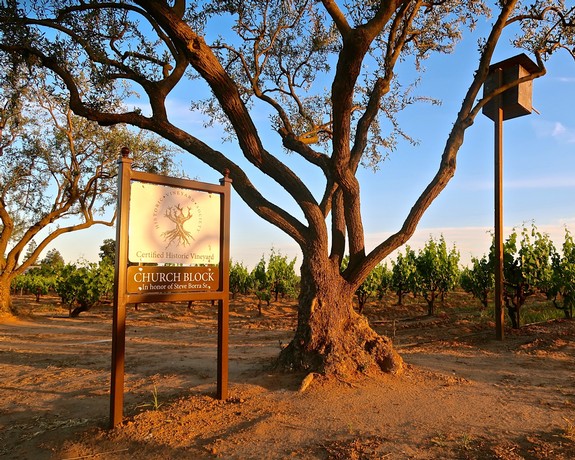
    The Historic Vineyard Society-certified Church Block was originally planted on Lodi’s west side in the early 1930s.

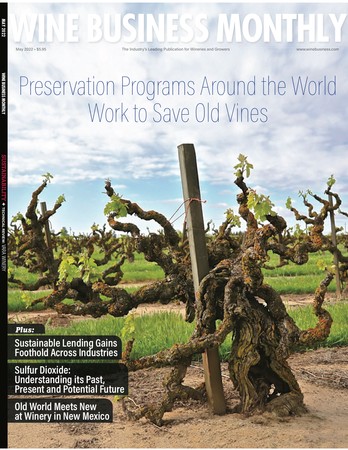
    In the May 2022 issue of America’s leading wine industry magazine, Wine Business Monthly, the cover story—festooned by a photo of a classic, 121-year-old Lodi old vine Zinfandel plant—is entitled, Preservation Programs Around the World Work to Save Old Vines.

    The author writes, on efforts to save older vines all around the world:

    … the best efforts to protect old vines come from initiatives led not by trade associations or government organizations, but by winemakers, journalists, and even consumers. There is now an international Old Vine Conference in the United Kingdom. California has the Historic Vineyard Society. But these efforts are led by volunteers. While government organizations sometimes offer funding for viticulture under the general rubric of agriculture, support for old vines is rare.

    The big wineries didn’t want [the Historic Vineyard Society] to happen,” said Tegan Passalacqua, winemaker at Turley Wine Cellars and an old-vine advocate. “They like paying not so much for old-vine grapes.

    The May 2022 cover of Wine Business Monthly, is festooned by a classic old vine Zinfandel plant (Marian’s Vineyard, planted in 1901).

    Ironically, of course, the rarer old vines become — the Historic Vineyard Society defines “old vine” as anything older than 50 years — the higher the price of their grapes, which would not be to the advantage of big wineries. In Napa Valley and Sonoma County, for instance, where grapes such as Cabernet Sauvignon, Pinot Noir, Merlot, and Chardonnay dominate vineyards, the far fewer plantings of classic old vine varieties such as Zinfandel now top $4,500/ton. For wineries purchasing these grapes, this translates into a minimum of $45/bottle by the time a wine hits a retail shelf.

    In Lodi, which still produces approximately 40% of California’s entire Zinfandel crop each year, grape prices are still less than half of Napa’s or Sonoma’s for the simple reason that top quality grapes, from both young and old vines, are far more plentiful. Hence, Lodi growers can profitably produce grapes for bottles priced anywhere from $12 to $40 dollars. And face it: The vast majority of wine consumers would rather pay $15 to $25 for a bottle of Zinfandel than $45 or $75.

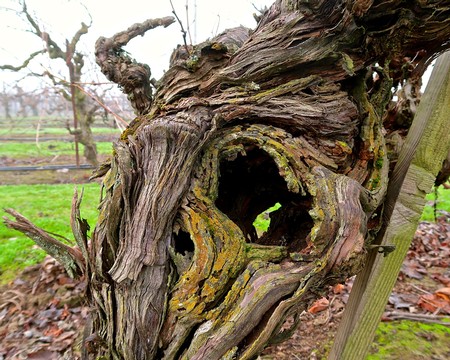
    The hollowed trunk of 133-year-old Zinfandel in Jessie’s Grove.

    Here’s the rub: It is well known that from the perspective of pure quality, the finest Zinfandels come from older vines. There are, of course, exceptions. There are some primo sites in certain parts of Lodi where top-quality Zinfandel is being produced from vines less than 40 years old. Excellent examples include the Mikami and Maley’s-on-Lucas Road vineyards on the west side, and Cemetery Vineyard and Mettler Family’s HGM Vineyard on the east. All the same, it’s after 50 years of age that Zinfandel plants develop a deep enough root system and thick enough trunks and spurs to produce the finest and most consistent quality wines. For grape varieties such as Carignan, vintners cite 75 or 80 years as the length of time before vines produce optimal quality.

    There’s no real science behind these estimations. Wine quality, as everyone knows, is a perceived assessment. In an interview during Zinfandel Advocates & Producers‘ annual grand tasting in San Francisco in 2018, Passalacqua explained this sensory phenomenon:

    We [Turley Wine Cellars] are one of those wineries that go through the tedious process of picking young vines separately. Most wineries bottle old vine Zinfandels from vineyards with at least 20% replants [i.e., younger vines planted in vineyards to replace dead old vines]. But they just pick the whole field, and their vineyard management teams want them to do it that way. We pick separately so that gives us a true standard that we can test. We have wines made from old vines and wines made from young vines, and we KNOW there’s a difference. We have worked with just one vineyard in Napa Valley where, in some years, the young vines could be of the same quality as the old. But that’s out of working with 50 vineyards throughout the state.

    Turley Wine Cellars’ Tegan Passalacqua with Lodi Zinfandel harvest

    That said, we would contend that the preservation of old vines in the Lodi appellation would be beneficial to all wineries, big and small. While large-scale wineries would prefer lower-priced grapes in order to profitably produce wines retailing between $8 and $18, quality is still a priority. In that price range, the average consumer often bases buying decisions on “comfort” brands—labels that the consumer feels will deliver a consistent level of quality. In order to remain competitive, wineries need grapes that meet consumer expectations.

    Here in Lodi, the best way we know to keep older vines in the ground is to recognize and celebrated these vineyards. The only reason why vineyards survive 50, 75, or over 100 years is that they are valued—by owners, caretakers, wineries, or at least someone. A classic example is Lodi’s oldest vineyard, called Bechthold, consisting of 25 acres of own-rooted Cinsaut that were planted in 1886 for a Stockton winery (called El Pinal) that went out of business during the 1920s. By the early 2000s, Bechthold’s owners, Al Bechthold, and Wanda Woock, fully acknowledged that it was costing them more to farm the vineyard than what they were getting for the grapes. But the vines remained in the ground, primarily for sentimental reasons—it was the first vineyard planted by Woock’s great-grandfather, Joseph Spencer.

    The Bechthold Vineyard, however, survived because it was eventually “discovered” by a number of small, specialty producers who came to value the soft, round yet spicy scented reds and rosés produced by these ancient vines, and they were willing to pay four times more for the fruit. The vineyard became so well known that, in 2014, the California State Fair named it the state’s “Vineyard of the Year.”

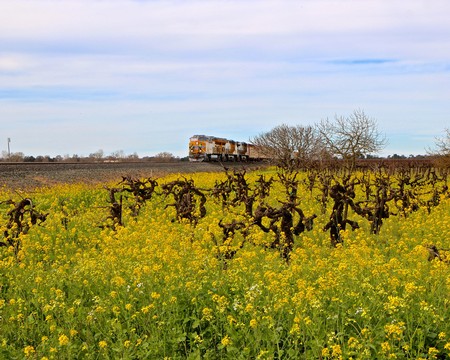
    Old vine Zinfandel alongside the historic Central Pacific Railroad tracks that run north-south through the center of the city of Lodi.

    Old vine Lodi growths—west side of Lodi’s Mokelumne River AVA

    As the years go by, more and more of these special, old vine growths are beginning to be recognized. Many of them (not all) now go into bottlings with their vineyard designations clearly stated on the label. The more this happens, the more consumers, trade, and media are able to distinguish and appreciate the sensory qualities unique to these particular vineyards. Getting to know the unique taste of each of these old vine vineyards only increases their value, thus their chances of survival.

    By the same token, in order for Lodi to continue to be recognized as the home of more old vine plantings than anywhere else in California, we all need to better appreciate this special vineyard; and loudly demonstrate it, with our wallets!

    Please note, in the following listing we are defining the “west” vs. “east” sides of Lodi by the historic Central Pacific Railroad tracks (now utilized by Southern Pacific Railroad and Amtrak) that run north-south through the center of the City of Lodi. This demarcation correlates with the observations of most old-time growers, who find sandier, almost beach-like variations of the classic Tokay series fine sandy loam soil on the east side, as opposed to loamier variations of the same soil on the west side (for more details, see our post Direct impact of east vs. west side terroirs on the taste of Lodi Zinfandel).

    Part 1 (listing west side growths) of our accounting of Lodi’s special old vines, here in 2022:

    Cinsaut harvest in Bechthold Vineyard, Lodi’s oldest continuously farmed vineyard.

    Bechthold Vineyard, Cinsaut

    Vineyard name: Bechthold Vineyard
    Year planted: 1886
    Size: 10.1 hectares
    Variety(ies): Cinsaut
    Wineries: Michael David Winery; Turley Wine Cellars; Onesta Wines; McCay Cellars; Fields Family Wines; Jessie’s Grove Winery; Estate Crush; Scholium Project; Two Shepherds; BIRICHINO; Odisea Wine Company; Lorenza True Rosé; Ser Winery

    • This 25-acre block consists entirely of own-rooted, spur-pruned, largely double-layered vertical cordon-trained Cinsaut, originally planted as “Black Malvoisie” by Joseph Spenker in 1886.
    • It produces both soft, sumptuous reds as well as strikingly Provençal-style rosés by at least a dozen wineries each year.
    • While still owned by Joseph Spenker’s great-granddaughter Wanda Woock, this block has been managed and farmed organically by Phillips Farms (the farming arm of Michael David Winery) since 2008.
    Bechthold Vineyard was named the 2014 California Vineyard of the Year by the California State Fair and remains revered for being the oldest continuously farmed vineyard in the Lodi AVA.
    • Registered by Historic Vineyard Society.

    Marian’s Vineyard, Zinfandel

    Vineyard name: Marian’s Vineyard
    Year planted: 1901
    Size: 3.3 hectares
    Variety(ies): Zinfandel
    Wineries: St. Amant Winery

    • This revered 8.3-acre block of own-rooted, head trained (i.e., goblet) Zinfandel was originally planted by the Mettler family in 1901 south of the City of Lodi along West Lane, north of Armstrong Road. It is now part of Mohr-Fry Ranches, owned and farmed by the Fry family since 1965.
    • Stuart Spencer—owner/winemaker of St. Amant Winery, which has taken nearly the entire vineyard since 1999—has described these as Lodi’s “mother of all vines,” an opinion with which few Lodi vintners would beg to differ.
    • The combination of meticulous, LODI RULES-driven viticulture, exceptionally sandy soil with limestone lenses, or streaks, and a unique clonal selection has resulted in enduring vine health and strikingly different vine and cluster morphology, compared to adjoining Mohr-Fry Ranches Zinfandel blocks planted between 1941 and 1945.
    • These vines still yield 2.5 to 4 tons per acre and produce a distinctively bold, concentrated style of Zinfandel somewhere between the floral, delineated styles of Lodi’s east side and the lush, round, earthier styles of Lodi’s west side.
    • Vineyard-designate Marian’s Vineyard Zinfandels have been bottled by St. Amant since 1999, as well as under St. Amant’s Lodi Native label.
    • Registered by Historic Vineyard Society.

    Own-rooted, goblet-trained ancient vine Zinfandel in Soucie Vineyard, planted in 1916 by the Soucie family.

    Soucie Vineyard, Zinfandel

    Vineyard name: Soucie Vineyard
    Year planted: 1916
    Size: 2.4 hectares
    Variety(ies): Zinfandel
    Wineries: m2 Wines; Michael David Winery; PRIE Winery

    • This 100% own-rooted, head-trained Zinfandel vineyard—its oldest block dating back to 1916—has been owned, planted, and farmed by the Soucie family for three generations. Kevin Soucie is the current custodian.
    Located on the far western edge of the Mokelumne River AVA, closest to the Sacramento-San Joaquin River Delta, this block is known for its extremely fine, talcum powder-like variant of the Tokay series sandy loam soil, sometimes identified as a DeVries series sandy loam.
    • The growth and success of Lodi’s m2 Wines have been intertwined with Soucie Vineyard since the winery’s founding in 2002, although most of the Soucie Vineyard Zinfandel goes to Michael David Winery.
    • In years past, Soucie Vineyard played a major part in Michael David’s top-of-the-line Lust Zinfandel and was one of the original seven properties going into the first 7 Deadly Zins bottlings.
    • Soucie Vineyard has always produced one of Lodi’s most aromatic, fleshy, full-bodied yet well-balanced Zinfandels—think of the line by Bob Dylan about a “mattress balanced on a bottle of wine.” Its wines are pungent with red and black berried qualities tinged with unmistakably loamy/earthy, organic qualities.
    • Vineyard-designate Soucie Vineyard Zinfandels are bottled by m2 Wines as Soucie Vineyard and Select Block (the latter, a reserve cuvée culled from specific rows receiving more leaf pulling and fruit dropping), as well as under m2’s Lodi Native label. There is also a vineyard-designate Soucie Vineyard Zinfandel produced by PRIE Winery.
    • Registered by Historic Vineyard Society.

    Wegat Vineyard, Zinfandel

    Vineyard name: Wegat Vineyard
    Year planted: 1958
    Size: 8.5 hectares
    Variety(ies): Zinfandel
    Wineries: Maley Bros. (bottled as Lodi Native); Macchia Wines

    • This 21-acre vineyard represents the “crown jewel” of the 330 acres of grapes owned and farmed by the Maley family, close cousins of Michael David Winery’s Phillips family and all descendants of Andrew Harshner, who began homesteading on Lodi’s west side in 1869. The Malays were one of the seven growers comprising Lodi’s original “7 Deadly Zins.”
    • Wegat Vineyard is farmed by Todd Maley, the son of Joseph Maley who first established the Maley Bros. wine brand with his late brother Louis Maley.
    • It consists primarily of spur-pruned, layered vertical cordon-trained vines planted in 1958 on St. George rootstock.
    • Plant material was originally taken from an Acampo vineyard, a selection now prized by wineries such as m2 Wines, Oak Farm Vineyards, and Macchia Wines for its consistently loose, fairly uniform, small-berried clusters.
    • Wegat yields what is considered to be quintessential west-side Zinfandel, distinguished by flowery, red-towards-blue berried fruit qualities underlined by signature loamy/earthy undertones, and rounded, plush texturing.
    • Wegat Vineyard Zinfandel is now bottled each year under Maley Bros.’s iteration of Lodi Native Zinfandel.

    Maley Bros.’s Joe Maley, whose family has been farming in Lodi since the late 1860s, in the landmark west-side growth, Wegat Vineyard.

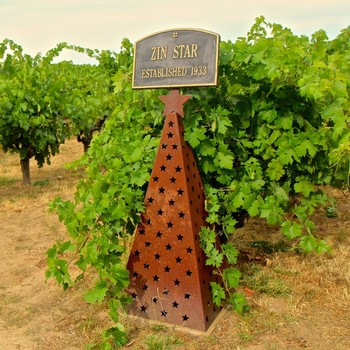
    ZinStar Vineyard, Zinfandel

    Vineyard name: ZinStar Vineyard
    Year planted: 1933
    Size: 1.4 hectares
    Variety(ies): Zinfandel
    Wineries: The Lucas Winery

    • Zinstar was notably Lodi’s first single-vineyard estate bottling, starting with the 1978 vintage and bottled every year since by The Lucas Winery.
    • This 3.5-acre block consists of spur-pruned, double-layered vertical cordon-trained Zinfandel planted on its roots in 1933. It is located in the heart of the Mokelumne River AVA’s west side, just east of the historic Spencer Ranch/Jessie’s Grove property, and north of West Turner Road.
    • It is certified organic by California Certified Organic Farmers (CCOF), and sustainably by LODI RULES for Sustainable Winegrowing.
    • This vineyard produces a medium-bodied style of Zinfandel of moderate alcohol, zesty natural acidity, and distinctively earth-toned, lush fruit qualities, which results in as much from a stylistic choice originated by owner David Lucas and continued by his spouse, winemaker/vineyard manager Heather Pyle Lucas, as from intrinsic terroir.

    TruLux Vineyard (Pescador Vineyard), Zinfandel

    Vineyard name: TruLux Vineyard (a.k.a., Pescador Vineyard)
    Year planted: Mid-1940s and mid-1970s
    Size: 12 hectares
    Variety(ies): Zinfandel
    Wineries: McCay Cellars; Watts Winery; Michael David Winery; Baron Herzog Wines

    • Another one of Lodi’s most distinctive west-side vineyards, TruLux’s 12 hectares of Zinfandel on St. George rootstock are located less than a quarter-mile south of West Kettleman Lane, behind Van Ruiten Family Winery. Half the vines were planted during the 1940s, with an inter-planting of younger vines put in during the 1970s.
    • The vineyard is owned and farmed by Keith Watts and has also been known as Pescador, the name of the Watts family’s late Filipino vineyard manager who originally planted and managed the vineyard.
    • The vineyard is distinguished by being unusually tall—even by Lodi standards, topping 6-foot—vertical cordon-trained vines with a “cake” layering of spurs. It produces atypically small, loose, elongated clusters prized by wineries such as McCay Cellars (bottled as TruLux Vineyard), Watts Winery (bottled as Pescador Vineyard), and Michael David Winery.
    • TruLux and Pescador vineyard-designate Zinfandels are distinguished by meaty, dark fruit qualities with smidgens of perceptible earthy/loam (but never herby or barnyard) notes almost reminiscent of Southern French garrigue, couched in a balanced, medium-full body.

    Rare Black Prince (a.k.a., Rose of Peru) grapes harvested from Jessie’s Grove’s Royal Tee Vineyard.

    Royal Tee Vineyard, Zinfandel

    Vineyard name: Royal Tee Vineyard
    Year planted: 1889
    Size: 2 hectares
    Variety(ies): Zinfandel; Carignan; Mission; Flame Tokay; Black Prince
    Wineries: Jessie’s Grove Winery; Marchelle Wines; Alquimista Cellars

    • The 4.95-acre Royal Tee Vineyard is Lodi’s oldest planting of Zinfandel. Planted on its own roots in 1889 by Joseph Spenker, it is still owned and farmed by one of Spenker’s descendants, Greg Burns, who founded Jessie’s Grove Winery in the late 1990s.
    • Royal Tee Vineyard also represents Lodi’s oldest surviving example of the classic, California-style “field mix” of approximately 84% Zinfandel, with a balance of Carignan, Mission, Flame Tokay, and Black Prince (a.k.a., Rose of Peru). All vines are head trained and spur-pruned.
    • Up until 2017, Jessie’s Grove produced Royal Tee Zinfandel exclusively from Zinfandel vines isolated in the vineyard, with the Royal Tee Carignan and Flame Tokay grapes going into Jessie’s Grove Ancient Vine Carignane and Ancient Vine Tokay.
    • In 2015 Alquimista Cellars, led by acclaimed winemaker/partner Greg La Follette, began harvesting and producing traditional “field crush” mixes of all five grapes, yielding exceptionally silken, zesty styles of Zinfandel with spiced floral notes almost suggesting white wine perfumes.
    • Since the 2018 vintage, a field mix blend of Royal Tee Vineyard has been bottled under Greg La Follette’s Marchelle Wines label. Since the same vintage, Jessie’s Grove also began producing field-mix style Zinfandels from Royal Tee.

    Spenker Ranch (Jessie’s Grove), Carignan

    Vineyard name: Spenker Ranch (a.k.a., Jessie’s Grove, Block 4, 1900 Block)
    Year planted: 1900
    Size: 3.2 hectares
    Variety(ies): Carignan
    Wineries: Jessie’s Grove Winery; Sandilands Wine; Precedent Wine; Markus Wine Co.; Holman Cellars; Leaf and Vine; Alquimista Cellars; Marchelle Wines

    • This 8-acre block—referred to by the grower/owner as Block 4 as well as the 1900 Block—consists of own-rooted Carignan originally planted along DeVries Road by Joseph Spenker in 1900, sitting on the western edge of the 320-acre (265 acres planted) Jessie’s Grove property.
    • This Carignan planting yields the majority of fruit going into Jessie’s Grove’s perennially award-winning Ancient Vine Carignane, as well as bottlings by Sandilands Wine, Holman Cellars, Leaf and Vine, Markus Wine Co.’s Domo and Zeitlos blends, Precedent Wine, Alquimista Wines, and Marchelle Wines.

    Jessie’s Grove’s Westwind Vineyard Zinfandel harvest.

    Westwind Vineyard (Jessie’s Grove), Zinfandel

    Vineyard name: Westwind Vineyard
    Year planted: 1941
    Size: 5.6 hectares
    Variety(ies): Zinfandel
    Wineries: Jessie’s Grove Winery; Bogle Vineyards

    At the center of the Jessie’s Grove estate is a second notable block of own-rooted, spur-pruned Zinfandel planted in 1941 called Westwind Vineyard. It is bottled by Jessie’s Grove as a vineyard-designate wine, producing a classic, full-bodied, dusty/earthy nuanced style of west-side Lodi Zinfandel. Most of Westwind’s Zinfandel goes into Bogle Vineyards reds.

    Bonnotto Vineyard, Zinfandel

    Vineyard name: Bonnotto Vineyard
    Year planted: 1930s
    Size: 0.8 hectare
    Variety(ies): Zinfandel
    Wineries: McCay Cellars

    • This own-rooted vineyard was planted in the 1930s by Ernie Spenker, a cousin of Joseph Spenker, and has been owned and farmed by the Bonnotto family since the 1950s.
    • Typical of the Zinfandel blocks planted by this branch of the Spencer family along DeVries Road and south of West Turner Road, these spur-pruned vines are trained low to the ground (2- to 3-foot height) in a traditional goblet style.
    • Since 2014, a Bonnotto Vineyard Zinfandel has been produced by McCay Cellars. The wine exhibits a somewhat meaty yet rounded, medium-full body with black and red fruit qualities, with a tinge of the dusty/loamy/earthy notes typical of Zinfandels grown on Lodi’s west side.

    Bishofberger Vineyard Carignan, owned by a family farming in Lodi since the 1860s.

    Bishofberger Vineyard, Carignan

    Vineyard name: Bishofberger Vineyard
    Year planted: 1936
    Size: 4.9 hectares
    Variety(ies): Carignan
    Wineries: Michael David Winery

    • This 12-acre block of own-rooted, vertical cordon-trained Carignan was planted in 1936 just south of West Turner Road between DeVries and North Ray roads.
    • It is owned and farmed by Bob Bishofberger, a close cousin to the Phillips family of Michael David Winery.
    Bishofberger Vineyard Carignan is occasionally bottled on its own by Michael David Winery, with the vineyard usually identified on the back label.
    • This Carignan is typically between medium- to full-bodied (about 13.5% alcohol), retaining zesty natural acidity, moderate tannin, and a classic red cherry varietal aroma with leafy/herby nuances.

    Mohr-Fry Ranches, Zinfandel

    Vineyard name: Mohr-Fry Ranches
    Year planted: 1941, 1942, 1943, 1944, 1945 and 1947
    Size: 44.5 hectares
    Variety(ies): Zinfandel
    Wineries: St. Amant Winery; Oak Farm Vineyards; Drava Wines; Scotto Cellars

    • In addition to their venerated Marian’s Vineyard, the Fry family owns and farms another 9 different blocks of own-rooted, head-trained Zinfandel planted over several years during the early to mid-1940s. All of these blocks are collectively known as “Mohr-Fry Ranches” and are registered with the Historic Vineyard Society.
    • 8 of the blocks are located at the Fry family home ranch on West Lane is located south of the City of Lodi, north of Armstrong Road, across West Lane from the Deshmesh Darbar Sikh Temple.
    • There is a separate block, planted in 1947, located on DeVries Rd. north of Peltier Rd., at the northern edge of the Mokelumne River AVA.
    • The West Lane blocks are dominated by slightly sandier variations of the Tokay series sandy loam defining the Mokelumne River AVA, with unusual (for Lodi) limestone layers in the subsoil.
    • Mohr-Fry Ranches vineyard-designate labeled Zinfandels are produced by St. Amant Winery, Oak Farm Vineyards, and occasionally by several other wineries. They typically exhibit very “west-side” characteristics, with rounded, full-bodied, red and black fruit qualities, and tinges of dusty/loamy notes.
    • Besides being leading exponents of LODI RULES for Sustainable Winegrowing, Jerry Fry and vineyard manager/son Bruce Fry were honored by the California Association of Winegrape Growers as their 2016 “Grower of the Year.”

    Shinn Ranch’s John Shinn, sixth-generation Lodi grower.

    Mule Plane Vineyard, Carignan

    Vineyard name: Mule Plane Vineyard
    Year planted: 1927-1930
    Size: 2 hectares
    Variety(ies): Carignan
    Wineries: m2 Wines; Precedent Wines; Holman Cellars; Leaf and Vine Winery, Bokisch Vineyards; BIRICHINO Winery

    • This 5-acre block of own-rooted Carignan, located on Davis Road less than a quarter-mile south of Peltier Road, was planted between 1927 and 1930 by the Shinn family. It is still owned by the same family and today is farmed by Shinn Ranch‘s sixth-generation managing partner John Shinn.
    • The vineyard is called Mule Plane because it was originally leveled by mule and plow.
    • These large spur-pruned, vertical cordon-trained vines—most reaching 6 feet in height—are historically high yielding, reaching as much as 7 tons per acre.
    • The grapes go into vineyard-designate Carignans produced by a number of small, artisanal-style wineries (including m2 Wines, Precedent Wines, Holman Cellars, Leaf and Vine Winery, Bokisch’s Tizona label, and BIRICHINO Winery).
    • The vineyard is certified by LODI RULES for Sustainable Winegrowing and registered with the Historic Vineyard Society.

    Church Block, Mixed grapes

    Vineyard name: Church Block
    Year planted: Early 1930s
    Size: .7 hectares
    Variety(ies): Approximately half-acre each of Carignan, Alicante Bouschet, and Petite Sirah
    Wineries: Markus Wine Co.

    • Post-Prohibition mixed grape planting of own-rooted, goblet-trained vines located south of the City of Lodi, just east of the historic Borra Vineyards winery (founded in 1975, shut down in 2018).
    • This tiny 1.5-acre block was donated to the Catholic church in the 1960s, and purchased by Steve Borra Jr. in the early 1970s. The property is now owned by Borra’s daughter, Gina Granlees (with a spouse, Mike Granlees).
    • Utilized by both Steve Borra Sr. and Steve Borra Jr. to produce co-fermented field blend reds, blended with fruit from trellised Barbera planted next to Borra Winery in the mid-1970s. Between 2010 and 2018, bottled as Borra Vineyards Heritage Red.
    • Traditionally produces deep, concentrated red wines with a defining loamy earthiness and characteristic high acidity, reflecting the slow ripening and low yields of these small, gnarly vines, rarely yielding more than 3 tons/acre.
    • Now managed and utilized in red wine blends crafted by Markus Niggli—Borra Vineyards’ winemaker during its last 15 years—for wines going under his Markus Wine Co. label.
    • Recognized by the Historic Vineyard Society.

    Greg Manassero with old Grenache harvest on the west and south side of Lodi’s Mokelumne River AVA.

    Manassero Vineyard Zinfandel, Carignan, and Grenache

    Vineyard name: Manassero Vineyard
    Year planted: 1938-1939, 1960-1962 and 1990
    Size: 32.3 hectares
    Variety(ies): Zinfandel; Carignan; Grenache
    Wineries: McCay Cellars; Bogle Vineyards; Michael David Winery

    • The most notable parcel among the vineyards collectively known as Manassero Vineyard is a 30-acre block of head-trained Zinfandel and Grenache (the latter, just 1 acre) originally planted in 1938-1939. It is owned and farmed by M.B. Manassero & Sons, and located on Armstrong Road east of North Lower Sacramento Road, south of the City of Lodi.
    • The oldest block consists of own-rooted vines planted by Joseph Manassero, who immigrated from Northern Italy in the early 1900s. Current vineyard manager Greg Manassero is a fourth-generation Lodi grower. Greg’s father Leonard Manassero is a first cousin of the late Steve Borra, whose Borra Vineyards home vineyard is located just west of Manassero Vineyard.
    • The west and west-north quadrants of the oldest vines consist of Zinfandel planted in 1962 (own-rooted) and 1990 (grafted), respectively. There is an east-north quadrant of Primitivo planted after 2010.
    • Most of the Zinfandel goes to Bogle Vineyards and Michael David Winery. The old vine Grenache goes entirely to McCay Cellars.
    • M.B. Manassero & Sons also owns and farms a separate 30-acre block of own-rooted 1961 Carignan and Zinfandel at Armstrong Road and North Ham Lane, and another 20 acres of own-rooted 1960 Carignan on Harney Lane at South Mills Avenue. All of the Manassero properties are certified by LODI RULES for Sustainable Winegrowing.

    Hatterle Vineyard, Zinfandel

    Vineyard name: Hatterle Vineyard
    Year planted: 1930
    Size: 2.8 hectares
    Variety(ies): Zinfandel
    Wineries: Michael Klouda Wines; Michael David Winery

    • Hatterle’s head-trained, spur-pruned Zinfandel vines are located off West Turner Road and originally planted on their own roots toward the end of Prohibition in 1930.
    • The vineyard has been farmed by Roland Hatterle since the late 1960s and now appears in vineyard-designate wines produced by Michael Klouda Wines in a contemporary, restrained, early-picked, terroir-focused style.

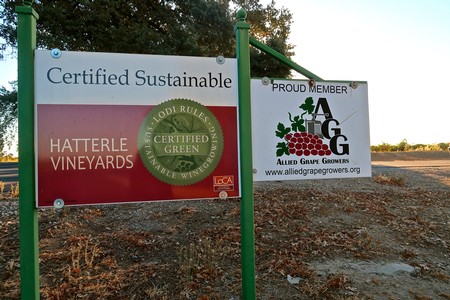
    Hatterle Vineyards, certified by LODI RULES for Sustainable Winegrowing.

    Star Valley Vineyard, Zinfandel

    Vineyard name: Star Valley Vineyard
    Year planted: 1962
    Size: 3.2 hectares
    Variety(ies): Zinfandel
    Wineries: Alliance Winery

    • This 8-acre block is located on North Davis Road at Larson Road. It was planted in 1962 and is still owned and farmed by JW Moore Vineyards, a Lodi vineyard management company now in its fifth generation.
    • Vineyard consists of own-rooted, vertical cordon-trained Zinfandel, spur pruned in two to three layers.
    • It is registered by the Historic Vineyard Society and is LODI RULES for Sustainable Winegrowing certified.
    • Grapes historically went to the Mondavi family of Charles Krug Winery. Since 2016, most of the fruit has been going to Lodi-based wineries, with a small portion bottled under JW Moore’s label, Alliance Winery (100% sourced from the vineyard, although the bottling does not carry a vineyard designation).
    • Star Valley produces a classic west-side Lodi style of Zinfandel—plump and round, with black cherry leaning towards blueberry and faint loamy earthiness.

    Giorgi/Ferrari Vineyard, Zinfandel

    Vineyard name: Giorgi/Ferrari Vineyard
    Year planted: Mid-1920s
    Size: 6 hectares
    Variety(ies): Zinfandel
    Wineries: Delicato Family Vineyards

    • This Prohibition-era Zinfandel block sits in the middle of the west side of the Mokelumne River AVA; the own-rooted, head-trained vines originally planted by Corrado and Santina Giorgi.
    • Current owner Diedre Ferrari is the granddaughter of Corrado and Santina Giorgi. Ferrari is determined to keep the old vine planting in the family despite the fact that the grapes currently go to field-packing companies selling directly to retailers in Canada and the East Coast—whole grape clusters packaged in 36-pound wood crates—who supply home winemakers (in recent years, Delicato Family Vineyards has purchased some of the grapes for their blending program).
    • The vineyard is registered by the Historic Vineyard Society.

    Look for our next post: 2022 update on Lodi’s oldest vine growths (part 2)—east side of the Mokelumne River AVA

    Zinfandel field packing—in crates headed for home winemakers in Canada and across the U.S.—in Giorgi/Ferrari Vineyard, originally planted during Prohibition.
  • 2021’s best articles on Lodi wines

    2021’s best articles on Lodi wines

    Vinography’s Alder Yarrow (right) visiting third-generation Lodi winegrower Kevin Soucie in April 2021 in Soucie’s ancient vine Zinfandel block, originally planted in 1916.

    2021 began with the feeling that things will never be the same. Not after a year like 2020. The repercussions have not been felt like ripples, but more like tidal waves.

    In the midst of all this chaos, winegrowers and vintners in Lodi wine country experienced a more than satisfactory 2021 harvest. The weather throughout the seasons, of course, was a lot dryer than what everyone would have liked it, but at least there were no extremes. Even smoke-domed skies, which lately seem to be par for the course during each harvest that coincides with the yearly fire season, seemed to have a benign effect — at least for California’s largest and most productive wine region, nestled between the Sierra Nevada and the flat, wet Delta and San Pablo Bay.

    Stuart Spencer, Lodi Winegrape Commission Executive Director, and St. Amant Winery owner/winemaker

    Lodi Winegrape Commission Executive Director Stuart Spencer summarized nearly everyone’s findings in a December 1 KCRA3 interview: “The yields were relatively light-to-average, but the quality looked exceptional this year.” While also a typical winemaker (as the owner of Lodi’s St. Amant Winery) who tends to drink from glasses half-full, Spencer also speaks for grape growers, who have a hard time seeing silver linings in anything. Thus, Spencer also warned of supply and labor shortages, and some vineyards exceeding the costs of farming. These have been ongoing issues in Lodi, and the entire California wine industry, well before the rippling effects of the pandemic.

    All the same, the Lodi winegrowing industry has a lot going for it. One of those things is, simply, time — it’s been pretty much a matter of time before more and more consumers around the world become aware of the ever-increasing quality of the region’s grapes and wines. This rise in quality has been no accident — Lodi growers and vintners have been making conscious and concerted efforts towards premiumization during the past ten, to twenty years. And during the past year, a few key media figures have ventured into Lodi to investigate this progress, and have followed up with firsthand reports.

    Photo taken by Alder Yarrow for his June 22, 2021 Vinography report of Royal Tee Vineyard, Lodi’s oldest Zinfandel block (planted in 1889).

    We were especially pleased with Alder Yarrow‘s article entitled Tasting California’s Ancient Vines: Lodi’s Heritage Vineyards posted on his Vinography page on June 22, 2021. As you undoubtedly know, the blogosphere is as cluttered with negligible debris as the earth’s orbit, but there is a reason why Yarrow, above nearly all others, has cultivated an internationally respected following credibility, plus clear and persuasive prose. Basically, he doesn’t make stuff up.

    Focusing his in-the-field research this past spring on one of Lodi’s growing concerns — the fate of its oldest vines in today’s economic climate — Yarrow writes: “… hidden in plain sight within the vast swaths of vineyards are some of the greatest treasures of American viticulture.” He continues:

    Approximately 2000 acres of Lodi vineyards consist of pre-Prohibition, own-rooted vines, some with vines that have been growing in these sandy soils for more than 140 years. Low-yielding and commercially tenuous, this vineyard acreage has been shrinking for years, as old vines are ripped out and replaced by more productive youngsters, or more frequently, by acres of tract homes and shopping centers.

    Lodi’s ancient vines, like many such vineyards around the world, are an endangered species that will only survive through a combination of proactive conservation and public advocacy by those who understand what they mean to the world of wine.

    You can consider this little tour I’m about to offer you an example of the latter. These vineyards can produce wines unlike any other in the world. The difference in flavor between a 4-year-old, trellis-trained, irrigated Cinsault vine, and a 150-year-old, own-rooted, dry-farmed vine with roots plunging 90 feet down into 20 million years worth of eroded granite sands cannot be overstated.

    If we want them to survive, we need to know, buy, and drink the wines they produce.

    We encourage you to read the rest of what Yarrow has to say, particularly on many of the exciting old vine bottlings he tasted, in his Vinography report.

    Sunset Magazine
    LangeTwins Family single-vineyard bottlings cited by Robb Report correspondent Sara Schneider as examples of luxurious wines now grown in Lodi. Anya McInroy Photography.

    In Schneider’s August 30, 2021, Robb Report article, entitled Why Lodi Is the Most Exciting US Wine Region You’ve Never Heard of, Schneider writes:

    … in recent years, more and more longtime growers have been bottling wine under their own brands, reflecting ever-better quality. And at the same time, well-known outside vintners — some young and approaching cult-level status with their “cool-kid” followings — have noticed the potential of the region and have bought vineyards here or are sourcing fruit for their own labels. Together, they’re producing a fascinating range of Lodi wines, with bright, aromatic character profiles that are themselves somewhat shocking, especially if your reference point is the now-dated big, ripe fruit bomb…

    Robb Report’s Sara Schneider tasting handcrafted wines with Lodi winegrower Jeff Perlegos in Lodi’s in the Perlegos family’s Stampede Vineyard in Lodi’s Clements Hills AVA.

    And no less a Zin maker than Larry Turley has cut a swath through the region with at least six bottlings from single vineyards, all worth seeking out (if you can get your hands on them). Behind the Turley scenes, his winemaker, Tegan Passalacqua, developed so much respect for Lodi’s old head-trained, often dry-farmed, and own-rooted vines that, with his wife, Olivia, he bought a vineyard here. And under his Sandlands brand, he makes Zinfandel and Carignan from Lodi, as well as wines from beyond. These vineyards dispense of the stereotype of a dense, jammy California Zinfandel. These newer Zins are perfumed and red-fruited, bright with acidity, and refreshingly light on their feet.

    Dr. Liz Thach — a widely-published American Master of Wine and former Distinguished Professor of Wine and Management at Sonoma State University — made no less than two extended pilgrimages to the Lodi AVA in 2021. Dr. Thach was interested in multiple things; particularly the future of Lodi’s old vines, the region’s proliferation of wine varieties, as well as local industry efforts to increase workplace diversity.

    Dr. Thach’s thoroughly researched articles appeared in several places, including the internationally read Forbes Magazine and in America’s leading wine industry publication, Wine Business Monthly. One excerpt, from Dr. Thach’s March 10, 2021, Wine Business Monthly article entitled How the Lodi Wine Region is Pursuing an Ultra-Premium Strategy with Ancient Vines:

    In the wine industry, it is always challenging to move from a low-cost strategy to one of ultra-premium wines, because changing consumer perception takes time. Another issue is that many wine consumers only consider classical grape varieties, such as Cabernet Sauvignon, Pinot Noir, and Chardonnay, to fit high-quality strategies, whereas the majority of Lodi’s ancient vines are the original varieties first planted by early California vineyard owners — Zinfandel, Carignan, Cinsault and field blends of mixed varietals…

    This past February, Dr. Liz Thach MW tasted a line-up of Sandlands and Turley wines with winemaker Tegan Passalacqua in his Kirschenmann Vineyard on the east side of Lodi’s Mokelumne River appellation.

    Due to this threat, the Save the Old Vines campaign — launched in October 2020 by the Lodi Winegrape Commission — has been established to raise awareness of the high-quality wine produced from old vines. Another group, the Historic Vineyard Society, is also trying to help by certifying old vineyards to bring recognition to their importance. It is hoped that these types of efforts will save these special heritage vineyards of California and that wine consumers will soon recognize the unique viticulture treasure that exists in Lodi and the exceptional wines they produce.

    On her own Dr. Liz Thach, MW page, Dr. Thach revealed her fascination with Spanish grapes in her March 21, 2021 post entitled Rolling Hills and Spanish Varieties at Bokisch Winery; writing about the family’s Terra Alta Vineyard in the Clements Hills-Lodi AVA:

    The view of the rolling hills was stunning, and we caught our breath at the magnificent 80-acre Terra Alta Vineyards spread out in front of us, with massive oak trees dotted throughout. As it was a cool Spring day during the Covid-era, we wore both coats and masks as we relaxed back into the comfortable sofa… The 80-acred Terra Alta Vineyard, which is located in front of the winery tasting room, is also planted to Albarino, Tempranillo, and Graciano…

    But the Bokischs didn’t stop there with their love of Spanish varieties, because they soon planted other vineyards with Garnacha Blanca, Verdejo, Garnacha, and Monastrell. More recently, they started a second label, Tizona, and purchased grapes to produce Old Vine Zin, Malbec, Rose, and Petit Verdot… Today Bokisch is very famous for its award-winning Spanish varietal wines and hosts thousands of visitors throughout the year who visit from the SF Bay Area, Sacramento, and beyond.

    Bokisch Vineyards’ Terra Alta Vineyard during February.

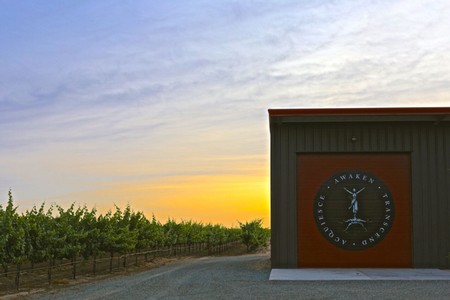
    Like more than a few visitors from out of town, Dr. Thach made a beeline for Acquiesce Winery, a tiny Lodi estate making huge waves across the country. In her May 21, 2021 article, Where the Queen of White Rhone Lives, Dr. Thach writes of meeting Acquiesce owner/grower/winemaker Sue Tipton:

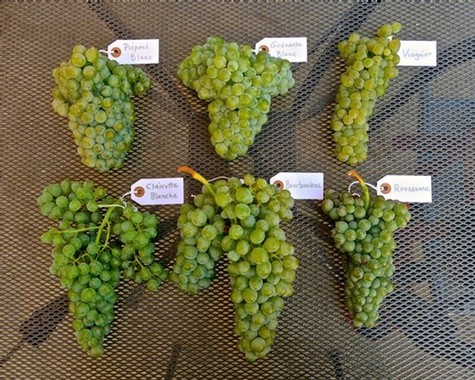
    … an amazing woman who designed and named the winery… also known as the “Queen of White Rhone Wines,” because the only types of wine she produces are white Rhone varietals. These include Roussanne, Viognier, Grenache Blanc, Picpoul, Bourboulenc, Clairette Blanche, and a few others… They [Sue and Rodney Tipton] told us their story of having a dream to one day buy a property that would be surrounded by land, where they could watch the sunrise and set.

    It was in the June 16, 2021 issue of Forbes Magazine that Thach published her article entitled Lodi Collective Is Early Leader In Efforts to Increase Wine Industry Diversity, reporting on the collaboration of a small group of Lodi wineries with The Roots Fund to sponsor scholars on a three-day study of Lodi to increase diversity in California (not just Lodi!) wine industry.

    Dr. Liz Thach MW (fourth from the left) celebrates diversity by visiting The Roots Foundation scholars and Lodi winemakers at Acquiesce Winery.

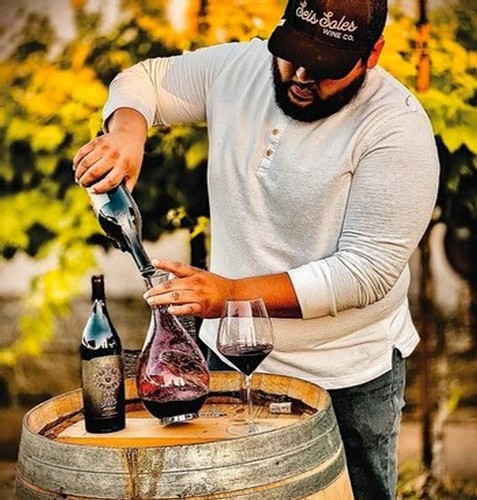
    On September 27, 2021, during National Spanish Heritage Month, there was an ABC 10 report called These Hispanic winemakers in Lodi are changing an industry one bottle at a time. In the broadcast, independent owner/winemaker Christopher Rivera of Seis Soles is quoted to say: “If you’re talking the number of people that put hands on these, like from grapes all the way to bottle, Latinos are probably outnumbering everyone else twenty to one.” The hard-working Rivera, a native of Michoacán, Mexico, worked his way up in the Lodi wine production community with almost lightning speed (less than five years), driven as much by talent as clear-cut vision.

    Seis Soles owner/winemaker Christopher Rivera.

    Peltier Winery head winemaker Susan Rodriquez Vasquez took a more methodical, but no less ambitious, path. Vasquez graduated with an agricultural degree from the Higher University of San Simón in Cochabamba, Bolivia; before arriving in California in 2005 to knock on doors, earning her stripes as a winemaker at big-time wineries such as E. & J. Gallo Winery.

    It’s one thing to be a woman in a male-dominated industry, but it’s still another to be a Latina woman. In her interview Vasquez made the understatement of the year, saying: “It wasn’t easy, it was a challenge, and I was happy to take it. I think that’s one of the things we Latinas have.” Vasquez is now widely admired throughout the Lodi wine industry for the impeccable quality and prestige she has brought to Peltier, founded by third-generation Lodi grower Rod Schatz.

    Peltier Winery’s widely acclaimed winemaker Susana Vasquez.
  • ‘Tis Autumn in America’s largest winegrowing region

    ‘Tis Autumn in America’s largest winegrowing region

    Varying colors of autumn in the Fry family’s Marian’s Vineyard — elongated-spurred, own-rooted head-trained Zinfandels that have seen no less than 120 yearly cycles during the course of their lives.

    The trees say they’re tired, they’ve borned too much fruit
    Charmed all the wayside, there’s no dispute
    Now shedding leaves, they don’t give a hoot
    La-di-da, di-la-di-dum, ’tis Autumn

    – Henry Nemo, ‘Tis Autumn (most notably sung by Nat King Cole, Ella Fitzgerald, and Stacey Kent)

    In Lodi, it is well known, grapevines can live long lives. While historic regions like Mother Lode Country in Amador County have grapevines planted as long ago as 1853, there are more vines over 50 years old in Lodi than anywhere else in the U.S.

    Orange-tinged yellow leaves of Cabernet Sauvignon in one of LangeTwins Family’s Jahant-Lodi AVA vineyards, typifying grapevine colors during November.

    One big reason, out of several, why grapevines live so long in Lodi is the region’s particular iteration of Mediterranean climate, defined by cool, wet winters and warm, dry summers. While coastal California wine regions from Santa Barbara County up to Sonoma County are also defined by a Mediterranean climate, in Lodi it is even milder. Meaning no killing frosts during winter or punishingly parched summers.

    For Vitis vinifera, or wine grapes, which are native to Europe’s Mediterranean Basin, the absence of extreme seasonal weather makes living in Lodi for grapes almost like living in Hawaii for people. Did you know that the state with the highest average life expectancy is Hawaii? Hmmm, I wonder why…

    Lodi icons: golden-maned Flame Tokay over 100 years old on the east side of Lodi’s Mokelumne River AVA.

    The region’s location smack dab in the middle between the Sierra Nevada and the California Delta spilling out into San Francisco Bay has a lot to do with it. For instance, the chances of snow in Lodi are practically nil. It is only the old-timers who can recall the last time it snowed in Lodi: Dec. 20, 1968. The recorded low on that day was 30° — a piece of cake for folks who live in Montana, Colorado, or upstate New York — and the snow, less than half an inch, lasted just a few hours. An inch and a half of snow fell on Lodi back on January 12, 1930, but other than trace amounts recorded in 1950 and 1972, that was it for Lodi over the past century.

    Otherwise, Lodi is actually approaching its coldest month of the year on average, which is December, averaging highs of 55.2°and lows of 40.8°, far above the freezing threshold (32°). Not exactly “Hawaii,” but as mild as it gets for California.

    Majestic blue oak in Bokisch Vineyards’ Terra Alta Vineyard in the Clements Hills-Lodi AVA, coming up on Thanksgiving weekend.

    Cold enough, however, for us to enjoy something of an annual visual feast of autumnal colors on our trees and grapevines. Technically, what we see during every autumn is the leaves of flora being drained of chlorophyll, the green pigments that allow plants to absorb energy from sunlight (i.e., photosynthesis) during the growing seasons. The shorter days and nights transitioning from cool to cold temperatures are what trigger the decline of chlorophyll and subsequent bursts of colors — yellows, oranges, and reds — before leaves finally give up the ghost and fall to the wayside, forcing us to dust off our leaf blowers or thrust rakes into the hands of groaning kids.

    In Lodi’s Rauser Vineyard (planted in 1909), a close-up of the pure, blood-red colors of Alicante Bouschet, a teinturier (i.e., red pulped) cultivar that is prone to leafroll virus stunting photosynthesis even before its fruit is fully matured.

    Out in the vineyards, grapevine leaves typically transition into yellow and orange hues before floating away. As you glide through the foggy mornings (unlike coastal wine regions, Lodi experiences no fog during the growing seasons — another reason why grapes luxuriate in Lodi sunlight) and gaze at the prettier vineyard blocks with their bright reddish colors, what you see are actually symptoms of plants beset with grapevine diseases, such as leafroll virus and red blotch. You’ll find reddish colors in both younger vines on trellises and in older, free-standing vines held up on stakes (up until the mid-1960s, almost all the vineyards in Lodi were staked as head-trained or vertical cordon spur-pruned vines).

    Vivid purplish-red leaves on 112-year-old Carignan in Rauser Vineyard, on the east side of Lodi’s Mokelumne River AVA.

    Red blotch, for one, is a disease that has been plaguing vineyards throughout California for the past 10 or 12 years. Grapevine scientists are still trying to figure out exactly what it is, and why it comes and goes or varies in proliferation from year to year, but when it occurs before grapes are fully matured it is definitely considered detrimental to the quality of fruit and, ultimately, subsequent wines. Despite their compelling colors, red blotched leaves are indicative of underperforming vines.

    Like a hobbled, indefatigable battleship creeping out of the fog, this 120-year-old, own-rooted, productive Zinfandel in Lodi’s Marian’s Vineyard has, seemingly, not yet begun to fight.

    All the same, it is a good time of year to drive through Lodi vineyards; and perhaps, sample the liquid wares of local wineries. Our Novembers may not be quite as spectacular as Vermont’s Octobers, but wine country has its own autumnal beauty, particularly for wine lovers.

    If or when you do, you might want to whisper your fond thanksgivings to the gnarly wooded plants, standing in rows like bloodied, indefatigable soldiers, for another year of heroic labors, and for bringing the prosperity that has made Lodi the largest winegrowing region in America. You may even want to sing them, as they make their leafy beds in preparation for another wintry nap. For many of Lodi’s oldest vines, marking the end of another cycle, going on 100 years or more. La-di-da, di-la-di-dum, ’tis Autumn!

    On a foggy November morning, Mettler Family Vineyards’ Bear Creek barn and vineyard block, at the lower edge of Lodi’s Clements Hills AVA.
  • Gimme shelter with Lodi’s bevy of dry rosés enjoyed with Coq au Vin Rosé

    A rosé is a rosé is a rosé, except for when it comes from Lodi’s ideal meridional climate!

    Not quite three and a half weeks into our compelled sheltering, with no real end in sight. How are you holding up? Reading all the books you’ve always wanted to read? Binge-watching the shows that you once only dreamed about binging out on?

    And if you are no different than zillions of stay-at-home wine and food lovers, dietary restraint can become an issue. My doctor (who is one of those impossibly 2% body-fat marathoners) recommends walks — lots and lots of long walks. And when I walk, I think about… wine and food. Can’t wait to get home to start cooking, and pop a bottle!

    Wine, of course, is the perfect balancing act for food — especially thoughtfully prepared dishes (the more intricate a dish, the more appealing the wine match). Wines have sensory qualities (particularly fruit-related qualities balanced by fresh acidity, and meaty tannin in the case of reds) that complement ingredients in dishes; and when consumed in moderation, they don’t seem to bloat the constitution like beers, milk, or even iced tea. Wines also contribute a lightening yet filling feel to the palate, which helps to keep the consumption of food (and calories) to reasonable proportions. So instead of two heaping plates of, say, spaghetti and meatballs, the body seems to be satisfied with one discreet serving. No wonder the fruit of the vine plays such an important role in the classic, healthy Mediterranean diet!

    Trusty red Le Creuset Dutch oven

    The Lodi appellation, as we love to remind everyone who cares to listen, is a quintessential Mediterranean-type winegrowing region. April can bring a few showers and showy white clouds, but by the time summer swings around there won’t be a drop of moisture in the sky. Unlike other parts of the California coast, we don’t experience fog during the growing seasons, and so wine grapes can work on their tans from the second the sun rises to the second it goes to bed, whereupon nights sink into the mid-50°s so that vines can also get their beauty sleep. Ergo, lots and lots of flavor-enhancing phenolics build up in the grape skins, and a nearly perfect amount of acidity is retained in the pulp thanks to the steady diurnal temperature swings. And that’s your “Lodi 101” lesson for today.

    Do you know what a nearly “perfect” Lodi wine is? It’s pink — as in the myriad styles of dry or pretty much nearly dry rosés coming out of the Lodi AVA these days. Why rosés? Because you drink dry rosés like you do white wines (nice and chilled), but unlike white wines rosés are made from black-skinned grapes, the same that goes into red wines. Despite the fact that fermenting juices of rosés are typically pressed off their skins right off the bat at the winery, a typical rosé retains a smidgen more of the flavors from grape skins than white wines, plus a tiny bit of the feel of phenols and polyphenols extracted from the skins which contribute a textural quality not found in many white wines.

    Rosé lovers (pre-social distancing days) at Oak Farm Vineyards

    In a way, this makes dry rosés almost the perfect “food wines.” Not to say that white or red wines aren’t also fantastic with foods (of course they are), but it’s just that dry rosés have a way of complimenting many of the light, “white” dishes that go great with white wines as well as many of the meaty, “red” dishes that we love with red wines. Dry rosés — especially the many fresh, zesty, tart-edged, yet exuberantly fruit-scented styles being produced today — are just that much more versatile.

    A perfect case in point: the recently released 2019 Peltier Winery “Diamond Rouge” Lodi Rosé of Cabernet Sauvignon ($20). If you’ve been sampling different Lodi-grown rosés lately, you know darned well that these days there are more first-class rosés being produced by our local wineries than you can shake a stick at. This particular rosé is interesting because it’s made entirely from Cabernet Sauvignon, an ultimate “red wine” grape because of its intensity of flavor and tannin. So even if you press off the juices from the skins to get the pretty, transparent pink color you find in Peltier’s “Rouge” rosé, you still end up with an opulence of aroma and flavor.

    In this wine, a pungent combination of strawberry, watermelon, and cranberry — the latter sensory component following up in the flavors on the palate, which is notably tart-edged while having that smidgen of grippy dryness similar to what you get when sipping cranberry juice. At the same time, there is a discreet amount of residual sweetness lurking just below the threshold of perception — it’s like the wine flashes a sense of lush fruitiness while retaining an overall sense of dryness, the same way a hula dancer flashes a little leg from out of a grass skirt while she does her wholesome yet winsome dance.

    The back label of Peltier’s Rosé of Cabernet Sauvignon, with an added seal for being “Certified Green” by LODI RULES for Sustainable Winegrowing

    One particular “ideal” recipe for a wine like the Peltier “Rouge” rosé: We’re sold on a dish called Coq au Vin Rosé (detailed recipe at the end of this post), which is a variation of the classic French dish, Coq au Vin, usually made with red wine. When you utilize rosé instead of red wine, the braising stew (chicken cooked in an entire bottle of wine with bacon, pearl onions, mushrooms, and garlic cloves) is not quite as intense or earthy; rather, it ends up with more of a lip-smacking zestiness, while still savory enough to call for a deeply flavorful wine. Honestly, white wine goes great with this dish (it’s chicken, after all, which loves white wines), and so do lighter-style reds (think red Grenache, Pinot noir, or easy-peasy Zinfandels). Yet in a way, a good, dry rosé — which has the savoriness of a red with the zestiness of a white — is pretty much the “perfect” match.

    Other Excellent Lodi Dry Rosés

    Another cool thing about Lodi-grown rosés is that they are made from a bevy of different grapes, reflecting the diversity of a region where well over 100 varieties of wine grapes are commercially grown — another advantage of Lodi’s squarely “Mediterranean” climate.

    Peltier Winery, for instance, also produces a Rosé of Pinot Noir ($26), which is markedly more demure, and lighter and airier in feel, than their Rosé of Cabernet Sauvignon, with more of a fresh sour cherry perfume and flavor. LangeTwins Family Winery & Vineyards is another winery that produces two different dry rosés with flavor profiles that are fascinatingly varied: a River Ranch Vineyard Aglianico Rosé ($22) with its exotic spice-tinged nose of strawberry and rhubarb and zesty acid balance, and the lighter, more delicate Estate Grown Sangiovese Rosé ($15) with its cherry/berry fragrance and citrusy fresh tartness.

    The Barbera grape — sort of an “old-timey” variety in Lodi, once used by wineries like E. & J. Gallo for their “jug” reds — not only produces phenomenal red wines but also a unique style of rosé that retains the naturally high acidity of the varietal. And if anything, you want rosés to have an elevated acidity giving them that bright, palate-bracing quality. Don’t be fooled, for instance, by the ridiculously reasonable price of the St. Amant Winery Lodi Barbera Rosé ($15), because this is a seriously fine and unique rosé— watermelon fresh, cranberryishly crisp, yet svelte, fluid, round, and savory in its long length of flavors.

    The black-skinned Barbera grape — is not typically used for dry rosé elsewhere in the world, but utilized in Lodi because of the region’s blocks of old vineyards dating back to the 1970s

    There are a number of producers who produce dry rosés from Cinsaut grapes grown in Lodi’s Bechthold Vineyard — a historic 25-acre site planted in 1886 (!). The Michael David Winery Bechthold Vineyard Cinsault Rosé ($25) is a classic; showing the wispy strawberry/cranberry scent of the grape with just a whiff of loamy earthiness in the backdrop, and a palate feel that is both sturdy yet fine and gentle. The Onesta Wines Rosé of Cinsaut ($20) is usually a little more intense and meatier than Michael David’s — almost like a red wine “disguised” as a pink — yet still finishes with a round, svelte, bone-dry feel. And if you’re looking for something totally different, McCay Cellars produces a Reserve Rosé ($32) woven from both Bechthold Vineyard Cinsaut and Abba Vineyard Syrah, although the predominant quality of the wine is the allspice nuanced strawberry/rhubarb fruit of the Cinsaut grape, enhanced by a subtle yet distinctive earthiness (like organic loam) often associated with west side Lodi plantings such as Bechthold Vineyard.

    Lodi grew Zinfandel, of course, was once used to produce vast amounts of sweet, tutti-fruity, “blush” colored wines collectively known as “White Zinfandel,” but lately it’s been turned into a bone-dry style of rosé by a few, small, handcrafted producers. Michael Klouda Wines’ MK label, for instance, recently came out with a 100% Zinfandel called Retro Rosé ($19) that is appealingly crisp, light, and a little minerally in its strawberry/tea-like quality. The Monte Rio Cellars Dry White Zinfandel ($20) is another 100% varietal with a light and easy bone-dry feel, and a cherry/berry/pomegranate-like fruit profile tinged by the faintest whiff of dusty earthiness. The Mikami Vineyards Lodi Rosé ($24) made entirely from estate-grown west side Lodi Zinfandel, on the other hand, tends to be a deeper shade of coral pink than the MK and Monte Rio Zinfandel rosés, and its aromas and flavors are like raspberry tea couched in a nearly red wine-like meatiness and grip to its dryness.

    Rioja Baja selection of Garnacha (a.k.a. Grenache) in Bokisch’s Terra Alta Vineyard, Lodi’s Clements Hills AVA

    Finally, the all-time favorite black-skinned grape for dry rosé production around the world is still Grenache; and Lodi produces a number of bottlings from this classic variety, all redolent with the lush strawberry/watermelon qualities of the grape. One contemporary classic is the Acquiesce Winery & Vineyards Grenache Rosé ($25), which almost always recalls the sea of classically dry, fleshy yet eminently drinkable rosés produced by France’s Provence region. The Bokisch Vineyards Terra Alta Vineyard Clements Hills-Lodi Garnacha Rosé ($20) is fashioned in a more delicate style than Acquiesce’s, emphasizing a little less of an unabashed strawberry-fruit exuberance and more of the grape’s fresh, zingy acidity, while finishing with a tingling touch of minerality in the feel.

    The McCay Cellars Rosé of Grenache ($24) retains the plump, pliant, strawberry/cherry-infused varietal character of Grenache, plus an intriguing splash of earthiness reflecting the winery’s 100% native yeast fermented philosophy of winemaking. For the sheer, lavish intensity of Grenache fruit character, look for the Oak Farm Vineyards Estate Grown Rosé ($26), which combines a citrusy fresh tartness with nostril-tingling strawberryishness. But for a more intricate thread of sensations, the Klinker Brick Winery “Bricks & Roses” Rosé ($15) flashes floral, rose petal, cherry, and strawberry notes in its blend of Grenache, Carignan, Syrah, and Mourvèdre grapes, with a passionate kiss of meridional sun-soaked fruit — a Lodi fruit freshness! — in its barely off-dry finish.

    So let’s get cookin’!

    Coq au Vin Rosé (image courtesy ofdeliciouslife.com)

    Rihana’s Coq au Vin Rosé

    The following recipe is admittedly a little more involved in the execution because it adapts a number of steps suggested by Julia Child in her classic Mastering the Art of French Cooking. You can take shortcuts, but in our experience, you get the best experience — a luxurious taste of the coq and vin-enriched braise — when you patiently take the time, of which we all seem to have plenty in these challenging days, weeks, and perhaps months!

    8 pieces chicken thighs (mostly) and legs (or one 5 lb. chicken, cut into serving pieces)
    24-30 pearl onions
    Salt and fresh ground black pepper
    6 oz. bacon strips or slab, squared or cubed
    8 oz. button mushrooms, quartered
    1 tbsp. unsalted butter
    1 bottle (750 ml.) dry rosé
    1 medium yellow onion, quartered
    2 stalks of celery, quartered
    2 medium carrots, quartered
    3 cloves garlic, crushed
    6-8 springs fresh thyme
    1 bay leaf
    2 cups chicken stock or broth

    Cut off the root end of each pearl onion and make an “x” with a knife in its place. Bring 2-3 cups water to a boil and drop in the onions for 1 minute. Remove onions from the pot, allow to cool, and peel (onions should slide right out of the skin). Set aside.

    “Scored” pearl onions

    Blanch bacon briefly in boiling water; drain, and dice or cube. Fry to render fat; remove meat and set aside, and save fat for frying.

    Sprinkle chicken pieces on all sides with salt and ground pepper. Place chicken pieces, a few at a time, into a large (1-2 gallon) sealable plastic bag along with flour; shake to coat chicken completely. Remove chicken from the bag, and fry in bacon fat, just until the crust is crisp. Set chicken pieces aside.

    In the same pan, add pearl onions to the fat, sprinkle with salt and pepper, and sauté until lightly brown (approximately 8-10 minutes). Remove onions from the pan and set aside. Transfer chicken into a 7-8 quart enameled cast (like Le Creuset) or cast iron Dutch oven.

    Add mushrooms to the same 12-inch sauté pan, adding 1 tbsp. Butter if needed, and sauté until liquid is released (approximately 5 minutes). Store onions, mushrooms, and bacon in an airtight container in the refrigerator until ready to use.

    Pour off the remaining fat and deglaze the pan with approximately 1 cup of the rosé. Pour this into a Dutch oven along with chicken stock, quartered onion, carrots, celery, garlic, thyme, and bay leaf. Add all of the remaining rosé. Preheat oven to 325° F.

    Place chicken in oven and cook for 2 to 2-1/2 hours, or until chicken is tender. Maintain a very gentle simmer and stir occasionally.

    Once the chicken is done, remove it to a heatproof container, cover it, and place it in the oven to keep warm. Strain the sauce in a sieve and degrease (discard carrots, celery, thyme, garlic, and bay leaf). Return the sauce to a pot, place over medium heat, and reduce by 1/3 (depending on how much liquid you begin with, this should take 20-45 minutes).

    When the sauce has thickened, add pearl onions, mushrooms, and bacon, and cook another 15 minutes or until heated through. Taste and adjust seasonings if necessary; remove from heat, add the chicken, and serve.

    Serve from a Dutch oven with either long-grained white rice or lightly buttered egg noodles. (Note: if the sauce is not thick enough at the end of reducing, you may add a mixture of equal parts butter and flour kneaded together, starting with 1 tbsp. Each; whisk this in the sauce for 4-5 minutes, and repeat if necessary).

  • 2019 fall update on the ideal Lodi wines for cheeses we love to eat most

    2019 fall update on the ideal Lodi wines for cheeses we love to eat most

    Sommelier with Lodi grown

    That wine and cheese go together is a concept that needs no explanation, much less justification. Fish swim, birds fly, and there’s nothing like a table set with wedges of cheese and glasses of wine from two, three or more bottles.

    We will say this, though: Through experience, lots of wine lovers know that certain wines go better with certain cheeses than other cheeses, and vice-versa. It really is no different than knowing that when you have a piece of white fish, chances are that a light, dry, lemony crisp white wine will probably taste better with the fish than a heavy, oak enriched, bitter edged red wine like a Cabernet Sauvignon. Or that a heavy, oaky Cabernet Sauvignon is more likely to taste better with a char-grilled steak than a light, tart white wine.

    It’s not a matter of “breaking rules.” There are no rules. Go ahead, eat and drink whatever you like. If you like mixing orange juice and milk, have at it. If you like ketchup on sushi, be our guest. But we want to talk about wine and cheese matching from the perspective that matters: how different taste sensations in cheeses and wines interact in the mouth, and how they titillate your senses through the nose.

    First thing to understand is that the human palate detects basically six taste sensations on the tongue: sweet, tart, salty, sweet, bitter, or what is called umami (the latter, the “savory” sensation found in foods high in amino acids, like the grating of Parmigiano cheese on spaghetti, a drop of oyster sauce in a stir fry, or the infusion of porcini or truffles in a sauce).

    Almost no wines give salty sensations, so that’s not a big factor. Neither is sweetness usually found in cheeses. Nonetheless, when wines and cheeses are combined, levels of saltiness are something to consider because many cheeses are salty, sometimes very salty. And while most consumers these days drink dry wines, wines with a little bit or even a lot of sweetness can come in handy – especially when you have a very salty cheese, like a Roquefort and Feta, sitting in front of you on the table.

    Sweetness balances saltiness. It’s a basic concept all cooks understand: When you have a food component that’s salty, like ham or a salted duck, a sweet glaze or a fruity sauce or relish helps a dish taste better. Which is why strongly salty cheeses taste pretty darned good with wines that are a little sweet, even if, generally speaking, sweet wines are not your cup of tea. It is the same reason why, when you have morsels of Roquefort of Gorgonzola on a board, you’re almost compelled to reach for some quince paste, fresh fig, dried berries, honey or something sweet to consume the cheese.

    Blue veined Gorgonzola from Italy (image courtesy ofstrongertogether.coop)

    Hence, a few more basic things to think about when shopping for cheeses to go with certain wines, or when selecting bottles from a store shelf to go with favorite cheeses:

    There are probably more cheeses – particularly fresh cheeses that see no extended aging – that taste better with white wines than with reds.

    Cheeses can give a full range of sensations, from soft and milky to sharp and acidic. Hence, it generally makes sense that sharper, more acidic cheeses (like goat cheeses) tend to go better with sharper, more acidic whites (like Sauvignon blanc), whereas softer, creamier cheeses (like Havarti or double- or triple-crèmes) naturally taste great with rounder, creamier textured white wines (like a typical American Chardonnay).

    There is a reason why cheeses that give savory umami sensations – generally those that are firmer, richer and deeper colored from aging processes (i.e. Parmigiano, Manchego or Cheddars) are often grated on dishes. It’s because they can intensity flavors of dishes. For that same reason, these types of cheeses are generally friendlier to red wines than to whites. Unlike white wines, red wines are fermented with their skins, automatically giving them deeper flavors, along with oak and oxidative qualities resulting from barrel aging. The more complex a wine from an aging process, the more likely they are to compliment the deeper, firmer, more complex and caramelized sensations typical of well aged cheeses, and vice-versa.

    Sauvignon blanc grapes in Lodi’s Oak Farm Vineyards

    Pungently earthy, organic aromas and flavors in cheeses (particularly those made from sheep or goat’s milk, as well as many variations of raw milk cheeses) are likely to find notes of similarity in wines of parallel qualities – be it the grassiness of Sauvignon blanc, the flintiness of Riesling, stoniness of less oaky Chardonnays, the mushroom/foresty notes of Pinot noirs, all the way to the meaty, even gamey or leathery notes of reds like Tempranillo, Zinfandels from Lodi’s west side, and Mourvèdre or Grenache based reds from all up and down the West Coast or Europe.

    Once you get into the grand tradition of aromatic, artfully flavored cheeses – such as herb crusted Chèvres, peppercorned crèmes, cider washed rinds, stout soaked Cheddars, or even truffled Boschetto al Tartufo – the gloves come off, and all the varieties of red and white wines criss-cross in accordance to the dominant flavors that are added. For instance, it makes sense that cheeses coated in black pepper strike partnerships with peppery wines like California Zinfandels and Syrahs from around the world. Herbs associated with Italian cooking (i.e. rosemary, oregano, basil, etc.) easily find matches with wines of Italian orientation (like those made from Sangiovese, Montepulciano, Nero d’Avola or Nebbiolo). High-umami, truffled cheeses practically scream for high-umami wines like Pinot noir or, from Lodi, west side Zinfandels or spice scented Grenache reds.

    … and so it goes. So what are the best Lodi wine and cheese combinations? “Bests” don’t exist, but here are some fun matches to explore:

    The staff at Lodi’s Spenkler Family Winery & Artisan Creamery

    Chèvre(French or Regional American)

    For high acid goat’s milk cheeses, look for lemony tart, dry whites such as Sauvignon blancs by Peltier Winery, LangeTwins Family Winery & Vineyards (or the LangeTwins Family’s Sand Point Family Vineyards brand), Michael David Winery, Oak Farm Vineyards, Heritage Oak Winery, Ironstone Vineyards, or McCay Cellars. Vermentino is another varietal white with steely-tart, often stony or minerally qualities that are dynamite with a good goat cheese – look for those by Peltier Winery, Uvaggio Wines, PRIE Winery, Fields Family Wines or Avivo (by DaVero Farms). Picpoul blanc (by Acquiesce Winery or PRIE Winery) is another varietal white that is as lemony tart as it gets, and absolutely shines with a fresh, sharp, naked Chèvre; but for something completely different, look for the prickly tart yet refreshing Fiano by Oak Farm Vineyards.
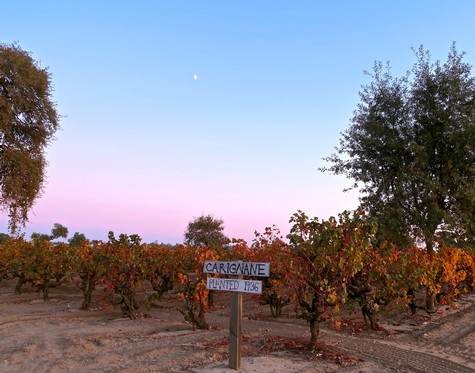
    Black peppercorn crusted goat cheese

    Herbed or Peppered Chèvres(U.S.)

    Peppercorns, as well as pungent mixes of herbs, alter the taste of Chèvres so drastically, these flavored goat cheeses call for reds with peppery spice or herby qualities, yet are soft and zesty enough to balance the slightly sharp taste of goat’s milk cheeses. Solids bets include Michael David’s Petite Petit (Petite Sirah blended with a little bit of zesty Petit Verdot), or the softer tannin styles of Petite Sirah by Ironstone Vineyards, Oak Ridge Winery’s Old Soul, McManis Family Vineyards, or the outstanding new Mountain Tides Palmero Family Vineyard. Other pungently spiced choices include McCay Cellars’ Paisley blend (Petite Sirah laced with earthy Zinfandels), or Heritage Oak Winery’s Vino Tinto (Zinfandel/Syrah/Petite Sirah blend). Then there are the pungently spiced Syrahs of Fields Family Wines and Klinker Brick Winery, which are sturdier in tannin, but are fruit-forward as well as faintly earthy enough in the Lodi style to strike a balance with the silky/sharp/grassy taste of flavor-coated goat cheeses.

    Herb coated Chèvre

    But even softer in tannin are kitchen spice/sweet pepper/rhubarb scented reds made from the Cinsaut grape (classic Lodi examples include those of Turley Wine Cellars, Michael David Winery, Estate Crush, McCay Cellars, Fields Family Wines, or Onesta Wines) as well as varietal Grenache bottlings (look for McCay Cellars, Jeremy Wine Company, d’Art Wines, PRIE Winery, Hunters Oak Vineyard, Riaza Wines, or Bokisch Vineyards’ classic Terra Alta Vineyard Garnacha). Last but not least, remember that Zinfandel can be spicy, sometimes herby and zippy enough for Chèvre, yet smooth as a baby’s bottom – particularly those of m2 Wines, The Lucas Winery’s iconic ZinStar, Maley Brothers’ Lodi Native Wegat Vineyard, Estate Crush’s Stellina brand, Harney Lane Winery, or Oak Farm Vineyards’ Primitivo or even more unique Tievoli (a snappy/spicy red crafted from Zinfandel, Primitivo, Barbera and Petite Sirah).

    Greek Feta from goat and sheep’s milk (image courtesy ofseriouseats.com)

    Feta(Greece)

    Although we do not really sit down with plates of plain Feta, we use this soft, briny, earthy goat or sheep’s milk cheese with enough of our dishes (salads, pastas, on pizzas or potatoes, in dips or stuffed vegetables, ad infinitum) to think about the ideal wines to match, which are generally whites with zesty balancing acidity and a good, floral fruitiness. Pinot Grigios (such as those of Van Ruiten Family Vineyards, Hybrid by Peltier Winery and Sorelle Winery) immediately come to mind; and also bottlings of the Chenin Blanc grape (by Heritage Oak Winery, Paskett Winery, McCay Cellars, or Six Hands Winery’s Palmero Vineyard). Viognier is also as flowery/fragrant white that, at least here in Lodi, is zesty enough in natural acidity to compliment quivering morsels of Feta (look for those of Acquiesce Winery, McCay Cellars or Peirano Estate Winery). Then there is the tart edged, lemon/lime scented Verdelho varietal (look for Bokisch Vineyards, Paskett Winery, or St. Jorge Winery’s). But really, just about any good, aromatic Sauvignon Blanc is also great to drink with Feta sprinkled dishes (top Lodi brands include Peltier Winery, LangeTwins Family, Sand Point Family Vineyards, Michael David Winery, Oak Farm Vineyards, Heritage Oak Winery, or McCay Cellars).

    Danish Havarti

    Havarti(Denmark)

    The soft, creamy, springy textured, almost fruity, fresh cow’s milk taste of Danish Havarti is a natural for most California grown Chardonnays, and the creamier textured the better (especially those of Lodi’s The Lucas Winery, Harney Lane Winery, Oak Farm Vineyards, Michael David Winery, Jeremy Wine Company, Mettler Family Vineyards, Peltier Winery, Watts Winery’s Casa Azul Vineyard, or Oak Ridge Winery’s Old Soul brand.

    Water buffalo inPaestum, Italy, source of Mozzarella di Bufala (image fromwikipedia.org)

    Buffalo Mozzarella (Mozzarella di Bufala)(Italy)

    By itself, the soft, round taste of Mozzarella di Bufala, which always comes packed in its own liquified whey, invites any soft, round, fruity white of low to moderate acidity. It’s hard to beat a good Chardonnay – especially those that emphasize more fruit than oak (examples: Peltier Winery’s un-oaked Limited Release as well as its lighter Hybrid bottlings, or Harney Lane’s new Scottsdale Vineyard) – although Grenache Blanc is also ideal an ideal varietal for its generally lighter, round, soft, purely fruited qualities (look for those of Klinker Brick Winery, Acquiesce Winery, Fields Family Wines, Leaf and Vine Wines, Holman Cellars, Onesta Wines, McCay Cellars, or Bokisch’s multi-award winning Garnacha Blanca).

    Smoked Mozzarella

    Smoked Mozzarella(Italy)

    Smoky variations of Mozzarella positively scream for round, fruit driven Chardonnays fermented and aged in distinctively toasted (i.e. charred inside by open fire) barrels. Although subtle, there are toasty highlights in those of Jeremy Wine Company, Mettler Family Vineyards, Peltier Winery, Harney Lane Winery, and Sierra Starr Vineyard that become all the more noticeable with a bite of smoke infused mozzarella.

    2019 Kerner grapes in Lodi’s Mokelumne Glen Vineyards

    Brie and Camembert(France)

    In our experience, cheese and wine lovers seem to go in three different directions, for three different sensory reasons, when it comes to these lush yet pungent, often earthy scented soft ripened cheeses. Fruit driven American Chardonnays, for one, match the soft, buttery texture of these cheeses. On the other hand, Sauvignon Blancs often offer the herbal notes that can moderate the earthy, occasionally ammonia-like notes of Bries and Camemberts, on top of a sharply contrasting acidity that freshens the palate, keeping the runny, buttery taste of Bries and Camemberts from tiring the senses.

    Camembert (image courtesy of Eisenhut and Mayer Wien/Getty Images,thespruceeats.com)

    Or, for a different effect altogether – minerally flavors of a medium-tart dry white mingling with the earthy taste of these soft ripened cheeses – you can go for a varietal of Rhône Valley origin, such as Acquiesce Winery’s minerally/citrusy Bourboulenc or more flinty/lavender-like Clairette Blanche. An even more unusual yet just as gratifying match would be Markus Wine Company’s Nativo, a bone dry, pure and feathery blend that combines the minerality of the Kerner grape with the floral, tingly-tart qualities of Bacchus and Riesling. For a taste of pure, crisp and stony Lodi grown Kerner, Sidebar Cellars (by David Ramey Wines) is the go-to. For a pure Bacchus, which has a sharp yet lavender/flowery, minerally character, look for Holman Cellars’ rare bottlings. Take your pick, or go with several of these whites to enjoy all the different contrasting and complimenting sensations possible when Lodi grown wines are poured with classic soft ripened cheeses.

    Classic red wine cheese: Beemster’s X-O Gouda (aged at least 26 months)

    Gouda, Smoked Gouda, and Aged Gouda(Netherlands)

    From the Dutch city of Gouda, this famous cheese is firm yet creamy in texture, developing a crunchy (from protein crystals), caramel-like sweetness as well as faintly nutty, mushroom-like notes during its aging process. Fruit driven yet complex barrel fermented California Chardonnays are an easy match – the sweet vanillin oak notes qualities of the wines are made all the more lush and finely textured when enjoyed with Goudas. But once you get into the super-aged Goudas – like the Beemster Classic (aged at least 18 months) or X-O Extra Aged (26 months) – you start to veer into red wine territory, since red wines are deeper in flavor than whites, and extra-aged Goudas takes on deeper, butterscotchy, vanilla roasted pecan flavors. One step beyond full bodied whites like Chardonnays are the softer tannin reds, such as many of Lodi’s Zinfandels, red Grenache, and also some of the region’s brightly perfumed, zippy yet silky ancient vine Carignans. For examples of classic Lodi Carignan, look for those of Klinker Brick Winery or Jessie’s Grove Winery made from vines over 100 years old, or else Michael Klouda Wines, McCay Cellars, PRIE Winery, or the Mule Plane Vineyard (planted in the late 1920s) bottlings of Holman Cellars or Leaf and Vine Wines.

    Fabulously creamy Boursault Triple Crème from France (image courtesy offromages-france.com)

    Triple Crème(France)

    This is the choice if you are enthralled by the biggest, oakiest, most intensely layered and creamy textured California Chardonnays: Triple Crèmes such as the plump, white crusted Brillat-Savarin, the high octane Boursault, a lush, sensual L’Explorateur, or any number of other top brands to be found. In this case, these over-the-top cheeses (defined by its having at least 75% butterfat) merely share the similar excess of rich, fat creaminess that make Chardonnays so attractive, yet are just mild enough in flavor to allow the sweet apple-like fruitiness of the grape shine on through.

    Toasting (over open fire) of wine barrels used to ferment and age Chardonnays, adding to these wines’ complexity

    There is still another, less saturating option, however, that makes a fabulous match for Triple Crèmes: a good, yeasty, toasted biscuity sparkling wine. LVVR Sparkling Cellars is Lodi’s specialist in Champagne style bubbly, and this winery’s dry style Brut, or silkier textured Blanc de Blancs, have the lush quality of Chardonnay as well as a palate-cleansing crispness and toastiness to sizzle like foam on a white sand beach with nibbles of these decadent cheeses. Other Champagne style Lodi sparklers include those of Acquiesce Winery’s Sparkling Grenache Blanc, Michael David Winery’s Bare Ranch Sparkling Wine, and Peltier Winery’s Gala Sparkling Wine.

    Exquisitely deep flavored Manchego (image courtesy ofgastronomicspain.com)

    Manchego(Spain)

    Aged for six months or longer, sheep’s milk Manchego become deeper, firmer and more complex in umami driven sensations: essentially becoming cheeses for red wines, by virtue of the depth derived during red wine during fermentation on the skins and barrel aging. Fresh, tangy, yet mature, mildly salty, faintly sweet, crunchy Manchego is one cheese that adapts to almost any red of medium to high tannin, moderate acidity, some degree of wood aging, and deep, meaty flavors. Tempranillo based reds – particularly those of Lodi’s Bokisch Vineyards, m2 Wines, Fields Family Wines, McCay Cellars, Heritage Oak Winery, Odisea Wine Company’s “The Temp,” Peirano Estate Winery, Ripken Vineyards, St. Jorge Winery, Durst Winery, Toasted Toad Cellars, Viaggio Estate, Dancing Fox Winery, d’Art Wines, or Riaza Wines – fit this culinary niche to a T. Another great choice for deep flavored Manchego is Graciano, an even earthier varietal red of Spanish origin that, in a way, is also slinkier and sexier than typical Tempranillo (look for Lodi’s Bokisch Vineyards or Riaza Wines).

    Lodi grown Tempranillo

    Another ideal choice is the supple, brightly aromatic Heritage Oak Winery’s Spanish Suite (blend of Tempranillo, Grenache and Graciano). Still, varietals of Spanish origin aren’t the only reds that have that deep yet suave affinity for Manchego. Also consider Italian varietals such as round, fleshy Montepulciano (LangeTwins Family’s River Ranch Vineyard or Watts Winery’s), sleek and nut-toned Sangiovese (bottlings by Oak Farm Vineyards, Heritage Oak Winery, Jeremy Wine Company, Macchia Wines, or Sorelle Winery), or sharper yet round and fleshy Lodi grown Barbera (especially those of St. Amant Winery, Oak Farm Vineyards, Uvaggio Wines, Jeremy Wine Company, or Macchia Wines).

    The ideal Lodi grown wines for complex, aged cheeses: sturdy, dark, oak aged reds

    Cheddars(International)

    Practically all the world’s great aged Cheddars – from English Farmhouse to Canadian Black Diamond, to domestics like the Sharps of Vermont and Tillamook in Oregon – are saturated with deep, firm, tangy, caramelized/buttery flavors that do amazing jobs of smoothing out the rough, boisterous edges of young to middle aged reds fashioned from classic Bordeaux/French grapes like Cabernet Sauvignon, or other high extract, generous tannin grapes. Among Lodi’s top Cabernet Sauvignons, look for the ever-reliable Mettler Family Vineyards, Michael David Winery’s consistently award winning Rapture or Earthquake bottlings, Peltier Winery’s dark and delicious Reserve, Van Ruiten Family Vineyards’ impeccably balanced Reserve, PRIE Winery’s Reserve, Klinker Brick Winery, Oak Farm Vineyards, Paskett Winery, Victor Vineyards, Burlington Chandler Wine, Jeremy Wine Company, or the deep yet elegantly balanced, Cabernet Sauvignon-driven blends of LangeTwins Family’s Midnight Reserve and Heritage Oak Winery’s French Blend.

    Classic English Cheddar, aged at least 17 months (image courtesy ofmunchist.com)

    In Lodi, however, Cabernet Sauvignon is not the only game in town when it comes to tannin and oak lavished reds. Charbono, for instance, is an old-timey specialty varietal, producing full bodied, musclebound reds (look for those of Paskett Winery or Heritage Oak Winery). Another red that socks a punch, made from a top-secret blend of ultra-black skinned varieties, is Harney Lane Winery’s mysterious (and delicious!) Patriarch’s Promise Lot 18; while the red that probably takes the cake when it comes to the black color and black and blue flavors that are highly favorable to well aged Cheddars is Peltier Winery’s Triomphe (Petite Sirah blended with Teroldego and Cabernet Sauvignon).

    Blue veined Stilton cheese from England

    Blue Cheeses(International)

    Generally speaking, the salty, sharp, powerful taste of the great blue veined cheeses of the world – not just classic Roquefort, Stilton, Gorgonzola, Spanish Cabrales, Danish Blue, Cambozola, or the popular Maytag Blue or Port Reyes Original Blue, but also specialty choices such as Bavaria’s Grand Noir, France’s Bleu des Basque, Shaft’s Ellie’s Vintage 2-Year Reserve (from Roseville, CA), or the lusciously layered Huntsman Double Gloucester with Blue Stilton – respond best to sweet, dessert style wines. Particularly Port inspired, fortified reds, such as d’Art Winery’s Lodi Port or their Late Harvest Zinfandel, the exquisitely sweet, handcrafted The Lucas Winery Late Harvest Zinfandel, Harney Lane Winery’s luscious Lizzy James Vineyard “Port Style” Zinfandel, or the decadently rich yet fresh, lively Bokisch Vineyards Late Harvest Graciano. Any of these combinations adding up to an autumnal wine and cheese party to remember!

    Lodi’s Spenker Family Winery & Artisan Creamery
  • 15 wines that will rock your world at this Saturday’s 2019 ZinFest Wine Festival

    15 wines that will rock your world at this Saturday’s 2019 ZinFest Wine Festival

    2019’s weather, we expect, will be a little chill (calling for a high of 63°), and there’s a chance of drizzle, but we’ve seen that before at Lodi’s yearly ZinFest Wine Festival; and everytime, everyone still had a grand ol’ time mastering of the art of sipping wine while balancing an umbrella or wrap.

    It’s highly unlikely that it will be “Woodstock wet,” but no one was complaining about that little get-together either.

    While not a rose garden, one thing we can promise is that, like our most recent ZinFests, you will be sure to find a plethora of wines that just might rock your world.

    What we mean by this is, yes, you will find lots of luscious red Zinfandel upon which Lodi hangs its hat. Lodi also produces bodacious Petite Sirahs and full flavored Cabernet Sauvignons, crisp Sauvignon blancs and a few pristinely fresh Chardonnays, and even some velvety Merlots. But Lodi also produces quite a few wines that you would be hard pressed to find in any other American wine region, if at all! Highly original wines made from grapes of startlingly unique aromas and flavors that could change your perception of American wine in general.

    How can this be? Simple reason: Although Lodi is newly emerging as a wine producing region of note, it is still the largest winegrowing region in the U.S. No other region – no other state, for that matter – comes close to the number of acres under vine as in Lodi, all by itself. This entails growers who are not afraid of planting wine grape varieties other regions simply would not dare.

    can

    That said: Going through the list of wines slated to be poured, here are 15 examples of these unique, highly original, very Lodi bottlings that you will find at this year’s ZinFest Wine Festival. The weather may not be “perfect,” but these experiences we can promise:

    experience

    2018 Bokisch Vineyards, Clay Station Vineyard Borden Ranch-Lodi Verdejo – Connoisseurs of this native Spanish white wine grape love the lip smacking citrus/orange freshness of this varietal. The sensations are always light as air but explosive in flavor. Why don’t more American wine regions grow this Verdejo? When you taste it, you’ll wonder about that, too, but at least Lodi is in the “know.”

    survival

    2018 Harney Lane Winery, Lodi Albariño – Some 13 years ago when this branch of Lodi’s Mettler family decided to go into the wine production business – after growing grapes and other agricultural products in the region since the late 1890s – their current family matriarch Kathy Mettler said it wasn’t going to happen unless they planted and bottled her favorite varietal, Albariño. Kathy, of course, has exquisite taste, which you can also chalk up to basic common sense: Albariño absolutely loves Lodi’s Mediterranean terroir (despite the fact that it is native to the Atlantic side of Spain, in Rías Baixas). Lodi iterations such as Harney Lane have a crisply dry, floral, mineral, and subtle stone fruit character that is practically indistinguishable from what you find in Spain. Not that anyone is trying to imitate Spain. The important thing is that it exemplifies what makes Albariño compelling to lovers of sleek, steely contemporary style white wine, which you can find in Lodi!

    2014 Heritage Oak Winery, Lodi CharbonoCharbono is a modern day Rodney Dangerfield: It’s a grape that just ain’t got no respect, despite the fact that it produces a red wine that checks all boxes: rich color and sinewy tannin, zesty acidity, and deeply fruited aromas and flavors that absorb rich oak qualities as easily as, say, Cabernet Sauvignon, but are more subtle and composed. It’s also a keeper – a wine so rich yet effortlessly full scaled, you’ll want to enjoy bottlings for years to come. In the hands of a minimalist like Heritage Oak owner/winemaker Tom Hoffman, it’s even more of a true “Charbono.” And you gota respect that.

    2016 Ironstone Vineyards, Rous Vineyard Reserve Zinfandel – Okay, we’re sneaking one Zinfandel into this line-up consisting mostly of “alternative” style wines. Why? Because modern day Lodi isn’t just about Zinfandel per se, but Zinfandel as an interpretation of unique single vineyards, respectfully bottled as vineyard-designate wines. Rous Vineyard, planted in 1909, is owned and meticulously farmed by longtime Lodi winemaker (now, evidently, “retired”) Craig Rous. That is to say, Mr. Rous tries to find some kind of peaceful co-existence with these individualistic (the opposite of “uniform!), winding, twirling, gnarly old vines that pretty much determine how they’re going to behave each year with or without human input. What makes Mr. Rous so smart is that he knows where to tweak and where to leave well enough alone, which is why wineries like Ironstone are always rewarded with Zinfandels that are just gushing with the most flowery (almost violet-like), blueberry cobbler fruit garbed in a royal velvet – sensations pretty much unique to this vineyard, different from even other Zinfandels grown in the immediate neighborhood. This wine, in other words, is not so much a “Zinfandel” as a “Rous Vineyard.” As such, yet another Lodi phenom.

    2018 LangeTwins Family, Lodi Aglianico Rosé – This delicately pigmented, transparent and dry rosé was released, for the first time, barely a month ago, and is already the talk of the town. Agliancio is an ancient grape of Central Italy – no doubt, wine bibbers were sipping nectars fashioned from this grape in Pompeii at the exact same time Vesuvius blew its top – and lo and behold, it turns out to be another Mediterranean grape perfectly suited to Lodi’s Mediterranean climate (after farming in Lodi since the 1860s, the Lange family is pretty smart about these things). We’ve confirmed this in our own blind tasting – the wine’s tart edged strawberry freshness, tinged by the type of exotic spice you find when sticking your nose into a red rose, is… almost to die for.

    2018 Markus Wine Company, Lodi Nativo – Lodi natives will recall that there was a big flood in early 2017, and Mokelumne Glen Vineyards – which grows the Kerner (83%), Bacchus and Riesling grapes that goes into this bottling – took the brunt of it, located as it is on a flat at an oxbow curve of the Mokelumne River. Therefore there was no 2017 Markus Nativo made, but the 2018 is an exciting return to this glorious, uniquely “Lodi” blend: flowery scented with slivers of tropical fruit, and a feathery feel finishing with stony, bracing crispness. And so for Nativo fans, the wait is over!

    2017 McCay Cellars, Abba Vineyard Lodi Grenache – Lodi grows a lot of Pinot noir, but is not known for Pinot noir – the region’s 3,000-plus acres of this grape are sneaked into many a bottling bearing other appellations. But if there was any grape that could be defined as, say, “Lodi’s Pinot noir,” it has to be Grenache – a Mediterranean variety that basks in the Lodi sun like the golden sunbathers at Nice and Monte Carlo, yet comes out fresh, bright, and popping with notably spicy (think black pepper and clove, and a hint of cardamom exoticism) red berry perfume, manifested in soft, silky, zippy sensations on the palate. Not exactly “Pinot noir,” but a pretty darned good (and perfectly delicious) facsimile of it. All the more so in this bottling, grown by one of Lodi’s most talented (some say meticulous, others say obsessive-compulsive) farmers, Phil Abba, and interpreted with the minimalist instincts (i.e. native yeast fermentation and neutral French oak aged) of Mike McCay.

    2015 Mettler Family Vineyards, Lodi Pinotage – Wine aficionados fairly new to the Lodi scene may be either surprised or horrified to learn that Lodi grows more Pinotage – a crossing of Pinot noir and Cinsaut first concocted in South Africa in 1924, thus hoisting a reputation for funky wines (despite the thoroughly modern and fresh qualities of South African wines today) on this country ever since – than any other place in the U.S. But once anyone tastes the Pinotage by Mettler Family Vineyards, the response is overwhelmingly positive. Grown in Lodi, this grape produces sculpted, round and luscious reds teeming with brambly, berry pie-like qualities; and the restrained tannins and the Mettlers’ deft use of subtle oak burnish the wine’s upbeat, contemporary feel even further.

    2018 Michael David Winery, Lodi Symphony – While known for their imaginatively branded bottlings of familiar varietals and blends, the Phillips family of Michael David take a lot of pride in their Symphony as a specialty grape crossing (Muscat of Alexandria x Grenache gris), first developed by U.C. Davis in the 1940s. A whiff of this soft, easy (barely 11% alcohol), lightly sweet white makes you think of foaming waves creeping up soft sands on tropical islands (think breakfast melon, or apricot or peach intertwined with honeysuckle). Not everyone wants their white wine bone dry; but it must be fruity, let it be something as unique and distinctive as this Lodi natural.

    2018 Michael Klouda, Lodi Zinfandel Retro Rosé – One of Lodi’s teeny-tiniest producers is trying to lead the way with a “retro” return to one of Zinfandel’s classic roles: as a pink wine. But unlike ye olde “White Zinfandel,” this pale orangy-pink wine is dry as a desert, while showing off the intrinsic fruit complexities capable in this grape when picked early enough to make a natural rosé: a squeeze of cranberry, a slice of green apple, and a sprinkling of rose petal and tea-like potpourri in the nose, coupled with a crisp feel that is both edgy and fleshy. Try this out for yourself to see if this bourgeoning producer is on to something.

    2011 Peltier Winery, Schatz Family Reserve Lodi Teroldego – Lest you expect to find a typically round and pliant Lodi style red wine in this 8-year old bottling, think again: It’s Teroldego, a Northern Italian grape that is more likely to rattle your cage with a dark, densely textured, full-tannin yet zesty, deeply fruited intensity. While full bodied (i.e. “big”), the feel is upbeat, steeped with sensations of dried fruit trail mix and mocha espresso. Wake up and smell the Teroldego!

    2017 PRIE Winery, Lodi VermentinoVermentino is still another quintessentially “Mediterranean” white wine grape, which basically means this: It thrives in a warm, sun soaked environment, yet still retains a zesty, mouth-watering natural acidity, floral notes and fruit qualities that are delineated and restrained rather than “fat” or “ripe.” Hence, the grapes popularity in places like Provence, Corsica, Sardinia, and now (tortellini-roll, please) Lodi! PRIE’s rendition is typically floral, with slivers of white peach and lemon zest, while the sensations in the mouth are minerally and lavender-ish in a classic herbes de Provence sense. Very Lodi.

    2014 St. Jorge, Lodi Touriga Nacional St. Jorge owner/grower/winemaker Vern Vierra’s Portuguese heritage adds still another strand to Lodi’s multiplicity of cultures, grapes and wines. Touriga Nacional plays a role as the most essential backbone-grape of Portugal’s famous sweet, fortified red wines known as Port; but when made as a dry table red (as in St. Jorge’s bottling), it is full bodied, chewy with tannin, deep and pungent with black fruits tinged with a fragrance suggesting bergamot-like citrus (hence, many say Earl Grey tea-like).

  • 2019 ZinFest Blind Tasting – a study of ancient vine Zinfandels of California

    2019 ZinFest Blind Tasting – a study of ancient vine Zinfandels of California

    ZinFest blind tasting coming up at Wine & Roses Hotel!

    Friday, May 17, 2019 – 2:00-4:00 PM – Wine & Roses Hotel Ballroom (Lodi)

    Exactly how do Zinfandels from Lodi’s oldest vines compare to ancient vine Zinfandels grown in Sonoma County, Napa Valley, Paso Robles, Contra Costa and Amador County? The best way to find out is to taste them “blind,” with no preconceptions, just sensory qualities to lead you to conclusions. Preferably with the guidance of some of the most Zinfandel-knowledgeable wine professionals in the state.

    ZinFest Blind Tasting panelist Catherine Fallis MS

    Which is exactly what we intend to do at this ZinFest pre-event, where we will pour 12 Zinfandels wrapped in paper bags, and let you compare some of the finest Zinfandels of all of California with some of the best from Lodi. And here’s the thing: We promise that all the Zinfandels in this tasting will come from vines planted an average of over 100 years ago.

    The Sacramento Bee’s redoubtable Mike Dunne

    When it comes to plantings this old, it doesn’t matter where the vineyard is located or even what grapes are planted in it: If the vines are old enough to survive, and flourish, for that long a time, you know darned well it makes some pretty fine, expressive, phenomenal wine.

    terroir

    Here’s one more thing: Seating is extremely limited. So if this tickles your fancy, please visit our pre-paid ZinFest Blind Tasting ticket page to lock in your seat(s). $40 per person (for more information on all the 2019 ZinFest events, please visit zinfest.com).

    Ancient vine Zinfandel harvest in Lodi
  • Four 2018 wine grape lessons (part 1)

    Four 2018 wine grape lessons (part 1)

    Lodi’s 2018 heirloom Flame Tokay and Zinfandel harvest in Jessie’s Grove’s 129-year-old Royal Tee Vineyard

    The months of August, September and October are the climatic peaks of each growing season in Lodi wine country, as they are in all the wine regions of the Northern Hemisphere. These are the months when wine grapes reach full maturation, thus ready for harvest. It is also the time of year when we rush out into the vineyards to poke, prod, taste and photograph the grapes just before or during peak ripeness. And this is how we learn more about exactly how the individual characteristics of each variety are impacted by factors such as terroir (the French word for “sense of place,” determined by vineyard location), grower and winemaker decisions, and above all, the whims of Mother Nature (i.e. peculiarities of each “vintage“).

    All the fine wines of the world are defined mostly by the grapes that go into them. It is why, for instance, white wines made from the Albariño grape are almost always lighter, sharper, more flowery, citrusy and flinty than white wines made from Chardonnay. Yet an Albariño grown in its native Rías Baixas, Spain is not exactly the same as an Albariño grown in Lodi. Why should it be? Rías Baixas is over 5,600 miles – an entire continent and ocean – away from Lodi. The climate, weather, soils and topography are different. Viticultural and winemaking traditions, and actual practices, are a little different. Wine is consumed in different culinary and social contexts, and so perception of quality is different. Sure, there are similarities, since Lodi and Rías Baixas are both part of a growing global community; but all the little things add up, impacting wine grape morphology and, ultimately, the way wines taste.

    By the same token, a Chardonnay grown in Lodi tends to be softer and more fruit-forward than a Chardonnay grown just 80 miles away in Sonoma Coast; and Sonoma Coast and Lodi Chardonnays are even more different from the higher elevation, minerally structured Chardonnays grown in Santa Cruz Mountains, the lean and tart-edged Chardonnays of Oregon’s colder climate Willamette Valley, the pungently tropical Chardonnays of sun soaked South Australia, or (especially) the crisply balanced, multi-faceted Chardonnays of France’s Burgundy region, where the grape originated and thus is more naturally adapted.

    Lush and fruit-forward Chardonnay grown in Lodi

    Ergo: Terroir often trumps the grape associated characteristics expected in each varietal wine, and it all starts with how grapes respond to their respective environments.

    The fascinating thing is that even within any given region such as Lodi, Sonoma Coast or Burgundy, you can find dramatic variations in grape cluster size, weight, berry shapes, aromas and sensations depending upon each vineyard location – all ultimately effecting how wines turn out, even when made from the exact same grape or clonal selection of that grape.

    During Lodi’s 2018 harvest season, we posted eight consecutive blogs on wine grapes utilizing photos and winegrower comments to demonstrate the differences between varieties and vineyards; all worth an abbreviated recap (which we are doing in two parts) for posterity’s sake. So here we go…

    Bokisch Vineyards’ Terra Alta, Las Cerezas and Andrus vineyards Albariño

    Bokisch Ranches Albariño from 1) Las Cerezas Vineyard (Mokelumne River-Lodi AVA); 2) Terra Alta Vineyard (Clements Hills-Lodi AVA); 3) Andrus Vineyard (Sacramento County, west of Lodi AVA)

    In our August 21, 2018 post entitled Bokisch Vineyards demonstrates impact of terroir on grapes, Bokisch Vineyards owner/grower Markus Bokisch broke down the graphic differences in cluster sizes and even color (photo above), leading to distinctive differences in resulting wines, in three of his Albariño plantings:

    “First of all,” says Mr. Bokisch, “the size, or cluster architecture, of the Albariño grape no matter where it’s grown – whether in California or Spain – tends to be very small, similar to a Pinot gris. It looks like a little hand grenade, and there is usually no wing (i.e. secondary arm growing from the top part of the main cluster) associated with it. If there is a wing, it is typically very small.

    “Albariño clusters tend to be medium-tight, with a visibly thick cuticle. The cuticle is the grayish, waxy film visible on the skin, or epidermal cells, of each berry. Grapes with visible layers of cuticle usually have the highest degree of tolerance for mildew, compared to other varieties. Which makes sense, because if you see where Albariño originated, in Spain’s Galicia region (particularly the Rías Baixas), 50 inches of rain is not atypical. Therefore, a fair amount of mildew tolerance in a variety grown in that area makes sense. Any mildew-prone variety typically does not do well there.

    “The other thing you see is that berries in the cluster tend to be on the smaller side. This allows for even a compact cluster to have more gaps or spaces between each berry, allowing for more airflow and, as a result, adds to the mildew-resistance.

    Markus and Liz Bokisch with their Terra Alta Vineyard (Clements Hills-Lodi AVA) Albariño harvest

    “The major distinction between the Albariño clusters coming from Las Cerezas on the left, Terra Alta in the middle, and Andrus Island on the right is a size differential based on location. The Terra Alta cluster is the smallest because it is grown in the most nutrient-depleted soils (a Redding Series gravelly clay loam), here at our winery and tasting room location in Clements Hills (AVA). Therefore the total capacity or vigor of the vine is diminished. The clusters are smaller, and you also have a yellower color in the berries, which is related to sun exposure. In an area where the soils are more depleted, not only are the berries and clusters smaller, but the canopies (i.e. shoot and leaf growth) are also smaller, allowing for more light infiltration.

    “What you see in Las Cerezas Albariño on the left is a reflection of the silty or sandy (Tokay Series) loams found in the Mokelumne River AVA. Here the soils have a low to moderate nutrient regime, thus a little more vigor; plus better water-holding capacity than in Clements Hills. It is still a typically compact size as Albariño clusters go; only, but slightly larger, on average, than what we get in Terra Alta Vineyard.

    “When you get to the Andrus Vineyard in Sacramento County, located on Andrus Island (in the Sacramento-San Joaquin Valley River Delta), now you’re talking about a vineyard site that needs no irrigation all season long. It’s dry farmed – doesn’t need a drop of water – because the area has a high water table, giving the plants all the water they need. These are also peat loamy soils (primarily in the Ryde Series), notably richer in natural nutrients. As a result, Andrus Vineyard is one of our most challenging sites in terms of slowing down plant vigor.

    Map showing the Lodi sub-appellations (American Viticultural Areas, a.k.a. AVAs) of Mokelumne River and Clements Hills

    “Consequently, some of that vigor gets taken out in the cluster, creating what would be a larger than average Albariño cluster. It actually has the emergence of a small wing, which is really odd for the variety. The berries are on average bigger that what you see in Terra Alta or Las Cerezas, and the color also tends to have a little more green.”

    In regards to the sensory ramifications of these variable clusters of Albariño, Bokisch Vineyards winemaker Elyse Egan Perry tells us:

    “In Las Cerezas, we tend to get a little more floral aromatics, as opposed to the little more citrus qualities we get in both the Terra Alta and the Andrus Albarinos. In the Terra Alta, you’re getting more citrus notes on the palate – more tangerine, lemon zest, and a little more of that saline quality on the palate. While not super-strong, this brininess is there, perhaps a little more on the finish of the wine than anywhere else.

    Wine grape vocabulary

    “Of all our Albariños, the Andrus fruit tends to be a little bit more on the tropical side, with pronounced melon, although it also holds its acid really well. As the sugars rise, the acids don’t drop out as much as they do in the other two. Which is why I usually pick Andrus Vineyard at around 22° Brix (i.e. sugar reading), whereas Terra Alta and Las Cerezas are picked at lower sugars, closer to 21°, 21.5°.

    “The vineyards also ripen differently. The Terra Alta is the first to come into the winery; the soils in Clements Hills being the oldest and most nutrient-depleted out of the three. When vines struggle, fruit ripens sooner. When you go west to Las Cerezas, in the silty-sandy soils of the Mokelumne River, these are the second Albariños to come in; and then Andrus, growing in the youngest, peaty soils, is usually a couple weeks behind those two, the highest yielding vineyards being the slowest to ripen.”

    Jessie’s Grove’s Royal Tee Vineyard ancient vine Zinfandel field mix

    Royal Tee Vineyard Flame Tokay and Zinfandel grapes picked together for Alquimista Cellars’ 2018 harvest

    In our August 28, 2018 post entitled Lodi’s oldest, most historic Zinfandel planting, the subject was Jessie’s Grove Winery’s Royal Tee Vineyard: a venerated block planted in the (Tokay Series) fine sandy loam of Mokelumne River’s west side, on its own (Zinfandel) rootstocks, by Joseph Spenker in 1889. The vineyard is a remnant of a larger planting, originally planted between 1886 and 1889, that once topped 45 acres. What remains is precisely 4.95 acres.

    The peculiar thing about the Royal Tee – at least for Lodi – is that only about 84.5% of the vineyard consists of Zinfandel plants (the vast majority of Zinfandel blocks in Lodi are 100% Zinfandel, if not at least 98% or 99% of the grape). The rest of Royal Tee is Carignan (about 10.5%), Flame Tokay (4%), Mission (.5%) and a rare, 19th century heirloom called Black Prince (.5%).

    Royal Tee Vineyard grapes (from left): 1) Zinfandel; 2) Carignan; 3) Mission; 4) Black Prince; 5) Flame Tokay

    Plucking cluster samples of each variety for us to examine, Jessie’s Grove owner/grower/winemaker Greg Burns explained: “You can see and taste the unique character of each grape. Zinfandel produces the smallest berries and cluster; and even though it is not yet completely ripe (in mid-August 2018), you can already taste the jammy berry flavor and tannin structure that makes it such a beautiful wine.

    “Carignan, on the other hand, is a larger cluster with medium sized berries. The taste is more like sour cherry. You can clearly see why Carignan was blended with Zinfandel – to give it that acidity, especially since Carignan ripens later than Zinfandel.

    “Mission also ripens later than Zinfandel, and is a long, very loose cluster of smaller berries. Its fruit is very soft tasting, and by itself, it would make a juicy, easy drinking wine with just a little tartness. But it can never be a very complex wine, which is why the old timers always preferred Zinfandel as the predominant grape.

    “Finally, the Black Prince and Flame Tokay grapes, which have a table grape quality – big, generous clusters with soft fruit, crunchy seeds, big berries, great for eating. Before we started producing our Ancient Vine Tokay (a lightly fortified style of sweet dessert wine), we used to leave the Tokay out in the field for our workers to eat; which, of course, was why this grape was grown for so many years in Lodi, as a table product.

    Jessie’s Grove’s Greg Burns with 2018 Royal Tee Vineyard cluster samples

    “I think that back in 1889 winemakers intuitively knew that if you plant Zinfandel in a field mix you can get a fuller range of flavor profiles in a wine. Greg La Follette (winemaker/partner of Alquimista Cellars) has been making wine from all five varieties since 2015 (see our notes (and Mr. La Follette’s remarks) on the 2017 Alquimista Jessie’s Grove Vineyard Zinfandel here). I think Greg has proven that fermenting all five grapes together in their original proportions brings out the best in the vineyard.

    “For Jessie’s Grove, we’ve been separating the Zinfandel out from the rest to produce our Royal Tee Vineyard Zinfandel. The Carignan has been going into our Ancient Vine Carignane bottlings, and our Tokay, of course, goes into our Ancient Vine Tokay. Last year (in 2017) I picked my own field blend for the first time, and it is a softer yet more complex wine; every bit as rich as our 100% Zinfandel, but different, as you would expect.”

    The white wine Rhône Valley grapes of Acquiesce estate

    Acquiesce grown white wine grapes: (top, from left) Piquepoul, Grenache blanc and Viognier; (bottom, from left) Clairette blanche, Bourboulenc and Roussanne)

    In our September 5, 2018 post entitled The utterly unique white Rhône grapes of Acquiesce Vineyards, Acquiesce Winery owner/grower/winemaker Sue Tipton commented on the six white wine grapes she grows to produce her enormously popular, 100% estate grown, zero-oak influenced Acquiesce label wines:

    Piquepoul (a.k.a. Picpoul blanc) – “Our Picpoul Blanc is a real favorite in the tasting room. It’s traditionally meant to go with oysters and shellfish, but people love to drink it on its own. I think the most unique thing about Piquepoul here in Lodi is the fact that it has this fruit-forwardness that you don’t typically see in Piquepouls from, say, Southern France (particularly the Picpoul de Pinet appellation). I believe that’s due to Lodi. The fact that we’re able to take this grape to ripeness here, where we can get a nice pineapple essence in the grape even when picked at low sugars – around 20° Brix (i.e. sugar reading), which usually finishes at around 12.5% alcohol – all goes to show how unique Lodi really is as a winegrowing region.

    Grenache blanc – “Grenache blanc is the first white wine grape we planted in our vineyard in 2008, all on head trained vines. It’s because it did so well that we decided to plant the other white Rhône varieties. The cluster you see here comes from our original head trained vines. It’s a little smaller than the clusters we get on our trellised plantings, which we put in later; although in our vineyard.

    “Grenache blanc is one of the most popular white wine grapes in Southern France; but over there, it is almost always part of a blend. We use it to produce a pure varietal; and it is also usually about 45% of my blend, the Acquiesce Belle Blanc (made from Grenache blanc, Roussanne and Viognier), which is our homage to Châteauneuf-du-Pape Blanc. We also use Grenache blanc as the base wine of our Champagne style sparkling wine, which is one-of-a-kind. We could be wrong, but I don’t believe there is any other sparkling wine in the world made from Grenache blanc.”

    Comparison of Acquiesce Grenache blanc clusters grown on head trained vines (left) vs. trellised vines (right)

    Viognier – “Our Viognier produce the smallest of our white wine clusters, which is typical, It is always triangular in shape, and fun in the vineyard because it doesn’t have a tendency to overcrop, at least in our sandy soils (our note: Acquiesce is located at the northern edge of Lodi’s Mokelumne River AVA, defined by its sandy Tokay Series soil)… Viognier is not one of the white wine grapes of Châteauneuf-du-Pape. It is grown further up the valley, in the Northern Rhône. All of my white Rhône grapes have their own unique flavor; but different, perhaps, than all the others, a Viognier grape tastes just like a wine made from Viognier. You can go out into the vineyard and taste the grapes, and it will be almost exactly what you get after you ferment it. The grapes have nice peach, apricot, tangerine flavors, with floral notes – particularly honeysuckle and violet.

    “We make our Viognier fairly low in alcohol, relatively speaking. We pick right around 23° Brix, and our alcohols end up under 14%, taken all the way to dryness. A lot of American Viogniers, on the other hand, are finished with some residual sugar. Sometimes we find customers who say they don’t want to try ours because they’ve had Viogniers before that were sweet; either that, or high in alcohol or oaky. We get them to try ours, telling them that this might not be what they expect, and they love it. Of course, Viognier is such a floral wine, it can be perceived as sweet because of its nose.”

    Clairette blanche – “The Clairette blanche cluster has a prominent shoulder, or wing; and rather round, the berries tend to have an ovoid shape to them, more pronounced in some years. As a varietal, this has been one of our biggest hits. It is, like, the best white wine I’ve ever had with cheese. With Clairette blanche you can really push the limit. We’ve tried blue cheeses, feta, goats, anything you can think of, they’ve all gone really well with this varietal, I think it has a bright crispness like a Sauvignon blanc and the green apple of a Grenache blanc, but it takes things further with its own other layer, which is almost like a caramel essence. It is not sweet; but when ripe, the grape itself tastes almost like a caramel-apple. I t hink it’s this unique character that makes it so versatile with cheeses.”

    Bourboulenc – “You can see that Bourboulenc is just about our largest variety, as grape clusters go, with fairly large berries that give a nice, distinctive lemon/lime taste. Bourboulenc has been puzzling for most people – even those who really know their white wines – because it’s basically unlike anything anyone has tried before… Just since last fall we’ve had three Masters of Wines from the U.K. visiting us, and none of them were been able to share their thoughts because they’d never had a white wine made from 100% Bourboulenc either!”

    Close-up of russet-tinged Roussane grape from the Acquiesce estate

    Roussanne – “Finally, we have the Roussanne, which the nurseries supposedly call ‘The Princess,’ because it can be a little demanding to grow, prone to a lot of problems. Roussanne comes from the word roux, in reference to the grape’s russet color. The grape cluster has a reddish-brown tinge. When Aaron Shinn (Round Valley Ranches vineyard manager) first started farming it, he came up to me and said, ‘Sue, there may be something wrong with the Roussanne, it’s changing into a weird color.’ I told him, ‘I think it’s supposed to do that – it’s Roussanne!’

    “In some ways, Roussanne is my favorite of the Rhône grapes. It has this honeyed/almond characteristic; and when it’s a little older, it develops this rich marzipan texture and flavor… Most of our wine club members might prefer the super-young Acquiesce varietals for all their brightness of fruit. But for Roussanne, I lean more towards the taste of a mature wine. This is the last of the varietal bottlings that we release each year – it comes out even after the Belle Blanc. If we didn’t sell out of all of the wines so quickly, I’d hold our Roussanne back even longer; at least a year after all the rest, because it’s really in about its third year that a Roussanne really starts to express itself…”

    Three German grapes finding a “secret place” in Markus Wine Co. Nativo

    Markus Wine Co. Nativo label

    From our September 13, 2018 post entitled Markus Wine Co.’s Markus Niggli approaches grapes like colors on a palette:

    To Markus Niggli, the owner/winemaker of Markus Wine Co., wine grapes are like paints on a palette. The purity of the colors selected by an artist are important enough; but it’s how the colors are put to canvas – the interplay, the blending, the contrasts and textures, and of course, the arresting skill and imagination – that catches the eye, stimulates the mind, and even riles the senses or emotions, consciously or unconsciously.

    And so, unlike your typical American winemaker (or perhaps because he is European-born), Mr. Niggli is less satisfied with interpretations of “varietal” wine – wines made primarily from one grape – than he is with creating blends from different grapes. Therefore, when you taste a Markus Wine Co. wine you are experiencing one winemaker’s thought process, or a culmination of his past experiences. Like an artist’s colors, grapes contribute to characteristics, as do sense of place, or terroir (in Niggli’s case, grapes that are very much “Lodi” grown). But in the end, the sum means more than the parts.

    Rare (for the U.S.), typically small clustered Bacchus grapes in Mokelumne Glen Vineyards

    Take, for example, the Markus Wine Co. “Nativo”: Niggli’s wily blend of Kerner (a German Trollinger x Riesling crossing), Riesling and Bacchus ({Silvaner x Riesling} x Müller-Thurgau {Riesling x Madeleine Royale}). On a sensory level, the wine is light, airy, minerally in its dryness, sensual in feel, and provocatively scented – like whiffs of lemon and glowing skin on the wrist of a proverbial maiden. This is what happens when focus is shifted away from single “varietals.”

    Mr. Niggli packages his Nativo white under a lime-green label with an abstraction of the postal code of his hometown in Weesen, Switzerland, along with the initials of Markus and his brothers, Konrad and Bernhard. Like the grapes, the vineyard source – Mokelumne Glen Vineyards, tucked into a riverbend on the east side of Lodi’s Mokelumne River Viticultural Area – is an important factor, but so is the winemaker’s sensibility. Whether or not the art label “says” exactly what he is thinking or feeling, the wine itself finds a separate place, an almost secretive niche, different from that of any other wine made in the U.S., or the world for that matter: the unique “colors” of Nativo.

    Late last month (August 2018) we asked Mr. Niggli to take us around to look at the various grapes and vineyard sources he uses as his “palette.” His comments on the Germanic white wine grapes sourced each year from Mokelumne Glen Vineyards:

    From Mokelumne Glen Vineyards in Mokelumne River-Lodi (from left): 1) Kerner; 2) Bacchus; and 3) Riesling

    Explains Niggli: “The Nativo is usually about 75% or 80% Kerner, which you see on the left. Kerner is a German crossing, but is as distinctive as any other grape, with its own character. It is also distinctive in the vineyard. It is an average sized grape cluster; nice and loose, with medium sized berries which always have a little ‘dot’ on them from where the flower pops off during the spring fruit set. It is a grape that seems to do very well in Lodi.

    “Bacchus, which you see in the middle, is usually a small, tight cluster with lots of gray specks. It also seems to produce very interesting wine in Lodi, but is very slow to ripen, usually several weeks after Kerner. Some years it barely ripens at all, which is aggravating; but it makes a wine with great acid, a robust flavor, yet very refreshing.

    “Riesling is Riesling – it is the classic grape of Germany, not what you expect to find growing in Lodi. It also brings very good acid to the wine, and lots of fragrance and flavor. In the Nativo, Kerner is responsible for the mouth-feel – light, fresh, flinty, playful. The Riesling provides a sense of sweetness in its fruit, but has better acid than the Kerner. Because it is not always completely ripened, the Bacchus from Mokelumne Glen usually ends up giving us even more acid backbone, adding to the overall balance of the blend.”

    Mr. Niggli’s own tasting notes on his most recent vintage of Nativo (a 2016 which, alas, is sold out at the winery).

    Please seePart 2ofFour 2018 Wine Grape Lessons

    Markus Niggli sampling his Mokelumne Glen Vineyards Kerner harvest
  • 10 of Lodi wine country’s most Instagram-worthy destinations

    10 of Lodi wine country’s most Instagram-worthy destinations

    Instagram-worthy moment in Phillips Farms U-Pick Flower Garden

    Lodi wine country is all about the wines and vineyards, the laid-back Lodi natives and small-town vibes; and evidently, for some 40% of visitors under age 33 (at least according to recent surveys taken by vacation planners), the “Instagramability” of the sights and sites.

    Most everyone wants to be like someone else in their social media circle; which is a perfectly human thing to feel. 100 years ago it was about living the life of heroes in books; 50 years ago, characters on the silver screen; and today, in places where we can create our own do-it-yourself scenarios for an audience of friends and family.

    Winery direction signs found on nearly every corner of Lodi wine country

    Calling all wine lovin’ peeps: Here are 10 of the most Instagram-worthy spots to make your followers’ social media fantasies come true. We can think of many more, of course, and we’ll be sure to share more ideas in future lodiwine.com posts.

    But for now, 10 of Lodi wine country’s best Instagram-ready locations:

    Quiet moment in Lodi Lake Park (image courtesy ofGoff Photography)

    Phillips Farms U-Pick Flower Garden

    4580 W. Highway 12, Lodi: For a well known, wildly successful operation, Michael David Winery (now nearing 1 million yearly case production) sure knows how to low-key it. Makes sense, since the owners – the Phillips family – have been farming in the Lodi region since the 1860s. They are an essence of “laid-back Lodi.”

    Therefore, this spot along W. Hwy. 12/W. Kettleman Rd. is discreetly marked by a country-quaint “Phillips Farms” sign. Their low-slung building is dominated by a “farm café” – where you find mostly locals enjoying breakfast or lunch (a sure sign of quality for any destination) – and the fresh vegetable and fruit stand that served as the location’s original purpose. Oh, and of course, there is a bustling wine tasting counter.

    Bocce balls at Michael David Winery’s Phillips Farms

    Outside the Phillips Farms café, fruit stand and tasting room, you find shaded outdoor wine tasting areas, an elaborate kids’ play area alongside luxury chicken coops, two bocce courts, and an extensive garden for picking your own bouquets (a discreet fee collected in the tasting room) – all adding up to an Instagramming hotspot.

    148-year-old barn at jessie’s Grove estate

    Jessie’s Grove Winery

    1973 W. Turner Rd., Lodi: There is a reason why the Jessie’s Grove Winery estate is the most photographed in Lodi. Old wood. Lots of it: In the white-washed barn originally raised in 1870; in the equally old timber-frame (i.e. nail-less) building that houses the winery tasting room; and in the 32 acres of indigenous valley oaks preserved by Jessie Spenker, the daughter of founder Joseph Spenker who established the original 1500-acre Spenker Ranch (most of it still owned and farmed by his descendants) in the 1870s.

    Ancient Carignan and oak on west side of Jessie’s Grove (along DeVries Rd.)

    Speaking of old wood, visitors adventurous enough to take the 5-minute stroll down the dirt road between the horse pasture and trellised vines will come upon a site that is wondrous even by Lodi standards: the Royal Tee Vineyard, consisting of majestic, nearly tree-like Zinfandel, Carignan, Mission, Flame Tokay and Black Prince vines originally planted in 1889.

    Jessie’s Grove owner/grower/winemaker Greg Burns picking 129-year-old Flame Tokay in his Royal Tee Vineyard

    This is Lodi’s second oldest continuously farmed vineyard (the oldest – the historic Bechthold Vineyard, planted by Spenker in 1886 – is located just a quarter-mile away across a canal, but is usually inaccessible to the public). The kind of vineyard that legendary winemaker Greg La Follette is fond as describing as “one that you approach with hat off and bended knee.”

    Timber-frame tasting room at Jessie’s Grove

    Then on the far west side of the property – along DeVries Rd. just south of the canal, between W. Woodbridge Rd. and W. Turner Rd. – is an oft-photographed stand of magnificent Carignan vines dating back to 1900, flanked by a dramatic ancient oak. Still another classic Instagram moment.

    Oak Farm Vineyards tasting room, winery and centuries-old oaks

    Oak Farm Vineyards

    23627 DeVries Rd., Lodi: Oak Farm Vineyards is a visual feast of a vineyard estate built upon a site that was once the plantation-home of Lodi farming pioneer William DeVries.

    Oak Farm Vineyards tasting room

    It has all the bells and whistles: A tasting room and winery with perfect golden lighting, an 1876 colonial style home straight out of Gone With the Wind, stately oak trees hundreds of years old, and to top it all off, first class wines ranging from Albariño and Sauvignon Blanc to Barbera and Zinfandel. And just behind the giant oaks and historic DeVries home is a dreamy lake, complete with overhanging, Delta-sized weeping willows.

    1876 DeVries home from Oak Farm winery eternity pool

    There is a certain slant of light, and just the right amount of shading, lending almost a “studio” quality to all the photos taken at Oak Farm Vineyards. An Instagrammer’s Shangri-La.

    The chai at The Lucas Winery (image courtesy of The Lucas Winery)

    The Lucas Winery

    18196 Davis Rd., Lodi: The Lucas Winery is a boutique sized artisan winery/vineyard/estate with a distinct, and fancy, touch of “Bordeaux château” to it. Its golden lighted barrel room, for instance, is trés petite, yet has the quiet elegance of a French chai (pronounced “shay”); giving the impression of wines happily at rest in their single-tiered rows of French oak barrels.

    Flower and nook at The Lucas Winery

    But rather than red wines produced from Cabernet Sauvignon or Merlot (the major grapes of Bordeaux), these barrels are filled with Lodi’s pièce de résistance: the Lucas Winery’s estate grown Zinfandel – perhaps the most elegantly crafted in Lodi.
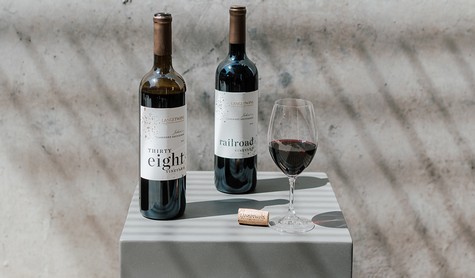
    ZinStar Vineyard behind The Lucas Winery tasting room

    The 85-year-old vines in The Lucas Winery’s ZinStar Vineyard are located just behind the winery, along a lush lawn lined with deep, rich rusted/veneered garden sculptures.

    Contemplation at The Lucas Winery

    None of this is by accident. Owner/grower David Lucas has always endeavored to produce wines with a sense of balance and longevity reminiscent of the great wines of France; and his winemaker/spouse, Heather Pyle, was a former director of winemaking for Napa Valley’s Robert Mondavi Winery as well as Opus One. All of which make for very Instagram-worthy images.
    The oasis-like Harney Lane Winery tasting room

    Harney Lane Winery

    9010 E. Harney Ln., Lodi: No doubt about it, Harney Lane Winery has been a magnet for both wine lovers and photo hounds since opening its doors 11 years ago, after farming wine grapes the previous 100 years.

    Ripening Primitivo right outside the Harney Lane tasting room

    When any one of Lodi’s branches of the Mettler family commit to a project, they execute it with the patience and thoroughness of a family that thinks long term. The only thing “instant” about this stunningly landscaped (towering evergreens, cork trees and pillowy green underbrush) showcase winery/tasting room/estate is the winningly Instagram-able images it inspires.

    Old truck and vineyards at Harney Lane estate

    If you’re looking for spectacular vineyard shots, purple sunsets, or even a classic old truck parked along the rows, just step outside the tasting room and walk a few feet from the oasis that has served as the family haven for well over a century. The Harney Lane wines, as it were, are equally deep and captivating – no exaggeration. Welcome to Lodi. Enjoy your stay.

    Leisurely life at Lodi Lake Park

    Lodi Lake Park

    1101 W. Turner Rd., Lodi: Whether you visit this sprawling, 114-acre City of Lodi landmark for casual strolls or Nature Trail hikes, kayaking or boating, birding or riparian sight-seeing…

    Native peeps at Lodi Lake Park

    … picnicking or bag-lunching, napping or jogging, or to wet your feet on a sandy beach with kids, families and passing caravans of ducks, it is one Instagram moment after another at Lodi Lake Park.

    Lodi Lake Park sunset (image courtesy ofDena Marquez Dreamscape Photography)

    Acquiesce Winery & Vineyards

    22353 N. Tretheway Rd., Acampo: The Acquiese Winery estate has become an Instagram hot spot because of the new, cool styles of wines it grows and produces: strictly white wines (plus one ultra-dry rosé), picked very early enough to be crisp and light, and aged in zero oak to retain their pervasive sense of purity and freshness. Right up a typical Instagrammer’s alley!

    Acquiesce’s “Awaken & Transcend” goddess of vines

    The Acquiesce tasting room, built out of a century-old barn, screams both a gentle, contemporary feel and the heritage of this historic wine region.

    Chairs and paintings in Acquiesce tasting room

    A walk through the surrounding vineyards brings close encounters with marked rows of vines rarely seen in the rest of California; including grapes like Piquepoul, Bourboulenc, Clairette Blanche, Grenache blanc, Grenache noir, Viognier and Roussanne. Acquiesce doesn’t do the mainstream commercial varieties.

    Acquiesce Vineyards

    Besides, how many wineries not only sample you on their wines, but also insist on giving you little tastes of complimenting finger-foods? This is a place where you are encouraged to “acquiesce” to the terroir, the grapes, and what, simply, comes natural to the entire experience. Instagram-worthy, indeed.

    The classic Know Place, on the east side of Lodi

    Know Place

    17271 N. Bruella Rd., Victor: Yeah, Know Place is a bar, complete with tapped beers, shuffleboards and pool tables. But it’s much more than that. It is a Victor institution; Victor being the little town – population 293 – located barely a minute east of the Lodi city limits. This is where you are always more than likely to rub shoulders with east-side Lodians; and yes, almost all of them are farmers or vintners.

    Know Place’s amazing Sunday Bloody (image courtesy of Know Place)

    Accordingly, the owners whip up drinks utilizing wines by their Lodi neighbor/producers, such as Bokisch, McCay, Mettler Family or Klinker Brick. Their “Sunday Bloody” – a classic Mary garnished with bacon and egg (on top of green chiles, celery and olives) – is beyond outlandish. No Lodi visit is complete without this experience.

    The old Eastside Meats hut: future home of Sandlands Wines

    When you step outside the front door onto Know Place’s Old West style wooden walkway, you are looking directly at the long abandoned Eastside Meats building; a Quonset hut now slated to be the future home of Sandlands Wines, owned by vaunted winemaker/grower Tegan Passalacqua (who owns a home and old vine vineyard in the neighborhood). Know Place is the place for Instagram-able Lodi wine country moments.

    Bokisch Vineyards’ Terra Alta Vineyard

    Bokisch Vineyards’ Terra Alta Vineyard

    18921 Atkins Rd., Lodi: Winter, spring, summer or fall, Bokisch Vineyards’ Terra Alta Vineyard is the spot for possibly the most dramatic Instagram images. It is also the location of the Bokisch family’s tasting room, where you can sample the widest and most adventurous range of Spanish varietals grown in California.

    Bokisch Vineyards’ Terra Alta Vineyard in the fall

    If you prefer your vinous draughts pure, fresh, light and perky, you’ll love the Bokisch wines. If you’re into classic vineyard scenes of rolling hills, towering trees, and grape vines that seem to stretch on forever, this is a must-stop Instagram destination.

    The landmark Lodi Arch (image courtesy of Dena Marquez Dreamscape Photography)

    Lodi Arch

    1-49 E. Pine St., Lodi: Last but not least, no visit to Lodi is complete without a pilgrimage to the Lodi Arch; located at the intersection of the very first streets – Pine and Sacramento – established by the city’s first settlers, in 1846. The adjoining Lodi Transit Station, which boosted the city’s population and importance, came in 1869. And in 1907 the Mission Revival style Lodi Arch was built on the occasion of the 1907 Tokay Carnival – a highly publicized 3-day festival attended by over 30,000 people coming from Stockton, Sacramento, and as far as the Bay Area, meant (according the Lodi Historical Society) to “advertise to the world the beauty and value of the Tokay grape.”

    The historic, and pristinely restored, Lodi Transit Station
  • 2018 statistics on American wine consumption (and what it means for Lodi)

    2018 statistics on American wine consumption (and what it means for Lodi)

    Toast to Lodi wine country at ZinFest Vintners Grille

    In her latest Overview of the U.S. Wine Industry, released this past January 31, 2018, Master of Wine/Sonoma State University Professor Liz Thach remarks: Many of the statistics for 2017 U.S. wine sales are in and the results show steady growth, but with increasing competition from imports and other beverages. The outlook is still positive because it is expected that 2018 will continue to see steady growth pattern of previous years, at around a 2% increase in U.S. wine sales value.

    What do the latest statistics mean for consumers of Lodi wine, as well as for growers and producers in the Lodi wine region? Lodi, after all, crushes about 20% of California’s entire wine grape crop (currently averaging over 4 million tons) each year. The Lodi AVA is by far the most widely planted wine region in the U.S. There are more acres of wine grapes planted in Lodi than all of Napa Valley and Sonoma County combined; in fact, more than the entire states of Washington and Oregon together, plus another 30%.

    First, we should identify the “American consumer.” When most Americans think of California wine, they still think of Napa Valley (we’re sure many wine consumers think Napa Valley is California), where the average price of Cabernet Sauvignon is closer to $75 a bottle. Heck, the average bottles of Zinfandel and Chardonnay from Napa Valley are over $40.

    Oak Farm Vineyards winemaker Chad Joseph drawing freshly fermented Sauvignon Blanc; over the past two years, one of their fastest growing wines in terms of sales and popularity

    But real American consumers don’t drink those wines. They just hear or talk about them; which, of course, is important, too, since that’s how American wine is perceived. But in Thach’s report – which represents an artful cobbling of reports recently put out by industry pundits like The Nielsen Company, Wines & Vines, Wine Business Monthly, Gomberg, Fredrickson & Associates, The Wine Institute of California, and other sources – she reminds us that

    The average retail bottle sale in the U.S. is about $10;

    What might be more telling is that sales of bottles in the $15-$19.99 range have increased over the past year by “double digits,” and

    Sales of $8-and-under bottles have decreased.

    That is to say, Americans are slowly but surely trading up. Nonetheless, Thach reminds us, $8-and-under bottles of wine (not including boxed wines) still make up 55% of all wines sold in the U.S. It may be a while before the average American attains an actual Napa Valley taste.

    Good times in Lodi wine country

    This means Lodi growers are still in the driver’s seat insofar as supply of grapes that the healthy majority of Americans consume. To give you an idea of how a wine region like Lodi stacks up: In the most recently finalized USDA Grape Crush Report – which was for the 2016 vintage – the following were the average prices per base ton for Cabernet Sauvignon in the three regions most widely planted to this grape:

    Napa Valley (District 4) – $6,846
    Sonoma County (District 3) – $2,959
    Lodi (District 11) – $684

    Industry analysts will tell you that the price of a bottle of wine reflects roughly 1% (give or take, depending upon myriad factors) of how much is paid for grapes per ton. That is why, selling for $684/ton, the average price of a Lodi grown Cabernet Sauvignon ends up being around $7 to $10; whereas for a Sonoma County Cabernet Sauvignon it’s somewhere in the neighborhood of $30 to $45, and for a Napa Valley Cabernet Sauvignon it’s $70 or more. Ergo: Lodi is far more capable of producing Cabernet Sauvignon that the majority of consumers are likely to drink.

    Younger-gen Lodi winemakers

    Remarks on other bits of statistical data shared by Thach in her January 2018 report:

    2017 sales of imported wines in the U.S. increased more (by 5%) than domestic wines (2%) – The upshot being, Americans are consuming more wine (overall sales increased by 3%), but it isn’t necessarily American wine. Clearly, they are quite willing to explore the wide range of imports coming from countries like France (for instance, in the increasingly popular rosé category, France leads all countries with 51% of the sales, compared to 37% produced in the U.S.) and New Zealand (one of the three fastest growing countries in terms of U.S. sales; particularly with their Sauvignon blanc, which according to Thach is one of the three fastest growing wine categories along with rosé and sparkling wines). In any case, according to Lodi Winegrape Commission Program Director Stuart Spencer, “Growth in consumer interest in imports also reflects a market acceptance of lesser known grape varieties; which gives a region like Lodi, known for its great diversity of grapes (see our previous post on the 100 grapes of Lodi), an additional advantage in the American wine market.”

    78% of wines sold in the U.S. are in retail stores, and 20% in restaurants (which is up by 1.9%) – If anything, this is indicative of the fact that, at this point within the usual economic swings, Americans are spending a little more on discretionary things like wines ordered off wine lists, with meals prepared by trained chefs. Thach points out that the average price of a bottle in a restaurant is $40 (a healthy sum compared to the recent past); although she also cites the concern within the hospitality industry “that too many new restaurants and bars have been established, with the current number of on-premise establishments around 373,000.” The current restaurant bubble (much of it fueled by corporate venture capitalists) may very well burst; but as to whether this affects the steady trend towards on-premise wine consumption, that remains to be seen. The other 2% of U.S. wine sales, incidentally, is in “DTC” (Winery Direct to Consumer), which saw an increase of 15.5% from 2016 to 2017.

    Lodi wine lovers at the Oak Farm Vineyards tasting bar

    Women continue to consume more wine than men (by 59% to 41%) – Which is why a savvy winery would be wise to focus packaging, marketing and wine types and crafting on women, or what appeals most to women. To some degree, this is also directly reflected in the five most popular wine categories cited by Thach, which she lists in order of 2017 dollar sales:

    Chardonnay ($2,539 million)
    Cabernet Sauvignon ($2,423 million)
    Red blends ($1,731 million)
    Pinot grigio ($1,254 million)
    Pinot noir ($1,046 million)

    … Although Thach also makes note of the fact that Chardonnay sales went down by .9% in 2017. This could mean that Cabernet Sauvignon may surpass Chardonnay in sales at some point over the next few years; but it also means that the increases in lieu of Chardonnay’s fading appeal will be in the categories where we are currently seeing significant growth, such as in rosé, sparkling wine, Sauvignon blanc, and red wine blends (categories in which artisanal wineries in Lodi are particularly well positioned to explore because of the diverse range of grape varieties already in the ground, or capable of being expanded by dint of a uniquely mild, adaptable Mediterranean climate – the reason why Lodi is so widely planted in the first place).

    Teroldego harvest in Peltier Winery’s estate vineyard on Lodi’s east side

    Red blends are still on the roll – For three consecutive years, red wine blends have been posting significant gains; going from under 11% of the market share in 2011 to over 13% today. Ironically, if you go back 40 years you would have heard market analysts talking about the premiumization of American wine tastes strictly in terms of “varietals.” Red wine blends, such as the generic E. & J. Gallo Hearty Burgundy, were considered the wave of the past. More and more of today’s consumers are looking for choices beyond varietals. Do you know what two grapes Lodi growers are busily planting the most of to meet the increasing market demand for red wine blends? Petite Sirah and Teroldego. Petite Sirah has long been considered the ideal multi-purpose blending grape (vintners like Michael David Winery’s Kevin Phillips have been quoted to say, “If I could blend Petite Sirah into Chardonnay, I would”). While most consumers may not heard of Teroldego (native of Northern Italy), it has been described by local winemakers as an even more “perfect” black skinned grape for blending because of its deep color, excellent tannin/acid structure, and ability to enhance other grapes without adding an obstrusive note.

    Glass of bone dry rosè; a style of wine increasing in popularity every year over the past five years

    The top selling wine brands in the U.S. remain the same – Indicative of the fact that the average American wine consumer still appreciates a value priced wine above all, the top five producers of any wine type sold in the U.S., along with the names of their multi-brand parent companies:

    1. Franzia (The Wine Group)
    2. Barefoot (E. & J. Gallo Winery)
    3. Robert Mondavi (Constellation Brands)
    4. Sutter Home (Trinchero Family Estates, Inc.)
    5. Carlo Rossi (E. & J. Gallo Winery)

    The aforementioned brands and companies, needless to say, take the lion’s share of wine grapes grown in the Lodi Viticultural Area. Yet in the same way that Napa Valley represents “California wine” to most consumers, it is Lodi’s smaller, premium quality focused producers – like the widely distributed Mettler Family, Klinker Brick and LangeTwins Family brands, the artisanal McCay Cellars and Fields Family Wines, the relentlessly expanding Michael David Winery, the teeny-tiny Acquiesce Winery, the estately Oak Farm Vineyards, or super-cutting-edge Markus Wine Co. – that are actually molding the emerging image of the region, particularly by brandishing the “Lodi” appellation on their labels (something the giant producers generally don’t, even with 100% Lodi grown bottlings).

    Lodi may still grow the wines “of the people.” But it is also a region with which the increasing number of Americans honing a more discerning taste for fine wine can now easily identify.

    Clements Hills-Lodi sunset in Bokisch Ranches’ Terra Alta Vineyard